
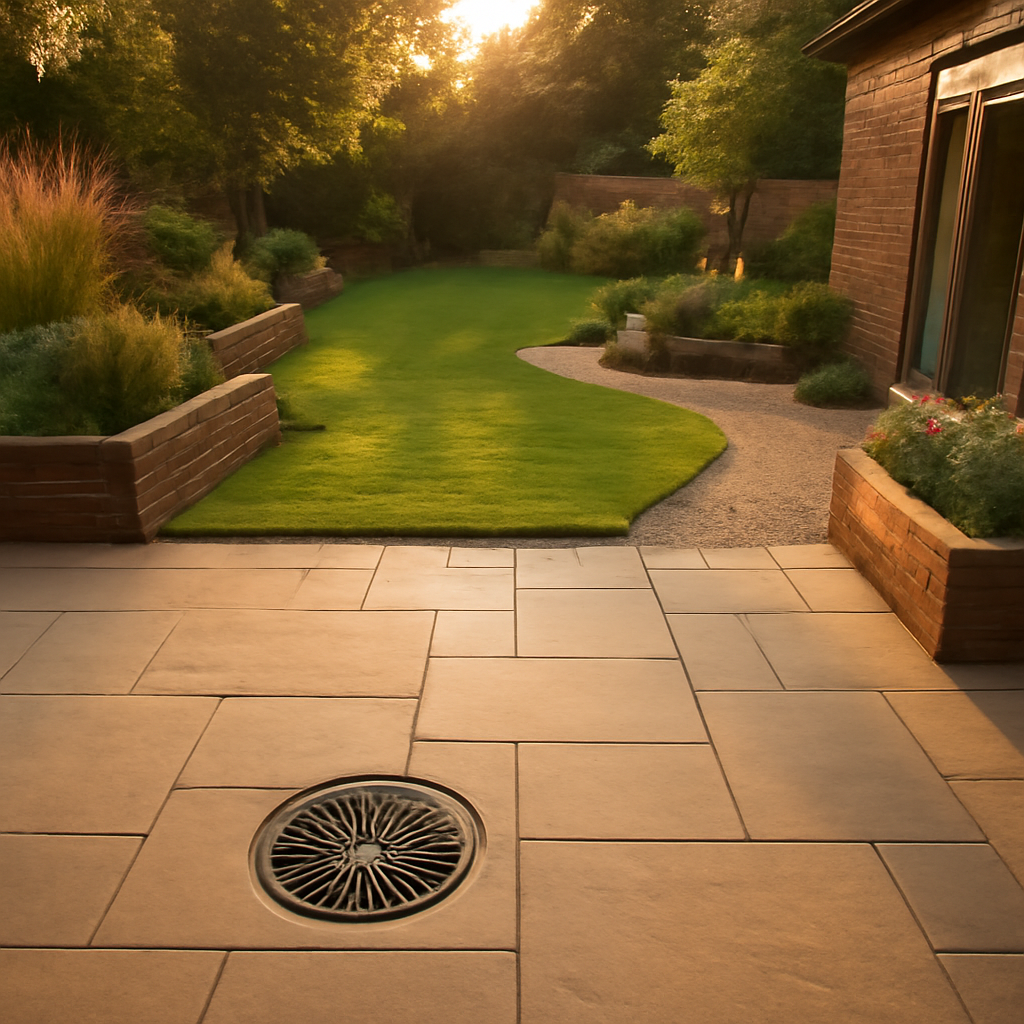
Planning to install a patio in your garden can give your outdoor space a fresh new look, but before starting any work, it’s important to identify potential drainage issues. Poor drainage can cause water to pool around your new patio, leading to premature damage and an uneven surface. At Worthington Landscape & Design, I often find drainage problems that need addressing to ensure patios last years without costly repairs.
One of the most common warning signs is standing water. If water regularly sits on your garden soil or lawn after rain, it’s a clear indicator that drainage is inadequate. This is especially true in parts of Loughborough and the East Midlands where clay soils dominate. Clay holds water tightly and drains slowly, so patios built on poorly draining ground without proper preparation can suffer from water-related damage.
The natural slope of your garden, or 'falls', also matters a lot. A patio needs to be installed with a slight gradient—usually about 1:100 to 1:80—to encourage water to run off to drainage channels or soakaways. If the ground is flat or slopes toward the house or other structures, water can collect and cause problems like damp patios and slippery surfaces. Correctly shaping the falls before laying slabs prevents these issues.
Channels and soakaways are essential components for managing excess water. Channels are drainage paths that guide water away from patios, while soakaways are underground pits or structures that allow water to slowly seep back into the ground. If you notice water ponding in certain garden areas, installing soakaways during hard landscaping work can help prevent waterlogging and protect your patio’s base.
Sub-base preparation is often overlooked but fundamentally important. A well-prepared sub-base provides a stable foundation, supports drainage, and prevents slab movement. Ideally, this involves excavating the soil to a suitable depth, laying a layer of compacted hardcore, and incorporating a suitable sub-base material like sharp sand or MOT type 1. Without this, slabs can shift, crack, or become uneven over time.
When diagnosing drainage problems before patio installation, it’s best to arrange a site visit. This allows for an accurate assessment of soil type, ground levels, drainage needs, and access. Factors such as clearance requirements or existing garden features can also affect the scope of work and final price. Typical pricing for patios in Loughborough and the East Midlands start at around GBP 90 to GBP 120 per sqm for Indian sandstone and GBP 110 to GBP 150 for porcelain, but final quotes depend on these variables.
If you’re considering raised beds with railway sleepers, be aware that drainage around these structures must also be planned carefully to prevent waterlogging. The cost for railway sleeper raised beds starts from GBP 85 to GBP 140 per linear metre depending on grade and preparation. Similarly, turfing costs GBP 18 to GBP 35 per sqm assuming the ground is ready, but extra work like levelling and clearance may add to the cost.
Garden drainage issues are best identified early. Ignoring them often leads to costly repairs or the need to lift and relay patios. Practical, local advice is essential, and this is why I always recommend a site visit before quoting. This way, you get a tailored solution designed for your garden’s unique conditions and long-lasting results.
For reliable advice and a clear, no-obligation quote anywhere in Loughborough or the East Midlands, get in touch. You can WhatsApp me, Aaron, directly on 07454 978031 for a quick chat or to arrange a site visit. With a practical approach and experience in 3D garden design and hard landscaping, I’ll guide you through creating a patio that works well with your garden’s natural drainage.
WhatsApp Aaron on 07454 978031 to talk through a garden project.