
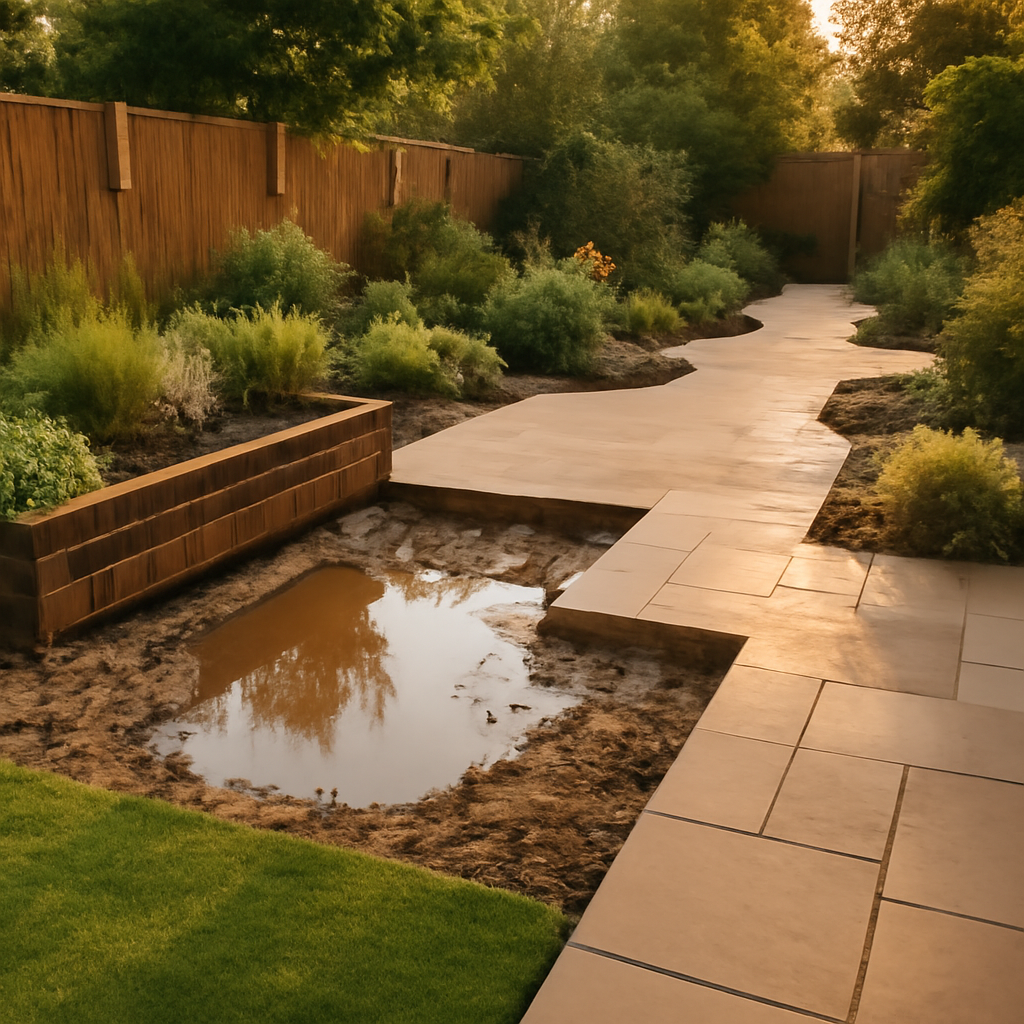
Installing a new patio can transform your garden and add valuable outdoor living space. However, before you lay any slabs, it’s essential to check your garden’s drainage. Ignoring drainage warning signs can lead to standing water, damaged patios, and costly repairs down the line. As a sole-trader landscaping specialist working across Loughborough and the East Midlands, I’ve seen how early garden drainage assessments make all the difference.
One of the most obvious drainage warning signs is standing water after rain. If your garden pools water or stays soggy for days, it’s a sure sign that water isn’t draining properly. This can cause patio slabs to shift, crack, or become uneven over time. It’s important to pinpoint these areas before installation and address the drainage issue to avoid future headaches.
The type of soil in your garden also influences drainage. Clay soil, which is common in parts of the East Midlands, is particularly prone to poor drainage because it holds water tightly. If you know your garden has heavy clay soil, you should plan for more extensive sub-base preparation and possibly additional drainage solutions to ensure your patio remains stable.
Another key factor is the fall of the garden surface. A ‘fall’ is a slight slope designed to direct water away from structures and toward drainage channels. Patios should ideally be installed with a gentle fall to prevent water pooling on the surface. Without the right fall, rainwater can stagnate, leading to slippery slabs and damage over time.
Channels or drainage gullies can be added as part of the hard landscaping to manage excess water. These features collect and direct water away from patios and garden paths, reducing the risk of flooding and erosion. Incorporating drainage channels during patio installation is often a simple, effective measure to control runoff in gardens that naturally hold water.
Soakaways are another practical drainage solution. These are underground pits filled with gravel or rubble designed to allow excess water to slowly disperse into the soil. If your garden drainage survey shows poor natural soakaway capacity, installing one alongside your patio can help handle surface water sustainably.
A correct sub-base preparation is crucial for any patio installation. This involves excavating the existing soil and replacing it with layers of compacted stone and sand, which improve drainage and provide a solid foundation. Inadequate sub-base preparation can lead to water pooling beneath slabs, which weakens the structure and shortens the patio’s lifespan.
For reference, installing an Indian sandstone patio typically costs between GBP 90 and GBP 120 per square metre, while a porcelain patio ranges from GBP 110 to GBP 150 per square metre due to higher material costs and installation complexity. These prices assume straightforward access and normal ground conditions; however, drainage issues, site clearance, levels, and preparation can affect the final quote.
If you spot these garden drainage warning signs or want advice tailored to your property in Loughborough or the East Midlands, a site visit is the best way to get an accurate assessment and quote. I offer 3D garden design services from GBP 150 to GBP 450 per project, which can help you visualise your completed space before work begins.
For a site visit or quick quote, WhatsApp Aaron on 07454 978031. Taking care of drainage before a patio installation ensures a durable, beautiful outdoor area that stands the test of time.
WhatsApp Aaron on 07454 978031 to talk through a garden project.