When planning a landscaping project involving railway sleepers, the choice between oak, pine and hardwood sleepers is important. Each type offers different benefits and considerations regarding appearance, lifespan, cost and structural use. As a sole-trader in Loughborough specialising in hard landscaping and 3D garden design, I often guide customers through these options to suit their garden’s needs and budget.
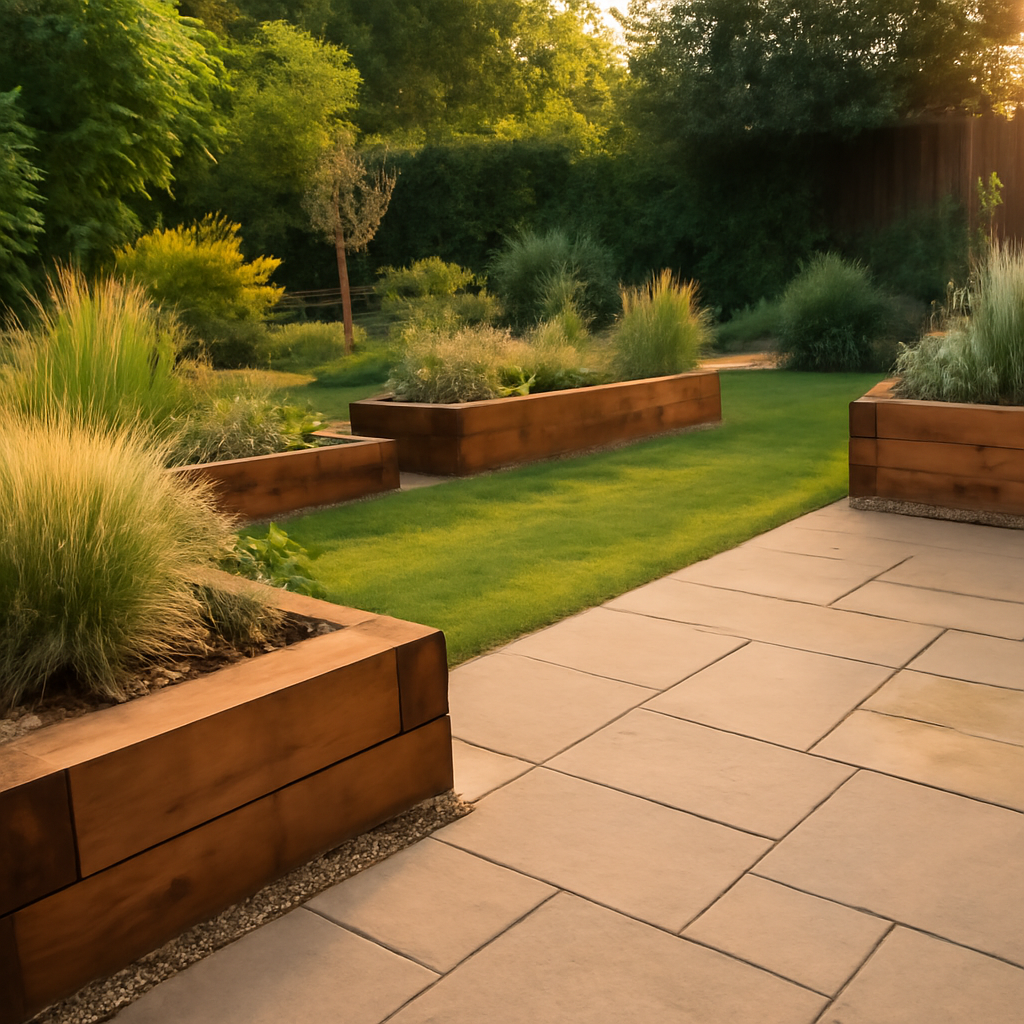
Starting with appearance, oak sleepers have a rich, classic look with deep, natural grains and a warm colour that weathers attractively over time. They suit traditional and rustic garden styles particularly well. Pine sleepers are lighter in colour, with a more uniform and paler look. They can be stained or painted to match your garden theme but tend to offer a less premium feel compared to oak. Hardwood sleepers include varieties like chestnut or tropical woods, which offer a mid-range option visually – often darker than pine but less textured than oak.
Regarding lifespan, oak sleepers are known for their durability and natural resistance to rot and insect damage, often lasting 30 years or more with minimal treatment. Hardwood sleepers also provide good longevity but vary depending on the species and treatment applied. Pine sleepers are the most affordable but generally have a shorter lifespan; treated pine often lasts around 10 to 15 years. If longevity is key, oak or quality hardwood will usually be the better investment.
Budget is naturally an important factor. Pine sleepers are generally the most cost-effective choice, making them a sensible option for budget-conscious projects or where sleepers are used mainly for decorative purposes such as raised beds or edging. Oak sleepers command a premium price reflecting their quality and longevity. Hardwood sleepers fall somewhere in between pine and oak pricing but costs can fluctuate based on the exact wood type and source. It's worth factoring in future replacement costs when comparing initial prices.
Structurally, oak sleepers are strong and suitable for load-bearing uses like steps, retaining walls or substantial raised beds. Hardwood sleepers can also be structurally reliable under similar conditions but should be checked for grade and thickness. Pine sleepers tend to be softer and less stable structurally, being best reserved for lightweight garden projects or areas with minimal soil pressure or traffic.
At Worthington Landscape & Design, pricing for sleeper projects in the Loughborough and East Midlands area typically ranges from £85 to £140 per linear metre depending on the sleeper grade, height, fixing method and ground preparation required. Final quotes will always consider site specifics such as access, levels, drainage and clearance, so a site visit is essential for an accurate estimate.
Combining sleepers with other landscaping materials is also key to achieving your desired look and function. For instance, Indian sandstone patios cost between £90 and £120 per square metre installed, while porcelain patios are £110 to £150 per square metre due to higher material and installation complexity. These materials often complement timber sleepers well in design schemes.
If you’re unsure which sleeper type is right for your garden, or want advice on combining them with patios, decking or turfing (priced from £18 to £35 per sqm), a visit to your site allows us to assess conditions and provide a practical solution tailored to your garden. We also offer 3D garden design services priced from £150 to £450 per project to help visualise the finished space before work begins.
For a site visit or a quick quote on railway sleepers and landscaping in Loughborough and the East Midlands, please WhatsApp Aaron on 07454 978031. I’m happy to help you choose the right sleeper material for your garden’s appearance, durability and budget without any pressure.
WhatsApp Aaron on 07454 978031 to talk through a garden project.