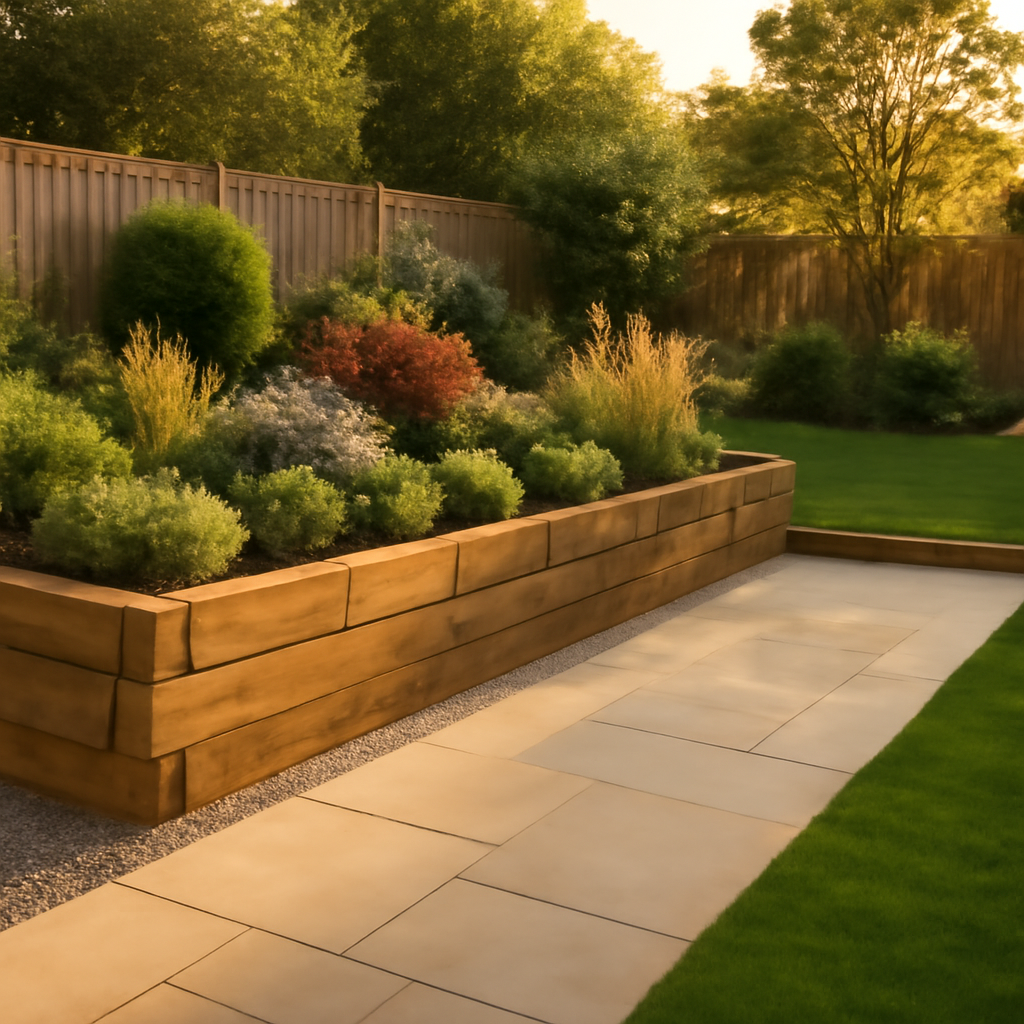
When it comes to landscaping in Loughborough and the wider East Midlands area, railway sleepers remain a popular choice for raised beds, retaining walls, and other hard landscaping features. They add a rustic, natural look but choosing between oak sleepers, pine sleepers, and hardwood sleepers depends on several key factors, including appearance, durability, budget, and intended use.
Starting with appearance, oak sleepers have a distinctive warm, rich colour and a coarse texture. They tend to look more refined and traditional, making them a favourite for gardens where aesthetics are a priority. Pine sleepers, by contrast, are lighter in colour, often soft yellow to pale brown, and they tend to weather to a silvery grey if left untreated. Hardwood sleepers vary depending on the species but generally have a darker, more uniform grain, giving a clean, contemporary feel.
Lifespan is an important consideration. Oak sleepers are known for their longevity due to the natural high tannin content which helps resist rot and insect damage. They typically last 25 years or more, making them suitable for structural uses where durability is key. Pine sleepers are generally cheaper but less durable, often lasting around 10 years unless pressure-treated. Hardwood sleepers are somewhere in between – they provide good durability but vary by species and treatment.
When budgeting for sleepers, pine sleepers are the most economical option. However, their shorter lifespan means replacement costs may add up over time. Oak sleepers are the most expensive but offer long-term value due to durability. Hardwood sleepers have a moderate price point but can vary substantially depending on grade and source. For reference, railway sleeper raised beds in the East Midlands typically range from GBP 85 to GBP 140 per linear metre, dependent on material grade, height, fixing method, and site preparation.
Structurally, oak sleepers are best suited for load-bearing applications like retaining walls and steps due to their strength and resistance to decay. Pine sleepers are better suited for decorative or low-stress uses such as simple raised beds or garden edging. Hardwood sleepers, being strong and stable, can fulfill a variety of roles between these extremes but confirming suitability for your specific project is important.
The East Midlands climate means damp conditions are common, so choosing a sleeper material that handles moisture well is crucial. While all sleepers can benefit from protective coatings or sealants, oak’s natural resistance often gives it an edge outdoors without additional treatment. Pine sleepers should be pressure-treated to extend their lifespan in contact with soil.
At Worthington Landscape & Design, we also advise considering the overall garden design and maintenance expectations before selecting sleepers. Our 3D garden design service, priced between GBP 150 to GBP 450 depending on garden size and revisions, can help visualise how different materials will look and perform in your space.
Finally, keep in mind that pricing and suitability may change depending on site-specific factors like access, ground levels, drainage, and clearance. For a no-obligation site visit or quick quote tailored to your landscaping project, WhatsApp Aaron on 07454 978031. We provide practical advice based on years of local experience in Loughborough and the East Midlands.
Choosing the right sleepers can make all the difference in your landscaping’s durability, appearance, and overall success. Whether you opt for oak, pine, or hardwood, professional guidance ensures you get the best results within your budget and site constraints.
WhatsApp Aaron on 07454 978031 to talk through a garden project.