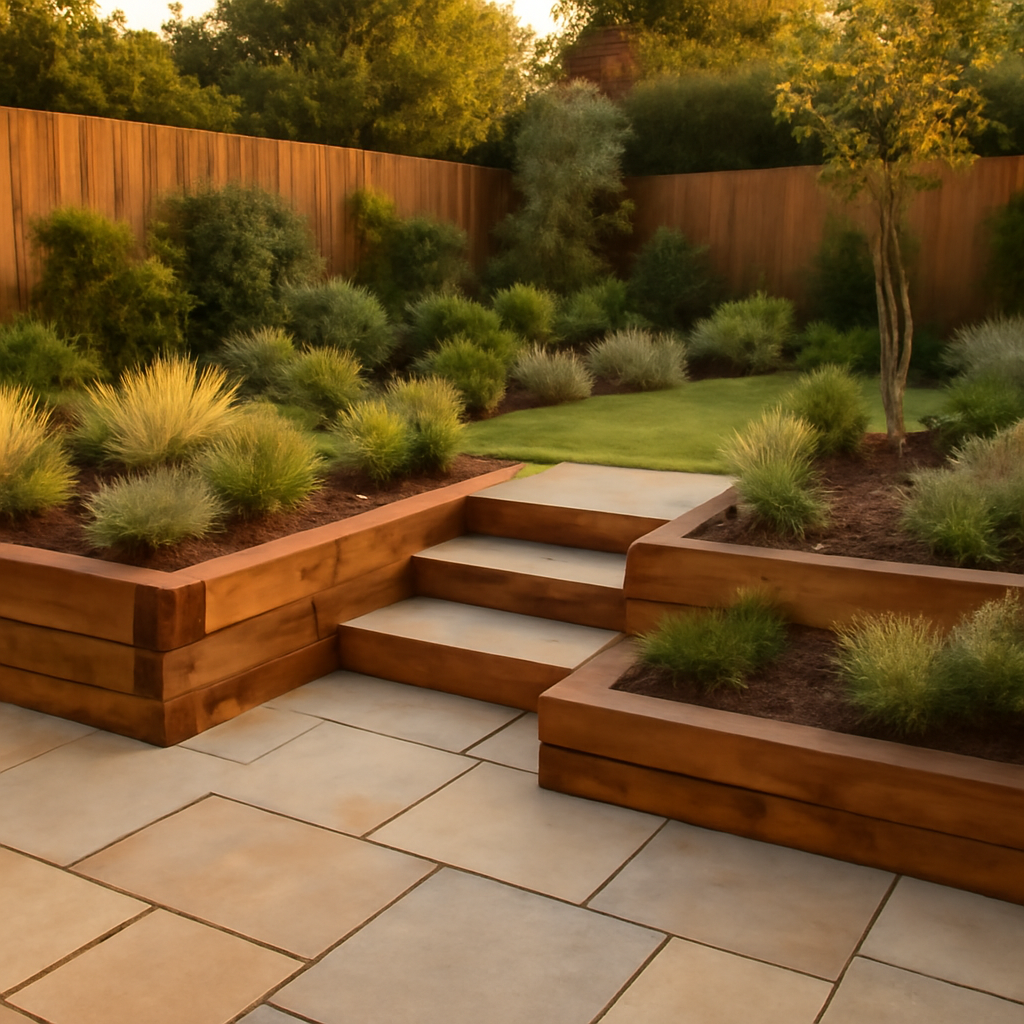
When planning landscaping projects in Loughborough and the wider East Midlands, railway sleepers are a popular choice for features like raised beds, retaining walls and edging. At Worthington Landscape & Design, we often get asked: oak sleepers, pine sleepers or hardwood sleepers — which is right? It’s important to consider appearance, lifespan, budget, and the project’s structural needs before deciding.
Starting with appearance, oak sleepers offer a rich and natural look with a distinctive grain pattern. Their warm tones tend to blend smoothly in gardens aiming for a classic or rustic style. Pine sleepers, in contrast, usually have a lighter colour and a straighter grain, giving a cleaner and more modern appearance but less visual texture than oak. Hardwood sleepers come in a range of woods such as chestnut or acacia, often with darker hues and more variations, making them versatile for different aesthetics.
In terms of lifespan, oak sleepers are known for their durability and resistance to decay, generally lasting 15-20 years or more when treated properly. Pine sleepers are typically less durable and may last around 7-10 years, even with treatment, partly due to their softer timber and thinner sections. Hardwood sleepers fall somewhere between oak and pine but can vary widely depending on the species and treatment; they often last 10-15 years if maintained well.
Budget also plays a key role in choosing sleepers. Pine sleepers tend to be the most affordable option, suitable if you have a tighter budget or are landscaping a larger area. Oak sleepers are at the higher end of price due to their timber quality and longevity; at Worthington Landscape & Design, we typically price railway sleeper raised beds between GBP 85 and GBP 140 per linear metre, with costs influenced by sleeper grade, height, fixing methods and site prep. Hardwood sleepers vary in price but usually fall between pine and oak in cost.
Structurally, oak sleepers are the strongest and provide excellent support for raised beds and retaining features, thanks to their dense timber. Pine sleepers are softer and less stable under heavy loads or erosion-prone spots but can work well for decorative edging or lighter construction if secured properly. Hardwoods offer a middle ground, often with good strength but sometimes less reliable than oak for major retaining walls.
Aside from material, remember final prices and suitability depend on factors like site access, levels, drainage, clearance and your exact material specification. A site visit allows us to assess these variables and deliver the most accurate quote and expert advice. For example, drainage issues or uneven ground can add to groundwork costs, affecting the overall project price.
If you’re considering other aspects of your landscaping, Worthington Landscape & Design also provides 3D garden design services (GBP 150 to GBP 450 per project) to help visualise your entire space before work begins. For patios, Indian sandstone usually costs around GBP 90 to GBP 120 per sqm, and porcelain slabs range from GBP 110 to GBP 150 per sqm, with prices depending on access and preparation.
Choosing the right sleeper can dramatically impact your garden’s longevity and look. Whether you want the timeless quality of oak, the cost-effectiveness of pine, or the balanced option of hardwood, it’s best to consider your long-term needs carefully and plan accordingly.
For tailored advice and quick, no-obligation quotes in Loughborough and across the East Midlands, contact Aaron at Worthington Landscape & Design. WhatsApp a site visit or question directly on 07454 978031.
WhatsApp Aaron on 07454 978031 to talk through a garden project.