When planning a garden project in Loughborough or the East Midlands, the choice of sleepers can make a big difference in both looks and longevity. At Worthington Landscape & Design, I often get asked which sleepers are best—oak, pine, or other hardwoods. This guide breaks down the main differences to help you decide what suits your specific landscaping needs.
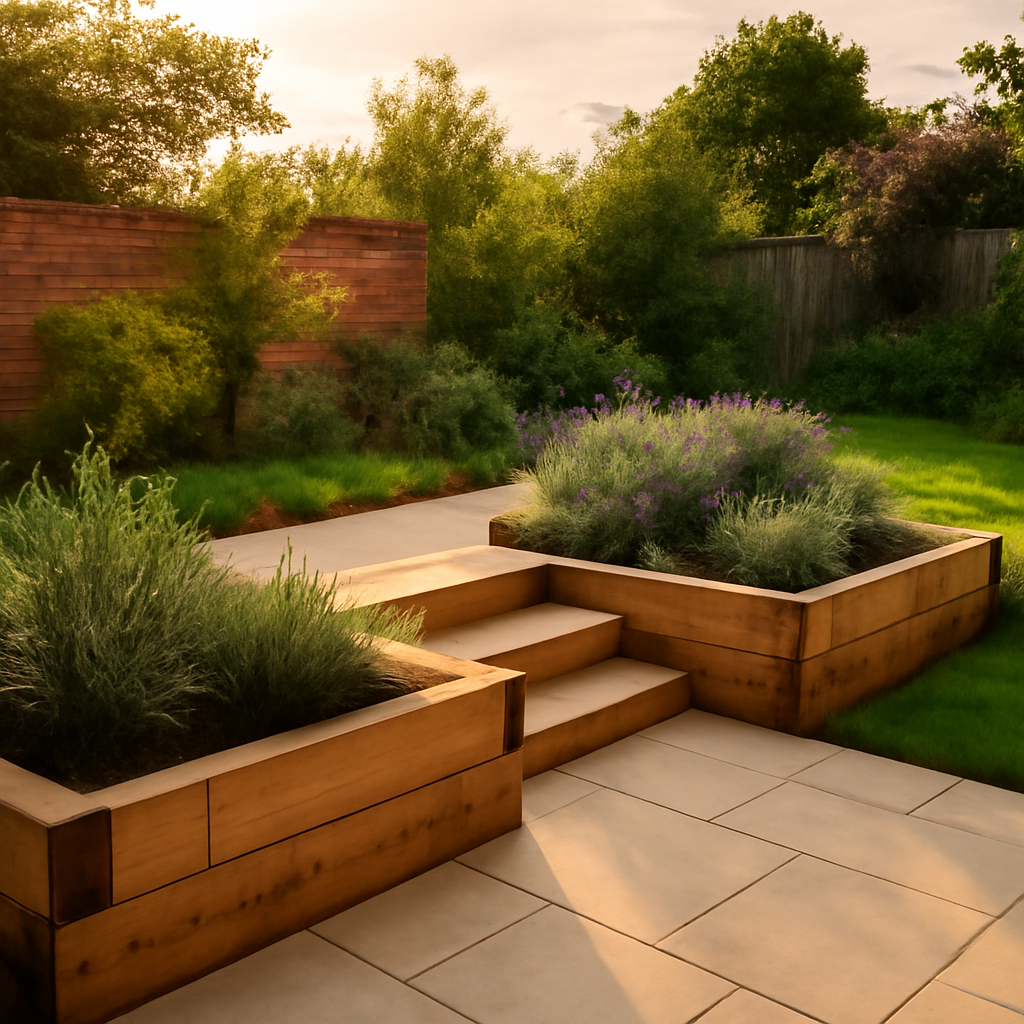
Oak sleepers are prized for their strength and classic, rich appearance. They have a typical lifespan of 15 to 25 years outdoors, sometimes longer with proper treatment. Oak’s dense grain also means it resists wear and rot better than softer woods, making it suitable for structural uses like retaining walls or raised beds that need long-term stability. However, oak sleepers tend to be at the higher end of the budget due to their durability and demand.
Pine sleepers are a more economical option, often treated with preservatives to extend their lifespan to around 10 to 15 years. Their lighter colour and more uniform grain give a different aesthetic compared to oak, which some homeowners prefer for a cleaner, more contemporary look. Pine is typically softer, so it’s best for low-impact installations like decorative borders, smaller raised beds, or paths. It’s important to consider that treated pine can leach chemicals, so check suitability if you plan to grow edibles.
Hardwood sleepers other than oak, such as larch or chestnut, sit between oak and pine in both cost and durability. They offer a variety of natural tones and textures, with a lifespan often around 15 years depending on species and site conditions. Hardwood sleepers are a great middle ground if oak is over budget and pine is too soft, especially for medium-duty projects like patios edging or steps.
From a structural standpoint, oak sleepers provide the most robust option, closely followed by other hardwoods. Pine, being softer, may warp or crack over time under heavy loads or in very wet conditions. Whichever material you choose, good drainage and site preparation will extend the life and appearance of your sleepers.
Budget-wise, consider the installed costs relative to your project scope. For example, railway sleeper raised beds typically range from £85 to £140 per linear metre, depending on sleeper grade, height, fixing method and ground preparation. Remember that difficult access, uneven levels or drainage needs can affect the quote, so a site visit is advisable for a precise price.
Worthington Landscape & Design offers 3D garden design services starting at £150 per project, allowing you to visualise how oak, pine or hardwood sleepers will look in your garden before committing. This service can be particularly helpful if you are unsure which material fits best with your existing landscaping and budget.
In summary, oak sleepers are your go-to if longevity and strength are priorities and budget allows. Pine sleepers suit smaller or less structural uses where cost is key and lifespan is less critical. Meanwhile, other hardwood sleepers provide a balance of appearance and endurance for medium-scale projects. Whichever you pick, professional installation and good site preparation make a big difference.
If you’d like advice tailored to your garden in Loughborough or the East Midlands, why not get in touch? For a site visit or quick quote, WhatsApp Aaron on 07454 978031. I’m happy to discuss your options and help you pick the right sleepers to fit your vision and budget.
WhatsApp Aaron on 07454 978031 to talk through a garden project.