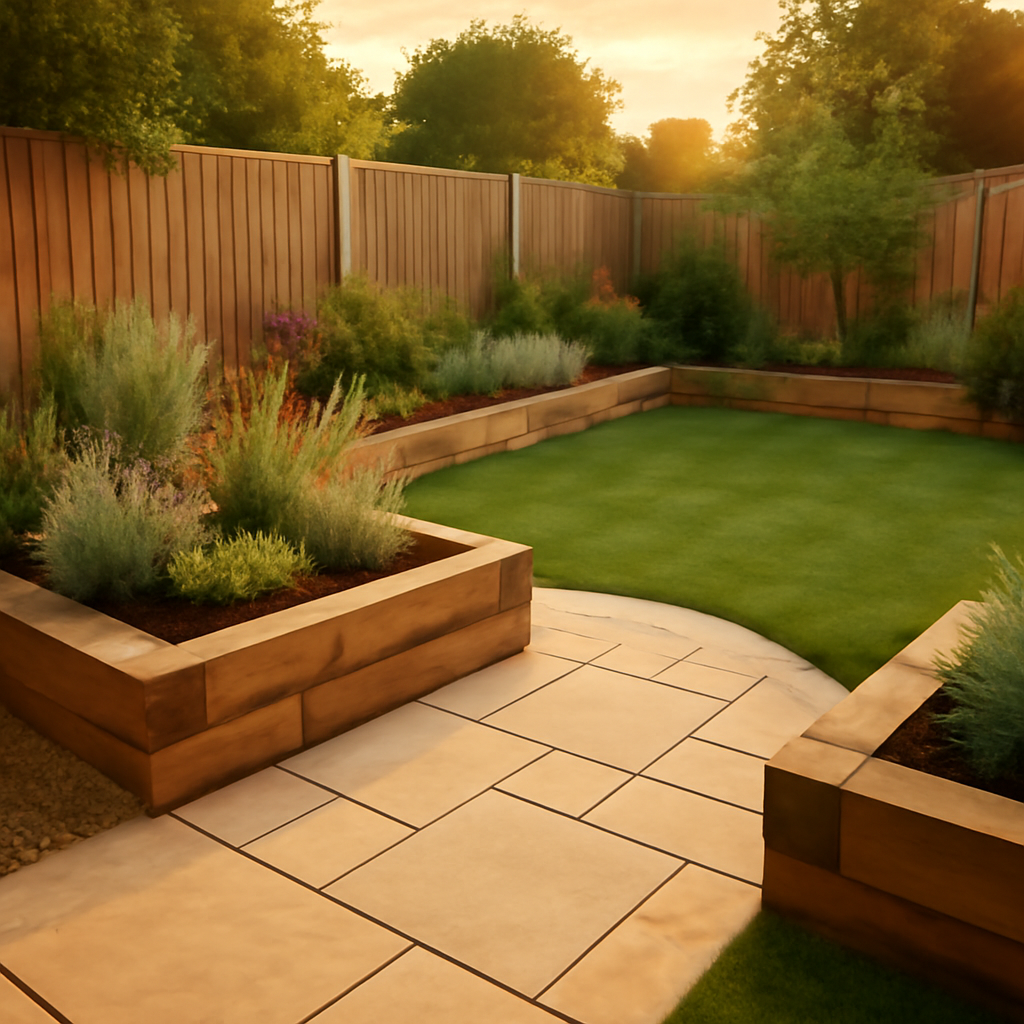
When planning landscaping projects in Loughborough or the wider East Midlands, choosing the right sleeper can make a big difference to your garden’s look, longevity and budget. Oak sleepers, pine sleepers and hardwood sleepers all have different qualities that suit specific uses, so it’s worth understanding these before deciding on materials for raised beds, retaining walls or other hard landscaping features.
Appearance is a great place to start. Oak sleepers have a rich, warm tone and a distinctive grain that many homeowners appreciate for its natural beauty and traditional appeal. Pine sleepers are lighter in colour, generally pale with visible knots, giving a more rustic or casual appearance, while hardwood sleepers (which can include species like oak but also tropical hardwoods) vary widely in colour and grain but tend to be denser and smoother than pine.
Lifespan and durability are key factors when considering sleepers. Oak sleepers are renowned for their strength and resistance to rot, often lasting 15 to 25 years or more without significant decay if installed correctly. Pine sleepers are typically pressure-treated to increase durability but generally have a shorter lifespan of about 10 to 15 years, especially if exposed to constant moisture. Hardwood sleepers offer excellent durability, sometimes exceeding oak in resistance to wear and weather, but costs and availability vary.
Budget inevitably plays a role in materials choice. Pine sleepers tend to be the most affordable option due to their quicker growth and wide availability, making them suitable for projects on a tighter budget. Oak sleepers usually cost more, reflecting their durability and aesthetic qualities, while hardwood sleepers can be the most expensive depending on the species and supply chain. For example, railway sleeper raised beds typically cost between GBP 85 and GBP 140 per linear metre, depending on the sleeper grade and height.
In terms of structural uses, oak and hardwood sleepers are better suited for retaining walls or raised beds requiring additional strength and stability due to their density and resistance to splitting. Pine sleepers, although lighter, can still be used effectively for less demanding structures or decorative garden features, particularly when properly treated and fixed.
It’s important to note that the final cost and suitability of sleepers can depend on site-specific factors like ground levels, drainage, access for delivery and installation, and material specification. For most landscaping projects, a site visit is recommended to provide an accurate quote and to discuss which sleeper type best fits your garden’s conditions and your needs.
As part of a complete landscaping service in the East Midlands, Worthington Landscape & Design also offers expert 3D garden design starting from GBP 150 to GBP 450 per project depending on size and revisions, plus patios in Indian sandstone, porcelain, and block paving driveways. This helps visualise how oak, pine or hardwood sleepers will complement your garden’s overall design.
If you are considering sleepers for your landscaping project or want advice on other landscaping elements in Loughborough or surrounding areas, a quick chat or site visit can clarify the best material choices based on your budget and garden layout. Contact Aaron via WhatsApp on 07454 978031 for a no-obligation chat or to arrange a site visit that suits your schedule.
WhatsApp Aaron on 07454 978031 to talk through a garden project.