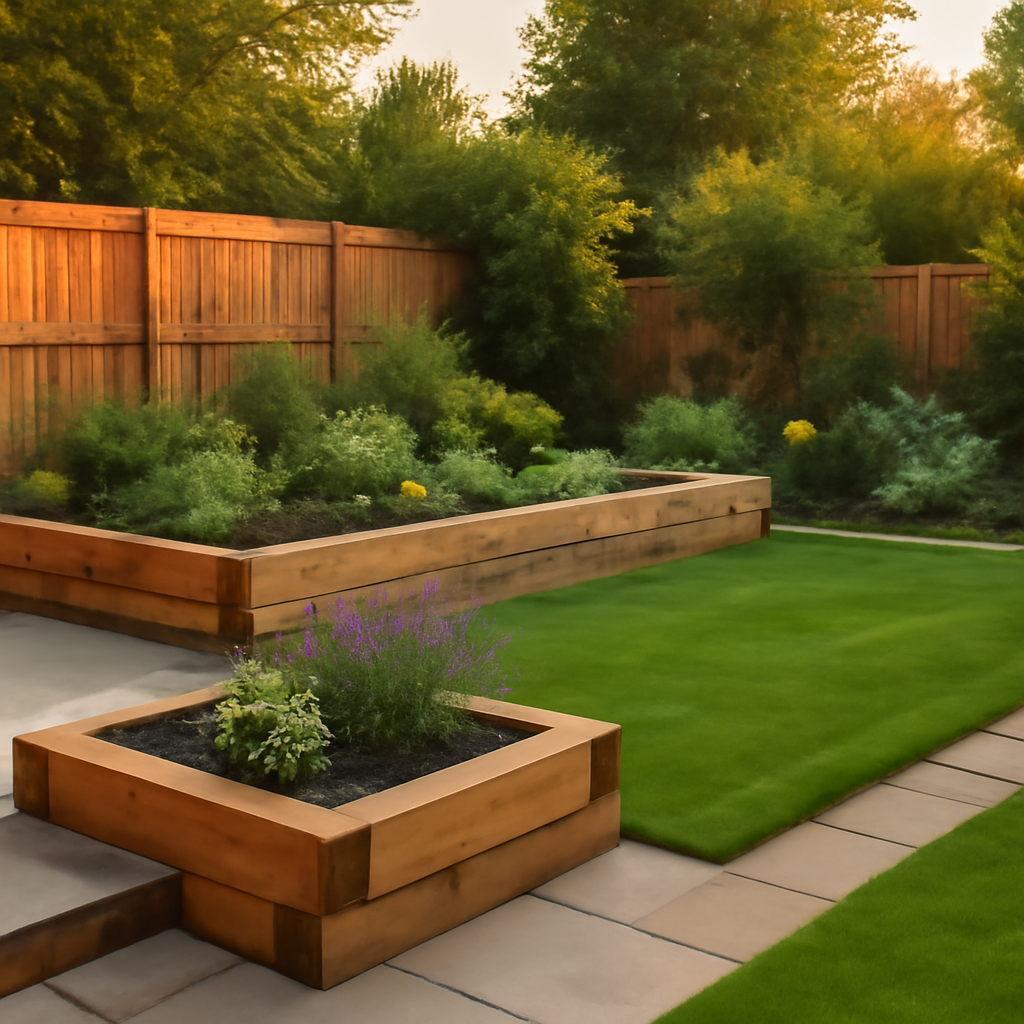
When planning landscaping projects in Loughborough or the East Midlands, railway sleepers are a popular choice for raised beds, retaining walls and other hard landscaping features. But with options like oak sleepers, pine sleepers, and hardwood sleepers available, which one is right for your garden? This guide compares their appearance, lifespan, budget, and structural uses to help you make an informed decision.
Starting with appearance, oak sleepers have a rich, deep colour and natural grain that lends a classic and premium look to any garden design. Over time, they age to a soft grey patina, adding character. Pine sleepers tend to be lighter in colour with a more uniform texture but may show knots and sapwood distinctly. Hardwood sleepers (often from tropical species) usually have a darker, dense grain with a hard-wearing finish that suits modern or rustic designs alike.
Lifespan is a key consideration for sleepers exposed to soil and weather. Oak is a very durable hardwood that can last 20-30 years or more with proper treatment. Pine sleepers are softer and generally treated to resist rot, but their lifespan is shorter, typically 7-15 years depending on conditions. Hardwood sleepers from tropical species can also last two decades or longer thanks to their density and natural oils, often rivaling oak in durability.
When budget is a factor, pine sleepers are usually the most affordable option, making them popular for budget-conscious landscaping or decorative uses. Hardwood sleepers and oak tend to be pricier due to sourcing and durability but offer better longevity and often reduce replacement or maintenance costs long term. As a practical yardstick, railway sleeper raised beds in the Loughborough area cost between £85 and £140 per linear metre, influenced by sleeper grade, height, fixing method and ground preparation.
Structurally, oak sleepers are excellent for retaining walls and heavy garden features thanks to their strength and natural resistance to decay. Hardwood sleepers also provide strong support but may vary depending on the species. Pine sleepers are more suited to lighter applications like raised beds where weight and pressure are less intense. Always consider the specific structural needs and site conditions before choosing sleepers.
Other factors such as accessibility, ground levels, drainage, and clearance will affect the final project cost and suitability of the sleeper type. For example, a straightforward installation with standard ground conditions will be towards the lower end of the price guide, whereas challenging site access or preparation may increase labour costs and final quotes.
At Worthington Landscape & Design, we understand the importance of selecting the right materials for your garden in the East Midlands. We offer 3D garden design services (from £150 to £450 depending on garden size and revisions) to help you visualise how sleepers and other landscaping elements will fit together before any work begins.
If you’re considering railway sleepers or other hard landscaping features like patios or block paving, it’s worth a site visit to discuss options tailored to your space and budget. Typical installed patio costs range from £90 to £120 per square metre for Indian sandstone and £110 to £150 for porcelain, with block paving driveways around £80 to £115 per square metre. Clearing, levelling, drainage, and material specification can all affect pricing.
For a reliable, practical landscaping solution in Loughborough and the East Midlands, get in touch with Worthington Landscape & Design. Reach Aaron via WhatsApp on 07454 978031 for a site visit or a quick, no-obligation quote. Seeing the site helps us give you the best advice on whether oak, pine or hardwood sleepers will work best for your garden’s look and longevity.
WhatsApp Aaron on 07454 978031 to talk through a garden project.