
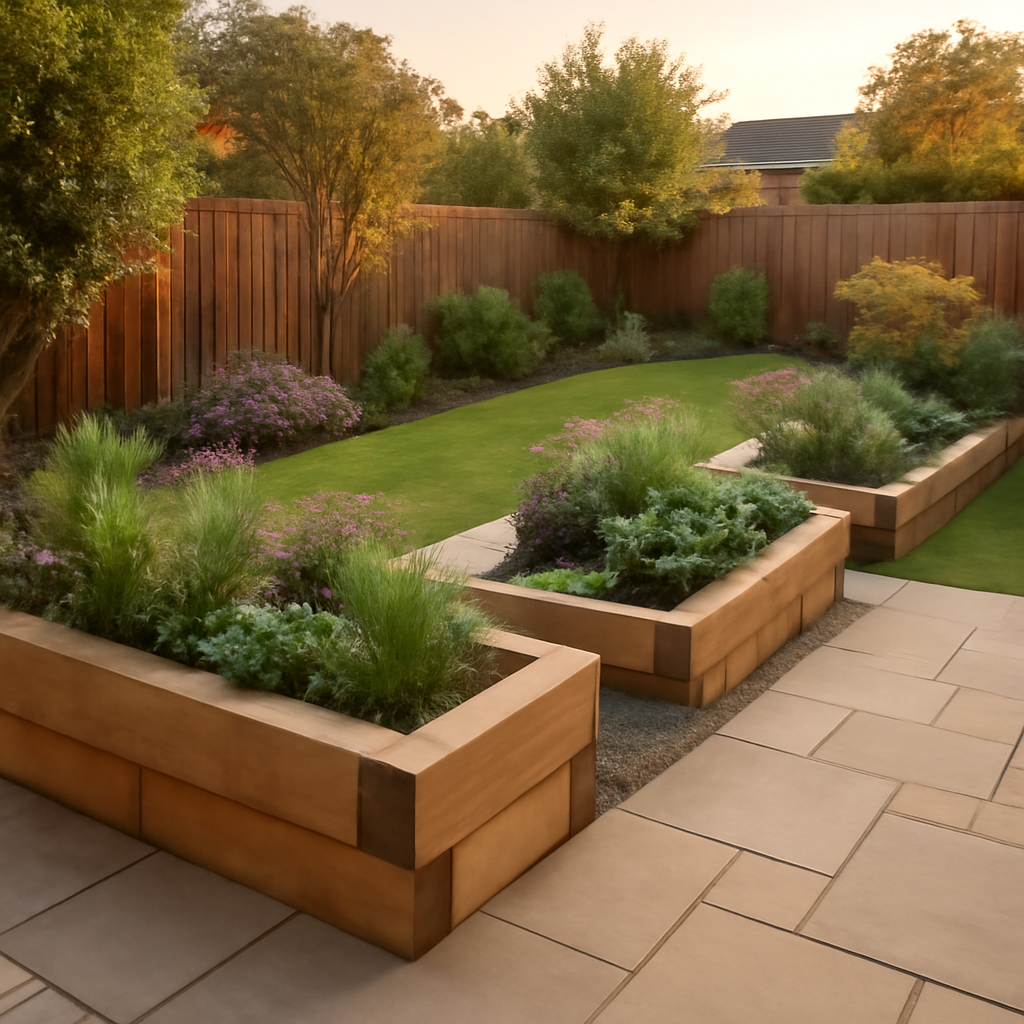
When it comes to landscaping in Loughborough and the East Midlands, railway sleepers are a popular choice for building raised beds, borders, retaining walls and other hard landscaping features. The main types you’ll encounter are oak sleepers, pine sleepers, and hardwood sleepers. Each has its own characteristics in terms of appearance, lifespan, budget, and structural use, and choosing the right one depends on your garden’s needs.
Oak sleepers are known for their strength and durability. They have a classic, warm appearance that weathers over time to a soft grey. Because oak is a dense hardwood, oak sleepers tend to last significantly longer than softwoods like pine, especially in damp or exposed conditions. For a long-term investment in a garden feature that requires structural strength, oak is an excellent choice. Be aware that oak sleepers generally come at the higher end of the price range, around £85 to £140 per linear metre installed, depending on grade, height and fixing method.
Pine sleepers, on the other hand, are a softer wood that is often treated with preservatives to improve durability. They’re lighter in appearance, often featuring a yellowish or reddish tone that can brighten up a garden. Pine sleepers typically have a shorter lifespan compared to oak, usually lasting around 10 to 15 years before signs of wear become noticeable, especially if in direct soil contact or exposed to moisture. However, they are more budget-friendly, making them popular for temporary or affordable landscaping solutions.
Hardwood sleepers made from species such as teak, mahogany or tropical hardwoods fall somewhere between oak and pine in terms of price and lifespan. They offer a hard, dense surface that generally resists rot and insects well, and their rich colouring can add visual interest. However, these sleepers often cost more than pine and can be comparable to or slightly above oak prices. They suit projects where appearance is important but require a careful assessment of environmental impact and sourcing.
From a structural point of view, oak and hardwood sleepers are better suited for load-bearing uses, such as retaining walls or garden steps, thanks to their superior strength. Pine sleepers are best used for lighter structures or decorative applications where heavy pressure or retaining soil is limited. Whichever you choose, ensure proper ground preparation and drainage to extend the life of your sleepers and reduce risk of rot or movement.
It’s also important to consider site-specific factors like access, ground levels, and drainage when selecting your sleepers. These can affect installation complexity and final costs. For reference, railway sleeper raised beds start around £85 and can go up to £140 per linear metre installed, depending on all these factors.
For a complete garden makeover, sleepers can also be combined with other landscaping elements such as Indian sandstone patios (£90-£120 per sqm) or porcelain patios (£110-£150 per sqm). Block paving driveways, turfing, and 3D garden design services are also available locally to help you bring your vision to life. Final quotes depend on site visits to assess all variables including clearance, material specification and ground preparation.
If you’re in the Loughborough or East Midlands area and want a practical, experienced landscaping professional to advise on the best sleeper choice for your garden, it’s worth arranging a site visit. This will provide a detailed, tailored quote and expert recommendations based on your unique garden conditions and project scope.
For a site visit or a quick quote, WhatsApp Aaron on 07454 978031. I can help you make the right choice between oak sleepers, pine sleepers and hardwood sleepers for your landscaping needs.
WhatsApp Aaron on 07454 978031 to talk through a garden project.