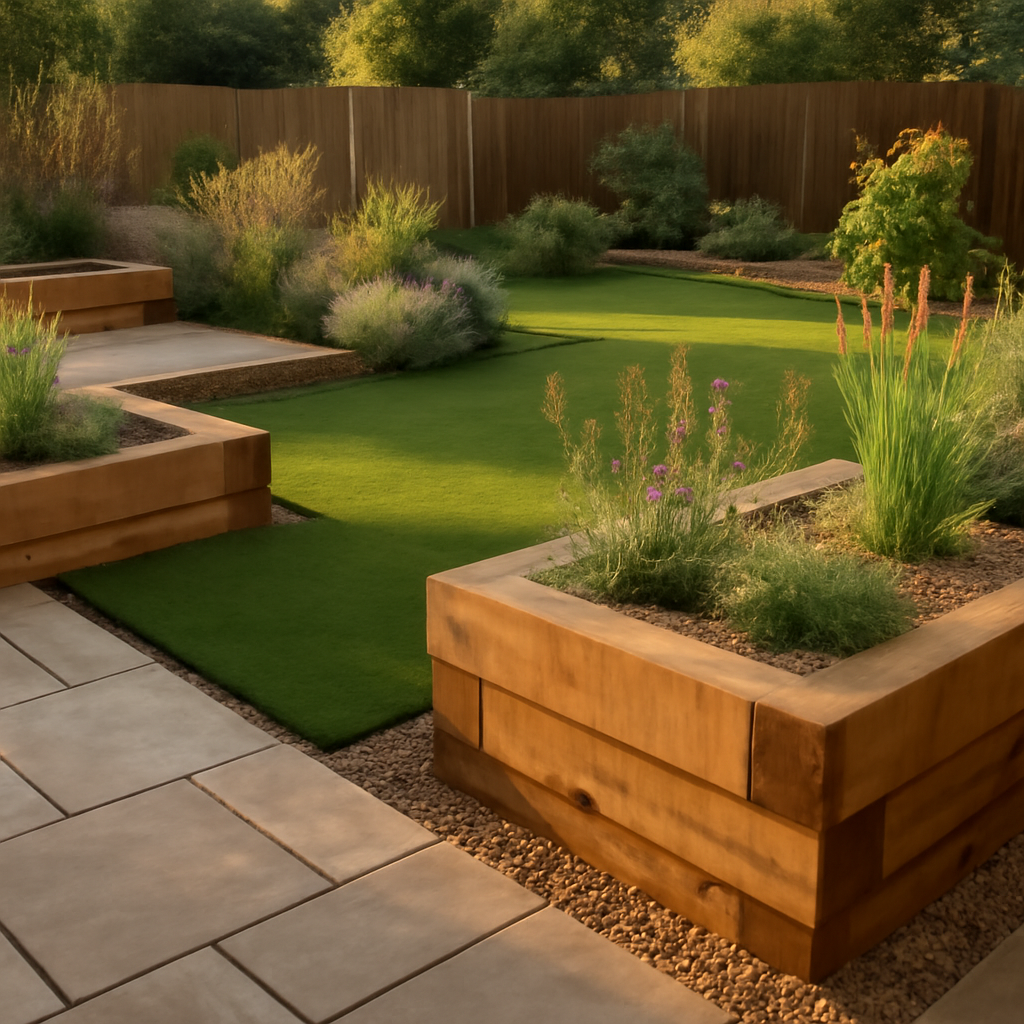
When it comes to landscaping in Loughborough and the East Midlands, railway sleepers are a popular choice for raised beds, borders, and retaining walls. However, picking the right material—oak, pine or hardwood sleepers—depends on factors like appearance, durability, budget and the structural role they will play in your garden.
Oak sleepers are known for their strength and classic appearance. With a rich grain and warm colour, oak adds a traditional, high-end look to your garden. Due to their density and natural resistance to decay, oak sleepers have a long lifespan, often exceeding 20 years with minimal maintenance. They’re ideal if you want a robust, durable structure that will last and age gracefully. Expect to pay towards the upper end of the price guide for railway sleeper raised beds (GBP 85 to GBP 140 per linear metre) when choosing oak, though the final cost depends on factors like ground prep and fixing methods.
Pine sleepers are the more budget-friendly option. They tend to have a lighter colour and a cleaner, simpler appearance compared to oak. Pine is softer and less dense, so it may not last as long, especially if it’s exposed to damp conditions without proper treatment. Typically, pine sleepers last around 10 to 15 years but can vary depending on the quality of preservative used. If you’re working to a tighter budget or looking for a lighter style, pine might be suitable, but keep in mind it may require replacement sooner or more upkeep.
Hardwood sleepers usually refer to durable tropical woods such as iroko or jarrah. These offer a good balance between oak and pine in terms of appearance and lifespan. Hardwoods are dense, naturally resistant to rot, and typically last 15 to 20 years. Their colour ranges from reddish-brown to dark brown, giving a contemporary look that’s slightly different from the traditional oak tones. Prices for hardwood sleepers are generally similar to or slightly below oak, depending on the specific wood type and supply.
Structurally, oak and hardwood sleepers are preferable if you’re building retaining walls or raised planters that need to hold back soil or define terraces due to their strength and resistance to warping. Pine can work for smaller or decorative features but may struggle under heavy loads or in wetter microclimates common in the East Midlands.
Budget-wise, consider not just initial material costs but also the lifespan and any maintenance involved. Oak and hardwood sleepers might cost more upfront but can save you money long term due to their durability. Pine is cheaper initially but can mean more frequent replacement or treatment. Always factor in additional costs such as ground clearance, drainage, and fixing methods, which can affect installation prices.
At Worthington Landscape & Design, we aim to help you find a practical and beautiful solution tailored to your garden and budget. For railway sleeper raised beds, typical installed costs range from GBP 85 to GBP 140 per linear metre, though exact pricing will depend on sleeper grade, height, fixing method and site preparation. We recommend a site visit to assess ground conditions, access and specification before finalising any quote.
If you’re also considering other landscaping options like patios or block paving alongside sleepers, our pricing guides are: Indian sandstone patios from GBP 90 to GBP 120 per sqm, porcelain patios GBP 110 to GBP 150 per sqm, and block paving driveways GBP 80 to GBP 115 per sqm. These prices assume straightforward access and standard ground conditions and can vary with requirements such as drainage, edging or excavation.
Understanding the differences between oak, pine and hardwood sleepers helps make your landscaping choices clearer and ensures your garden looks and functions well for years to come. If you’d like to discuss your garden project or want a no-obligation site visit and quote in Loughborough or the East Midlands, get in touch with Aaron via WhatsApp on 07454 978031.
WhatsApp Aaron on 07454 978031 to talk through a garden project.