
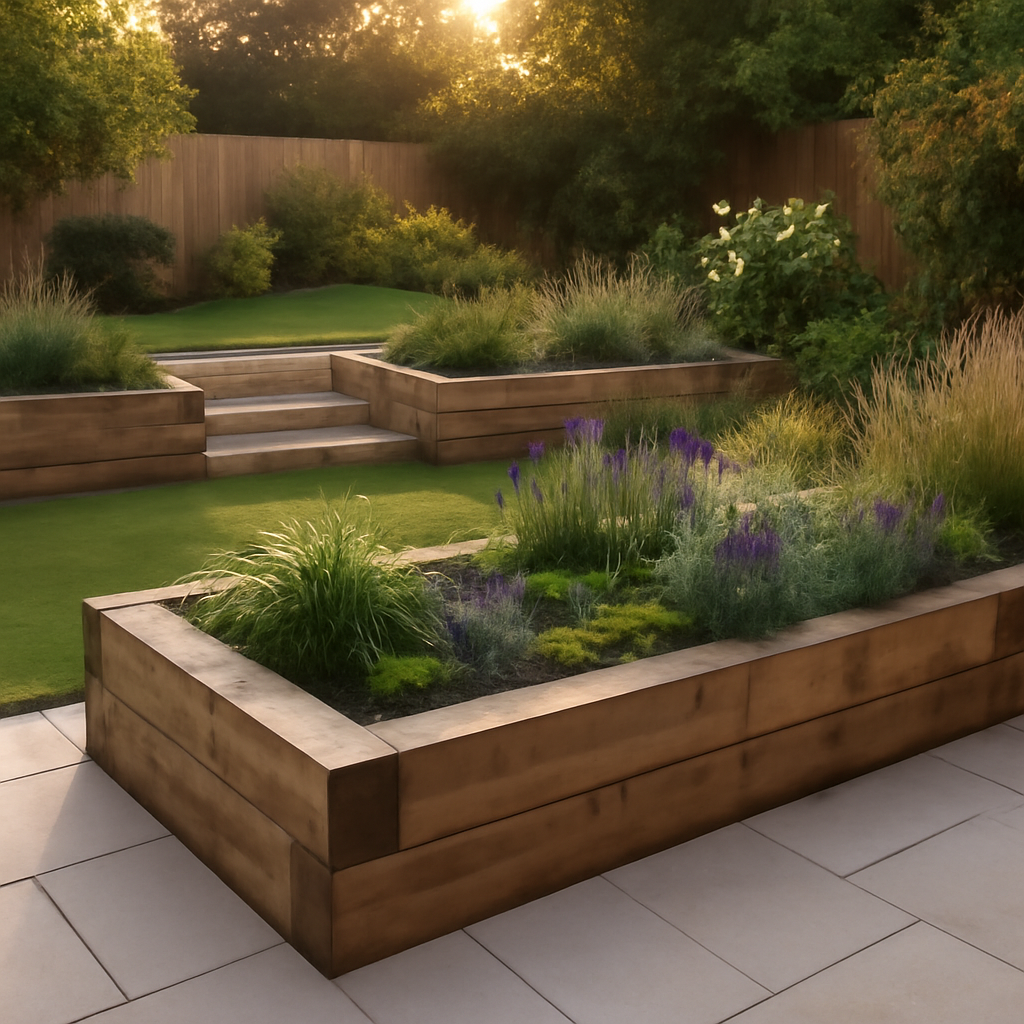
When it comes to landscaping in Loughborough and the wider East Midlands, choosing the right material for your project is key. Railway sleepers are a popular choice for garden beds, steps, retaining walls and other hard landscaping features. But oak sleepers, pine sleepers and hardwood sleepers all have different benefits and considerations. Knowing which is right for your garden will save you time, money and maintenance down the line.
Appearance is often the first consideration. Oak sleepers tend to have a classic, rich look with deep grains that weather to a warm grey. They suit more traditional or premium garden designs. Pine sleepers are lighter in colour and can have a rustic, knotty finish that fits well with casual or woodland-inspired spaces. Hardwood sleepers (often from species such as iroko or jarrah) have a smooth, dense finish and can range from reddish-brown to dark hues, ideal for contemporary gardens.
Lifespan varies significantly between these sleeper types. Oak sleepers offer durability and can last 15-25 years outdoors if properly installed and maintained. Pine is a softer wood, generally less durable, lasting around 5-10 years unless pressure treated. Hardwood sleepers are usually very strong and decay-resistant, often lasting 20 years or more. The cost of hardwood tends to reflect this enhanced lifespan.
Budget is often a deciding factor. Pine sleepers are the most affordable option and widely available, making them ideal for larger projects on a tighter budget. Oak sleepers sit in a mid-range price bracket, balancing cost with longevity and classic appearance. Hardwood sleepers are the most expensive due to quality and durability but can be cost-effective over the long term due to their lifespan.
Structurally, hardwood sleepers are better suited for load-bearing landscaping like retaining walls or steps because of their strength and resistance to cracking. Oak sleepers are also strong enough for many structural uses but can be heavier and pricier. Pine sleepers are best reserved for lighter applications such as raised beds or decorative edging, especially if untreated.
At Worthington Landscape & Design, we always recommend considering site-specific factors such as access, levels, drainage and ground clearance when choosing sleepers. These factors can affect installation complexity and final cost more than the material choice alone. For example, drainage requirements may change how deep sleepers are installed to avoid water damage.
As a rough pricing guide in the East Midlands, installing railway sleeper raised beds ranges between GBP 85 and GBP 140 per linear metre, depending on sleeper grade, fixing method and ground preparation. Keep in mind these prices vary with material type and site conditions, and a site visit is the best way to get an accurate quote.
If you are planning a full garden upgrade or hard landscaping project involving sleepers, patios or 3D garden design, Worthington Landscape & Design can help you choose the right materials and layout for your space. Typical patio installation costs, for example, range from GBP 90 to GBP 120 per square metre for Indian sandstone and GBP 110 to GBP 150 for porcelain, with final prices affected by cuts, falls and ground prep.
For personalised advice or a site visit in Loughborough and the East Midlands, WhatsApp Aaron on 07454 978031. We can assess your garden, discuss sleeper options and provide a quick, no-obligation quote tailored to your project and budget. Choosing the right sleepers doesn’t have to be complicated — with the right expertise, you can get the look and durability your garden deserves.
WhatsApp Aaron on 07454 978031 to talk through a garden project.