When it comes to choosing sleepers for your landscaping project in Loughborough or the wider East Midlands, selecting the right timber can make all the difference. At Worthington Landscape & Design, we often get asked about the pros and cons of oak sleepers, pine sleepers, and hardwood sleepers. This guide aims to help you understand these materials so you can decide which fits your garden’s needs best.
Let’s start with appearance. Oak sleepers are known for their rich, warm tones and attractive grain patterns. They tend to develop a silvery-grey patina over time if left untreated but can be stained or sealed to maintain their original look. Pine sleepers typically have a lighter, more uniform appearance and are often pressure-treated to resist decay. Hardwood sleepers, which can include varieties like tropical hardwoods, offer a deep, dark colour and dense grain that many find visually striking and more contemporary in landscaping schemes.
In terms of lifespan, oak sleepers generally offer excellent durability and can last many years, often outlasting pine sleepers if maintained properly. Pine sleepers, while more affordable, are softer and can be more vulnerable to rot and insect attack despite treatment – especially in damp or ground-contact situations. Hardwood sleepers, due to their density and natural oils, often have a lifespan comparable to or better than oak, making them a robust choice for structural or decorative use.
Budget considerations are always important. Pine sleepers tend to be the most cost-effective option, with prices reflecting their more common availability and faster growth rates. Oak sleepers come at a premium because of their durability and appearance, and hardwood sleepers generally fall in a similar or slightly higher price bracket depending on the species. At Worthington Landscape & Design, typical railway sleeper raised beds range from GBP 85 to GBP 140 per linear metre, with cost variation influenced by sleeper grade, height, fixing method and ground preparation. We recommend a site visit to provide a precise quote.
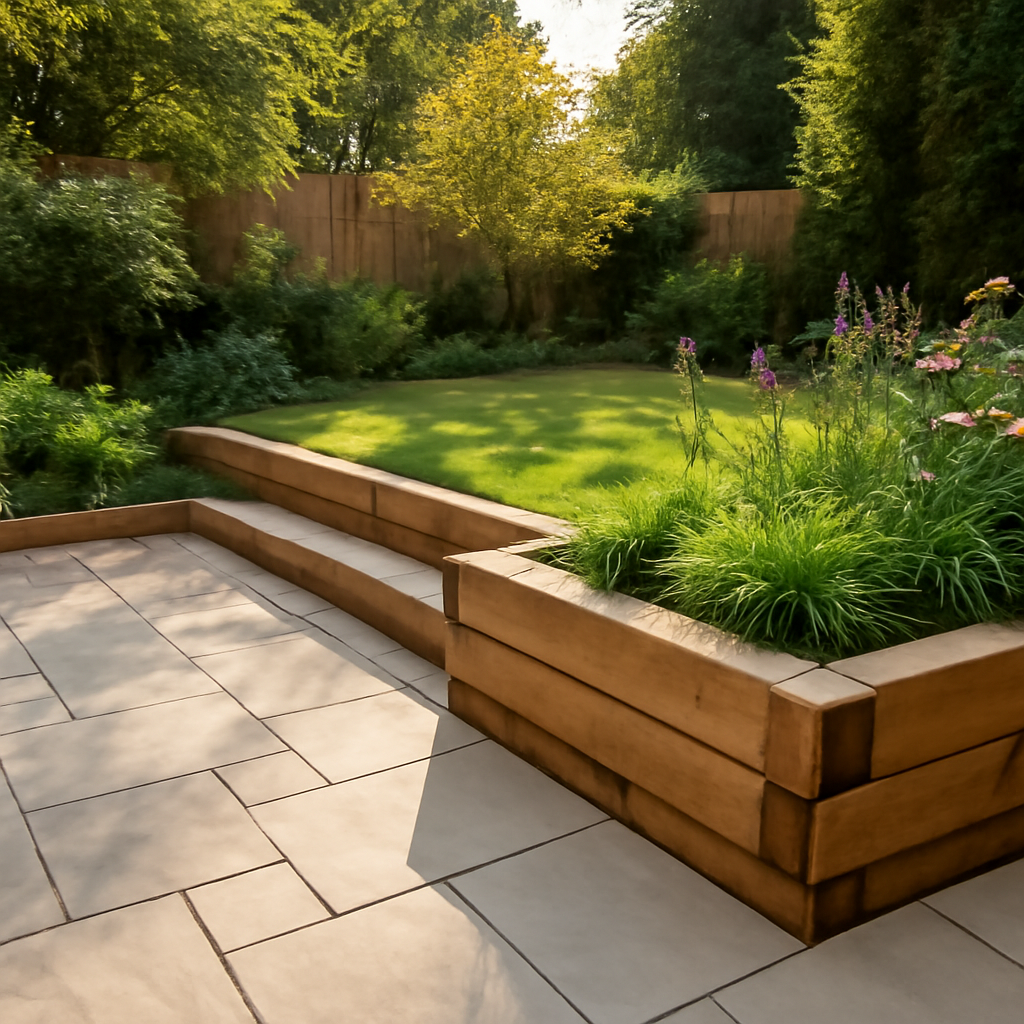
Structurally, pine sleepers can be suitable for raised beds, borders, or light retaining walls, but they’re best avoided for heavy-duty tasks as they may warp or degrade more quickly under pressure. Oak sleepers excel in structural uses such as steps, substantial retaining walls, or staircases due to their strength. Hardwood sleepers are often chosen for high-stress applications and where a premium finish is required, combining durability with style.
Maintenance is another consideration. Pine sleepers typically require more ongoing care—like treating for pests and moisture protection—compared to oak or dense hardwoods, which weather naturally but will still benefit from occasional sealing depending on exposure. If you prefer a lower-maintenance garden element, oak or hardwood sleepers usually offer a better long-term solution.
In summary, choosing between oak, pine, and hardwood sleepers depends on your budget, the structural demands of your project, and the look you want to achieve. Pine can be ideal for budget-conscious projects with lighter demands, oak is a great all-rounder for durability and appearance, and hardwood sleepers offer premium durability and aesthetic impact for more demanding or upscale gardens.
At Worthington Landscape & Design, we understand that every garden and site conditions are different. Final pricing and material recommendations depend on access, ground levels, drainage, clearance, material specs, and more. We advise arranging a site visit to discuss your project in detail and get an accurate quote tailored to your needs.
If you’re in Loughborough or the East Midlands and considering sleepers for your next landscaping project, get in touch. For a site visit or a quick, no-obligation quote, WhatsApp Aaron on 07454 978031. We look forward to helping you bring your garden design to life.
WhatsApp Aaron on 07454 978031 to talk through a garden project.