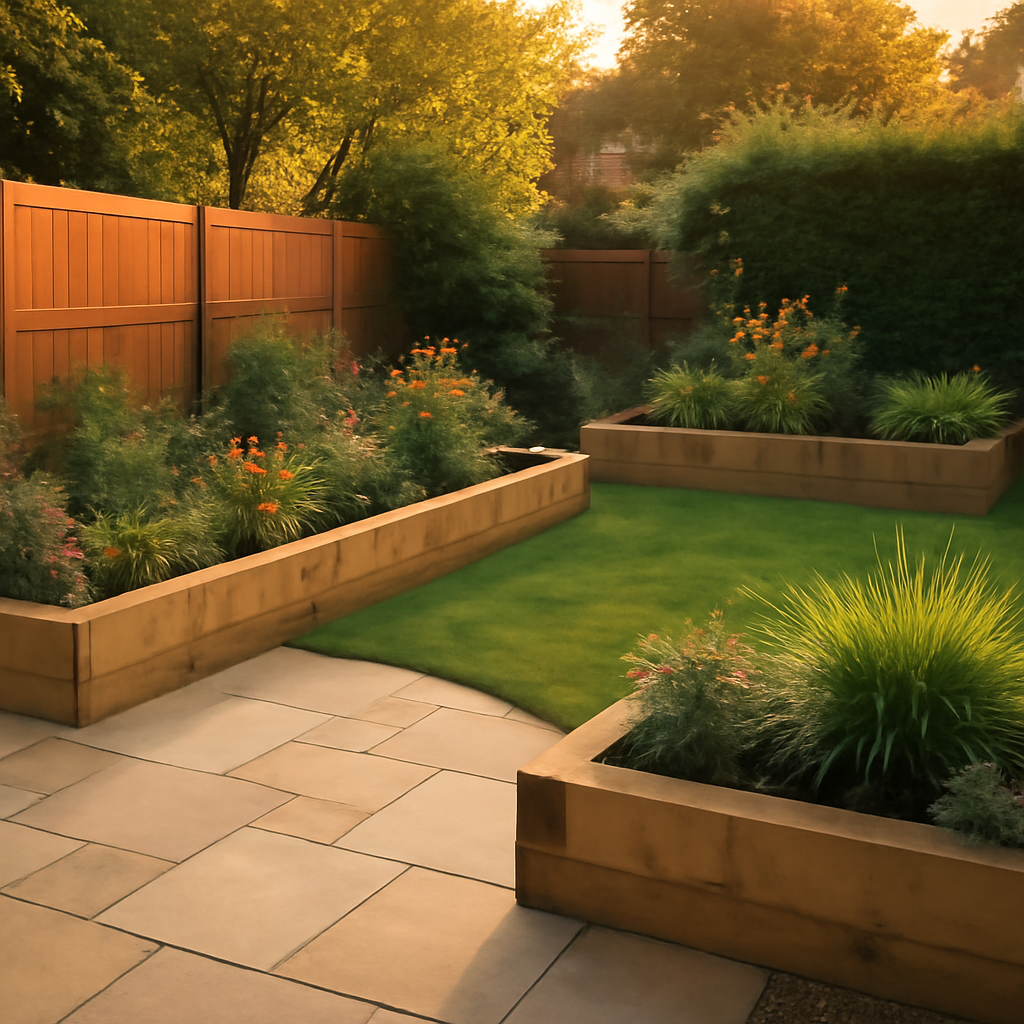
When planning landscaping projects that require sleepers, such as raised beds, retaining walls, or garden edging, choosing the right material is crucial. At Worthington Landscape & Design, serving Loughborough and the East Midlands, we often get asked about the differences between oak, pine, and hardwood sleepers. This guide covers the main factors to consider: appearance, lifespan, budget, and structural suitability.
Starting with appearance, oak sleepers tend to offer a rich, classic look. They age gracefully, developing a silvery-grey patina when left untreated, which many homeowners appreciate for a natural, mature garden feel. Pine sleepers, by contrast, are lighter in colour and have a more casual, rustic appearance. Hardwood sleepers cover a broad category but generally fall somewhere between pine and oak in colour and texture, often darker and denser than pine but less refined than oak.
In terms of lifespan, oak sleepers are the most durable owing to their dense, stable timber. When properly installed and maintained, oak can last for many decades, making it ideal for structural uses such as retaining walls or heavy-duty raised beds. Pine sleepers, especially untreated, have a shorter lifespan. They are prone to rot and insect damage if not pressure treated, which is common practice. Hardwood sleepers vary widely depending on the species but generally provide a solid middle ground in terms of longevity.
Budget-wise, pine sleepers are usually the most affordable option, making them attractive for large-scale projects or temporary installations. Hardwood sleepers generally fall in the mid-price range. Oak sleepers tend to be the most expensive due to the timber quality and longevity. To give you a rough guide, railway sleeper raised beds in our area typically range from £85 to £140 per linear metre. The final price depends on the sleeper grade, height, fixing method, and ground preparation involved. Note that local factors like access, site levels, drainage, and clearance can affect costs, so we recommend a site visit to provide a precise quote.
Structurally, if you need sleepers for heavy-duty landscaping — such as substantial retaining walls, steps, or high raised beds — oak is the best choice. It handles load and weather well. Pine sleepers work fine for lighter applications like small garden edging or decorative raised beds but may require replacement sooner if conditions are wet or exposed. Hardwoods can be a good compromise, especially if you need something more robust than pine but aren't ready to invest in oak.
Installation considerations also matter. Oak and hardwood sleepers generally weigh more and can be harder to cut and shape on-site. Pine sleepers are easier to work with for DIY enthusiasts but check for pressure treatment to prevent rot. Good drainage and ground preparation extend the life of any sleeper installation, so don't overlook these steps.
At Worthington Landscape & Design, we tailor our recommendations based on your garden's specific needs and your design preferences. Whether you want a natural, timeless look or a budget-friendly fix, we can help. Our services include 3D garden design from £150 to £450 per project, depending on garden size and revisions, to ensure your proposal fits your lifestyle and budget.
Finally, while we provide pricing guides here, please remember these are approximate figures. Factors such as site access, ground conditions, drainage requirements, materials specifications, and necessary clearance all influence final costs. For an accurate quote and expert advice on sleepers or any landscaping needs in Loughborough and East Midlands, a site visit is invaluable.
To discuss your project or arrange a site visit, WhatsApp Aaron on 07454 978031. We're here to help you make the best choice for your garden.
WhatsApp Aaron on 07454 978031 to talk through a garden project.