
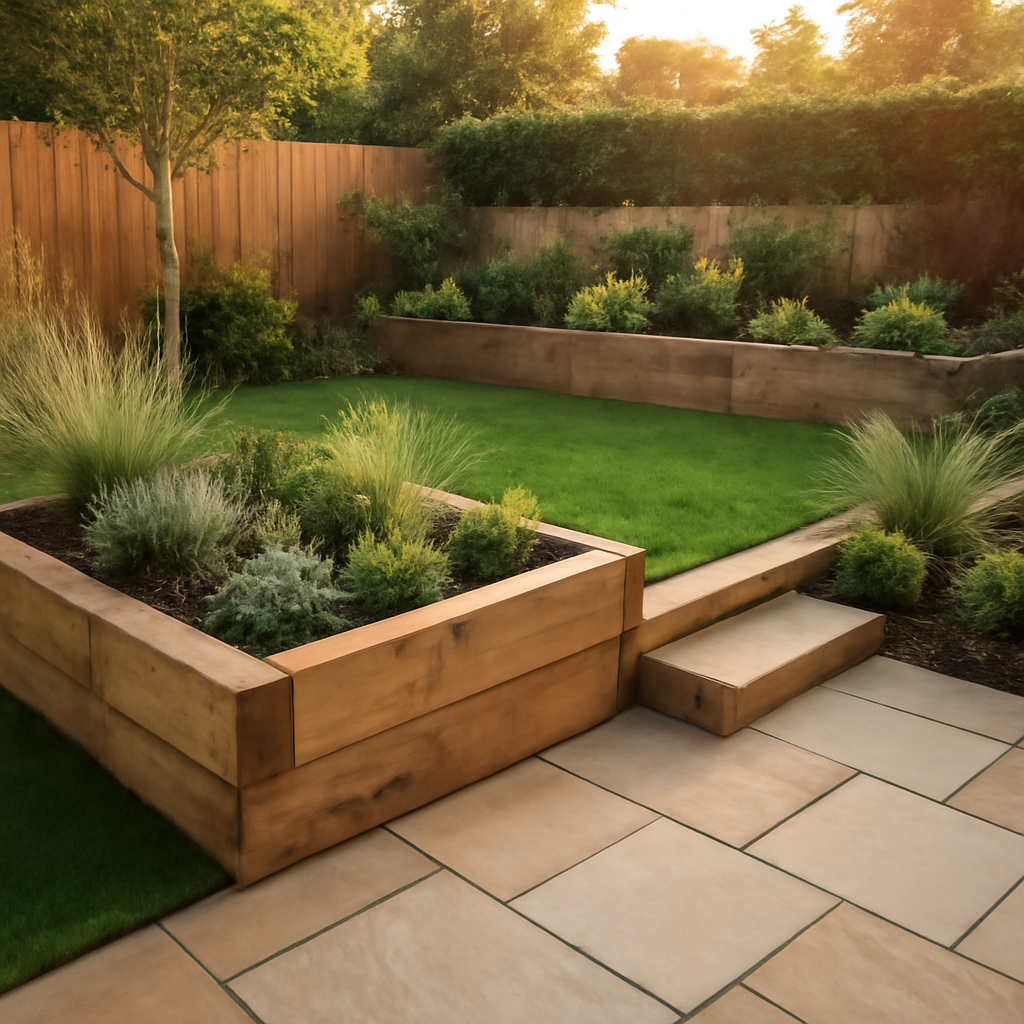
When planning a landscaping project involving railway sleepers in Loughborough or the wider East Midlands, choosing the right material is key. Oak sleepers, pine sleepers and hardwood sleepers each bring different advantages in terms of appearance, durability, cost and structural use. This guide compares these options to help you make an informed decision for your garden.
Oak sleepers are a classic choice for many garden features such as raised beds, borders, and retaining walls. They have a rich, warm colour and attractive grain that adds character. Oak is naturally very durable, often lasting 15-25 years outdoors with minimal treatment. This makes them ideal where longevity and appearance matter. The main downside is the price, as oak sleepers tend to cost more than alternatives due to their quality and durability.
In contrast, pine sleepers are more budget-friendly and widely available. The pale colour of pine can suit light, modern garden schemes but might darken or weather unevenly over time unless treated. Pine sleepers typically last 7-12 years outdoors if pressure treated, so may require replacing sooner in exposed sites. Their lighter weight makes them easier to handle, useful for DIY landscaping projects on a budget.
Hardwood sleepers are generally sourced from tropical hardwoods such as oak alternatives, offering a middle ground between oak and pine in terms of price and durability. These sleepers often feature a rich reddish-brown hue and can last 10-20 years when properly maintained. They work well structurally for patios, retaining features, or garden steps but verify the timber certification and treatment to ensure sustainable sourcing.
From a structural perspective, oak sleepers offer great strength and are suitable for retaining walls and raised beds subject to considerable load. Pine sleepers are best for lightweight applications where budget is a priority but should not be relied on for heavy structural use. Hardwood sleepers often provide good structural integrity and work well in moderate loading conditions.
Budget-wise, pine sleepers usually come in at the lower end of the scale, with prices for railway sleeper raised beds typically ranging from £85 to £140 per linear metre depending on grade, height, fixings and ground preparation. Oak and hardwood sleepers tend to be at the higher end of this range. Keep in mind that installation costs, ground clearance, levels, drainage and site access will also influence your final quote.
For a complete landscaping project involving sleepers, consider pairing your choice with complementary elements such as Indian sandstone patios (£90-£120 per sqm) or porcelain patios (£110-£150 per sqm) for a cohesive look in your Loughborough garden. Block paving driveways and turfing add further options to create a functional and stylish outdoor space. For planning and design guidance, 3D garden design services range from £150 to £450 depending on garden size and revisions.
If you’re still unsure which sleeper type will work best on your site, or want a precise quote tailored to your garden’s conditions, a site visit is invaluable. Factors like ground levels, soil drainage, site access and material specification all affect the best solution and cost.
Worthington Landscape & Design specialises in landscaping across Loughborough and the East Midlands. We offer practical advice, 3D garden designs, and skilled installation to bring your project to life. For a site visit or a quick quote on sleepers or any other landscaping needs, WhatsApp Aaron on 07454 978031.
Remember, investing time in selecting the right sleeper material upfront helps ensure your garden looks great, lasts longer and fits your budget. Whether oak, pine or hardwood sleepers, the right choice depends on your priorities for appearance, lifespan and structural use.
WhatsApp Aaron on 07454 978031 to talk through a garden project.