
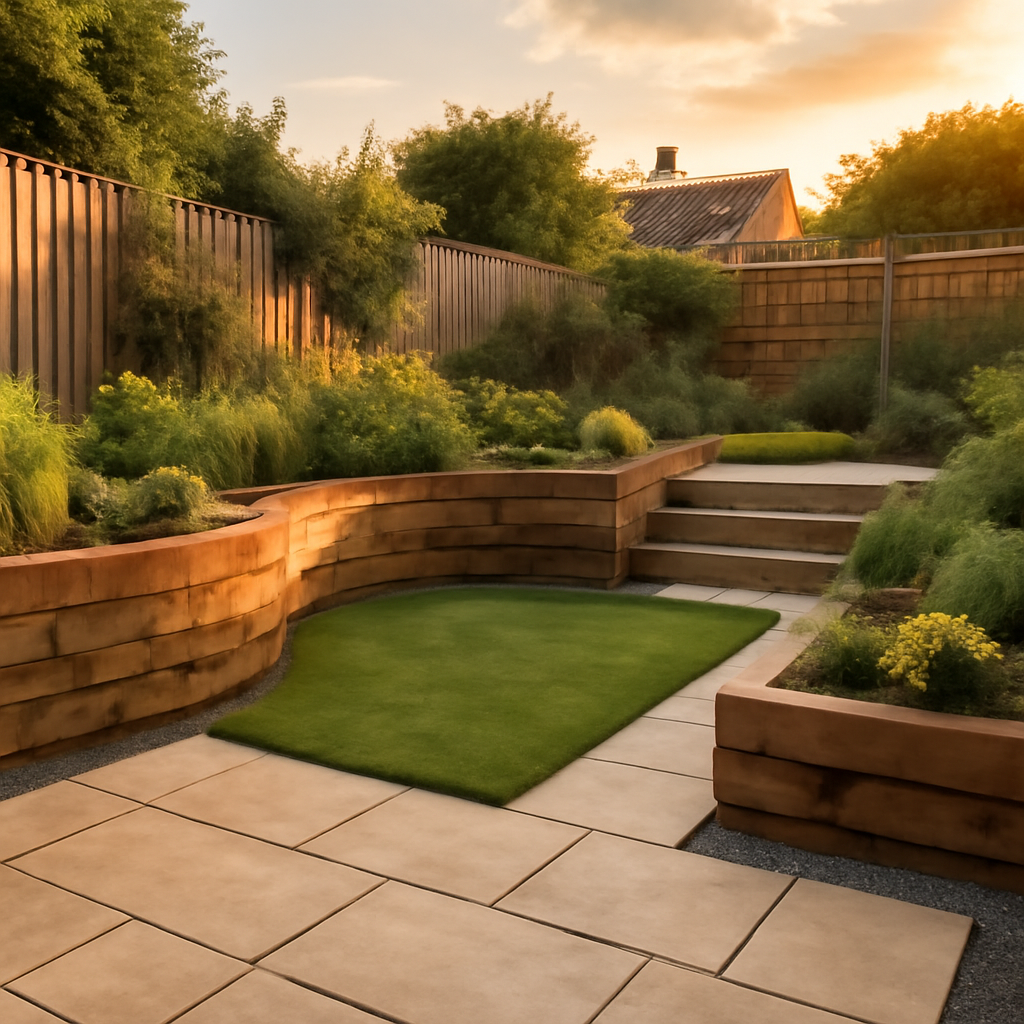
When it comes to landscaping projects in Loughborough and the wider East Midlands area, railway sleepers are a popular choice for raised beds, retaining walls, and garden edging. If you’re considering adding sleepers to your garden design, you’ll often face the question: oak sleepers, pine sleepers or hardwood sleepers—which is right? Each type has its own strengths and considerations depending on your budget, appearance preferences, and expected lifespan.
Starting with appearance, oak sleepers tend to offer a rich, natural look with prominent grain patterns and warm colouring. They can add an element of classic elegance to your garden but typically come at a higher price point. Pine sleepers generally have a lighter, more uniform look which some find fits well with modern or naturalistic garden designs. Hardwood sleepers (such as from tropical species) vary in appearance but usually offer a darker, dense finish that can complement hard landscaping features like patios or block paving.
Lifespan is an important factor. Oak sleepers are known for their durability and natural resistance to rot, especially when left untreated. They often last longer outdoors compared to pine, which typically requires treatment to withstand weathering and insects. Untreated pine sleepers may only last a few years before needing replacement, while hardwood sleepers usually offer good durability but can vary depending on the species and treatment used.
Budget-wise, pine sleepers are generally the most affordable option, making them suitable for projects on a tighter budget or where replacement over time is anticipated. Oak sleepers tend to be more expensive due to their quality and longevity, while hardwood sleepers fall somewhere in between, depending on the specific wood species sourced.
From a structural standpoint, oak sleepers are strong and capable of supporting large raised beds or retaining walls, making them ideal for significant landscaping features. Hardwood sleepers also have good strength properties but can vary, so it’s worth checking the exact type before specifying them for load-bearing uses. Pine sleepers are usually softer and better suited to lighter weight structures or decorative borders rather than heavy-duty retaining walls.
When considering pricing for a landscaping project incorporating sleepers, typical guide prices for railway sleeper raised beds range from GBP 85 to GBP 140 per linear metre. This depends on factors like sleeper grade, height, fixing method, and ground preparation. It’s important to note that the final quote will be influenced by site specifics, such as access, levels, drainage, clearance and material specification—so a site visit is recommended to get an accurate price.
Worthington Landscape & Design offers local, practical advice and experienced installation services for landscaping projects across Loughborough and the East Midlands. We incorporate 3D garden design to help you visualise how your chosen sleepers will fit within the overall garden scheme.
If you want a straightforward, reliable roofing option or raised bed using sleepers, we suggest arranging a site visit to discuss the best timber choice for your project and to receive a personalised quote. Every garden and site is unique, so visiting on location gives us the best understanding of what materials and approach will work for you.
For a site visit or quick quote on oak, pine or hardwood sleepers—or any landscaping work in the East Midlands—WhatsApp Aaron on 07454 978031. We’re happy to help you choose the right materials for your project with clear and honest advice based on experience.
WhatsApp Aaron on 07454 978031 to talk through a garden project.