When planning landscaping projects in Loughborough and the East Midlands, selecting the right type of sleeper can greatly influence the look, durability, and overall cost. As a sole-trader specialising in landscaping and 3D garden design, I often get asked about the differences between oak sleepers, pine sleepers, and hardwood sleepers. Here’s a clear, practical comparison to help you decide which is right for your garden.
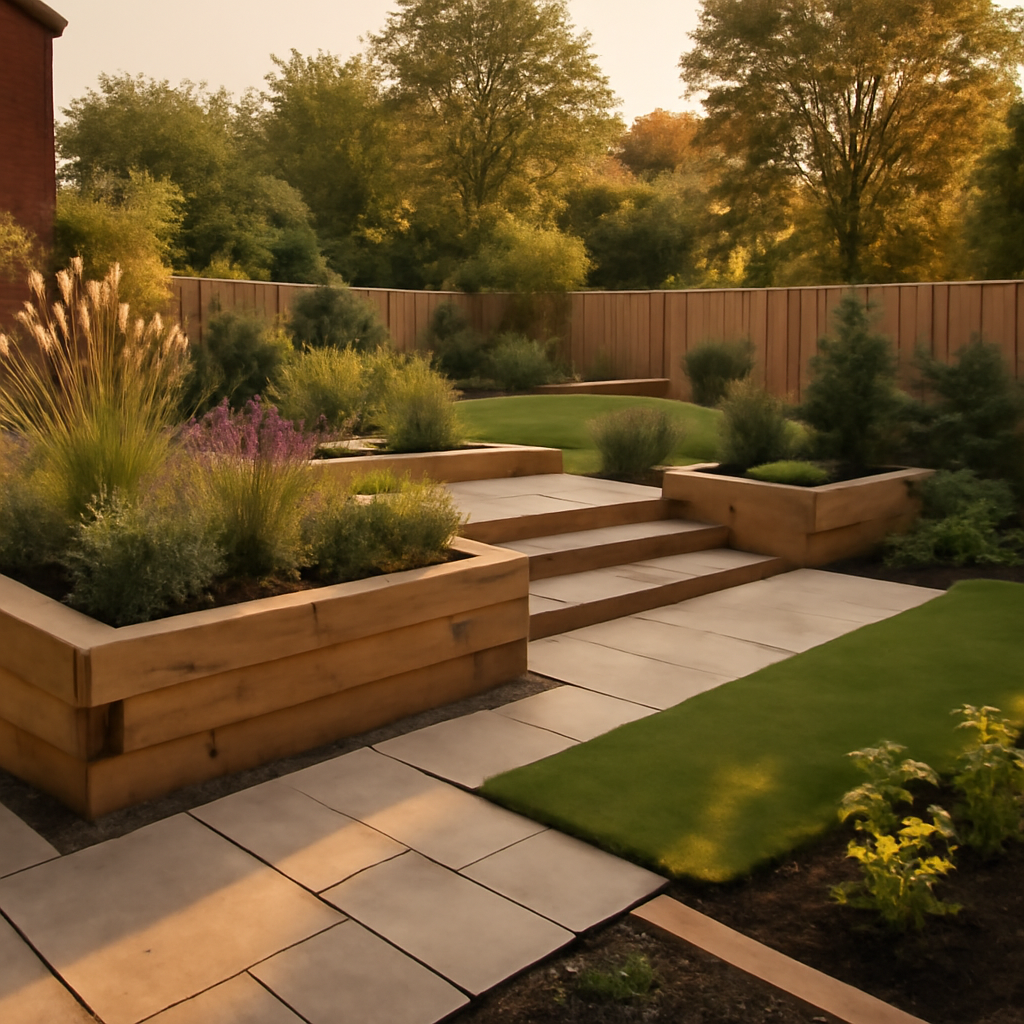
Oak sleepers offer a premium appearance with rich texture and deep colors that age beautifully over time. Known for their strength and natural durability, oak sleepers can last 25 years or more outdoors, resisting rot and insect damage. This makes them ideal for structural uses such as retaining walls, raised beds, and seating areas where longevity is a priority. Keep in mind, oak sleepers are typically more expensive than pine or generic hardwood options.
Pine sleepers are a popular budget-friendly choice. They usually have a lighter colour and a simpler grain pattern compared to oak. Untreated pine will age faster and is more prone to rot and insect attack, but pressure-treated options are available to extend lifespan up to 10-15 years. Pine sleepers work well for decorative uses like edging, lightweight raised beds, or garden steps. If your project has a tight budget but you still want the look of sleepers, pine can be a suitable option.
Hardwood sleepers, often made from a variety of tropical or locally sourced hardwoods, fall somewhere between oak and pine in price and durability. They vary in colour, density, and grain, but generally offer strong structural benefits with a lifespan of 15-20 years or more when properly maintained. They can be used in retaining structures, steps, or patios with sleeper edging, balancing durability and cost effectively.
When choosing sleepers, consider the specific structural requirements of your project. Oak and hardwood sleepers are better suited for heavy-duty landscaping like terrace walls or steps due to their strength. Pine sleepers are more appropriate for light structural builds but may need replacement sooner, especially in wet or frost-prone locations common in East Midlands gardens.
Budget is always an important factor. As a guide, railway sleeper raised beds typically cost between GBP 85 to GBP 140 per linear metre installed. The final cost depends on sleeper grade, height, fixing method, and ground preparation. It’s important to remember that costs can increase depending on site access, levels, drainage needs, and clearance requirements, so getting a site visit is invaluable.
Besides sleepers, consider how they fit with other materials in your garden. For example, Indian sandstone patios cost around GBP 90 to GBP 120 per square metre, while porcelain patios range from GBP 110 to GBP 150 per square metre. Combining sleepers with high-quality patios or block paving can raise the overall appeal and value of your landscaping.
In Loughborough and the wider East Midlands, weather conditions and soil types influence durability and maintenance schedules for any wooden garden materials. Regular sealing or treating can extend the lifespan of sleepers and keep your garden looking fresh year-round.
Ultimately, the best type of sleeper depends on your budget, preferred style, and the project’s structural needs. For a straightforward, durable option, oak is hard to beat but comes at a higher cost. Pine offers a lower initial price and decent looks for decorative projects, while hardwood gives a good balance of both.
For tailored advice on which sleepers suit your garden and an accurate quote considering all the local factors, get in touch for a site visit or quick quote. You can WhatsApp me, Aaron, directly on 07454 978031.
WhatsApp Aaron on 07454 978031 to talk through a garden project.