
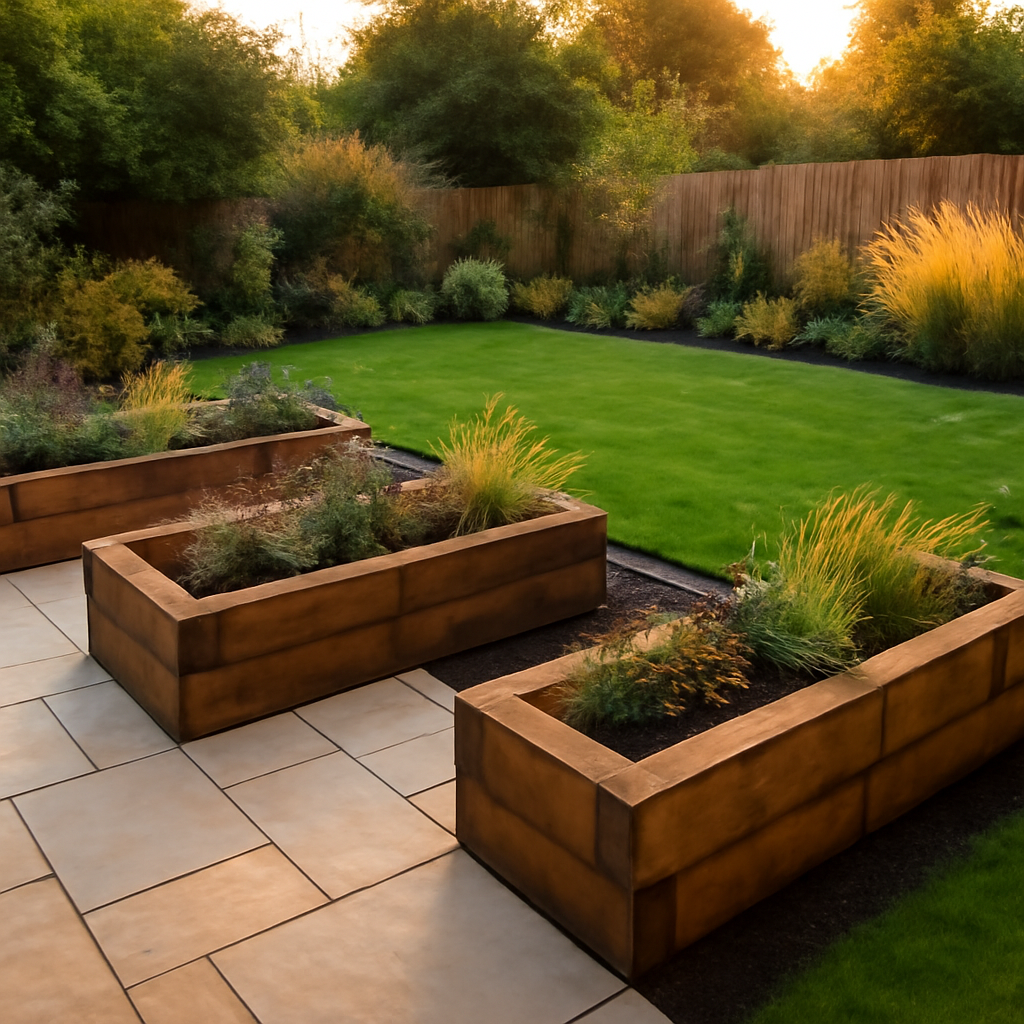
When planning a landscaping project in Loughborough or the wider East Midlands, choosing the right materials is key. Railway sleepers are popular for raised beds, edging and structural features like retaining walls. But with options like oak sleepers, pine sleepers and hardwood sleepers available, which one is the right fit for your garden? Here’s a practical guide to help you make an informed choice.
In terms of appearance, oak sleepers have a rich, warm colour and natural grain that ages gracefully, often developing a silver-grey patina over time. They’re highly regarded for their premium look and often chosen when aesthetics matter. Pine sleepers tend to be lighter in colour with a more uniform texture, offering a rustic, natural appearance. Hardwood sleepers span a range of tones and grains depending on the wood species used, generally providing a balance between the look of oak and pine.
Lifespan is an important consideration. Oak is known for its natural durability and resistance to rot, so oak sleepers can last decades if installed correctly. Hardwood sleepers are also quite durable and often treated to resist moisture and decay, making them a solid medium to long-term option. Pine sleepers typically have a shorter lifespan unless pressure-treated, as they are more prone to rotting and insect damage. For structural uses where longevity is key, oak or good quality hardwood sleepers are usually advised.
Budget-wise, pine sleepers tend to be the most affordable option, making them popular for lower-cost projects or temporary structures. Hardwood sleepers come in a mid-range price bracket, depending on the species and treatment used, while oak sleepers are the most premium and can command a higher price. As a guide, railway sleeper raised beds generally run from GBP 85 to GBP 140 per linear metre, with the final price depending on sleeper grade, height, fixing method and ground preparation.
Structurally, oak sleepers provide excellent load-bearing capacity and stability, making them ideal for retaining walls and heavy landscaping features. Hardwood sleepers also perform well for these uses, but you should confirm the specific wood species and treatment with your supplier. Pine sleepers can be used structurally in less demanding scenarios but may require additional treatment and maintenance to prevent early failure.
When compared to paving options, sleepers complement features like Indian sandstone patios (GBP 90 to GBP 120 per sqm) or porcelain patios (GBP 110 to GBP 150 per sqm). A well-designed garden can pair a variety of materials based on durability, budget and style preferences. If your project includes patios, drives or multiple materials, a 3D garden design (GBP 150 to GBP 450 per project) can be a worthwhile investment to visualise the complete setup.
It’s important to bear in mind that final costs and suitability depend on several factors including site access, ground levels, drainage, clearance and exact material specifications. Every garden has unique challenges, and a site visit is invaluable to provide an accurate quote and tailored advice. This also helps ensure sleepers and other materials are installed for maximum longevity and effectiveness.
If you’re based in Loughborough or anywhere in the East Midlands and are considering oak, pine or hardwood sleepers for your garden, please get in touch. I’m Aaron from Worthington Landscape & Design, and I specialise in practical, quality landscaping and 3D garden design. For a site visit or a quick quote, WhatsApp me on 07454 978031—let’s find the right solution for your outdoor space.
WhatsApp Aaron on 07454 978031 to talk through a garden project.