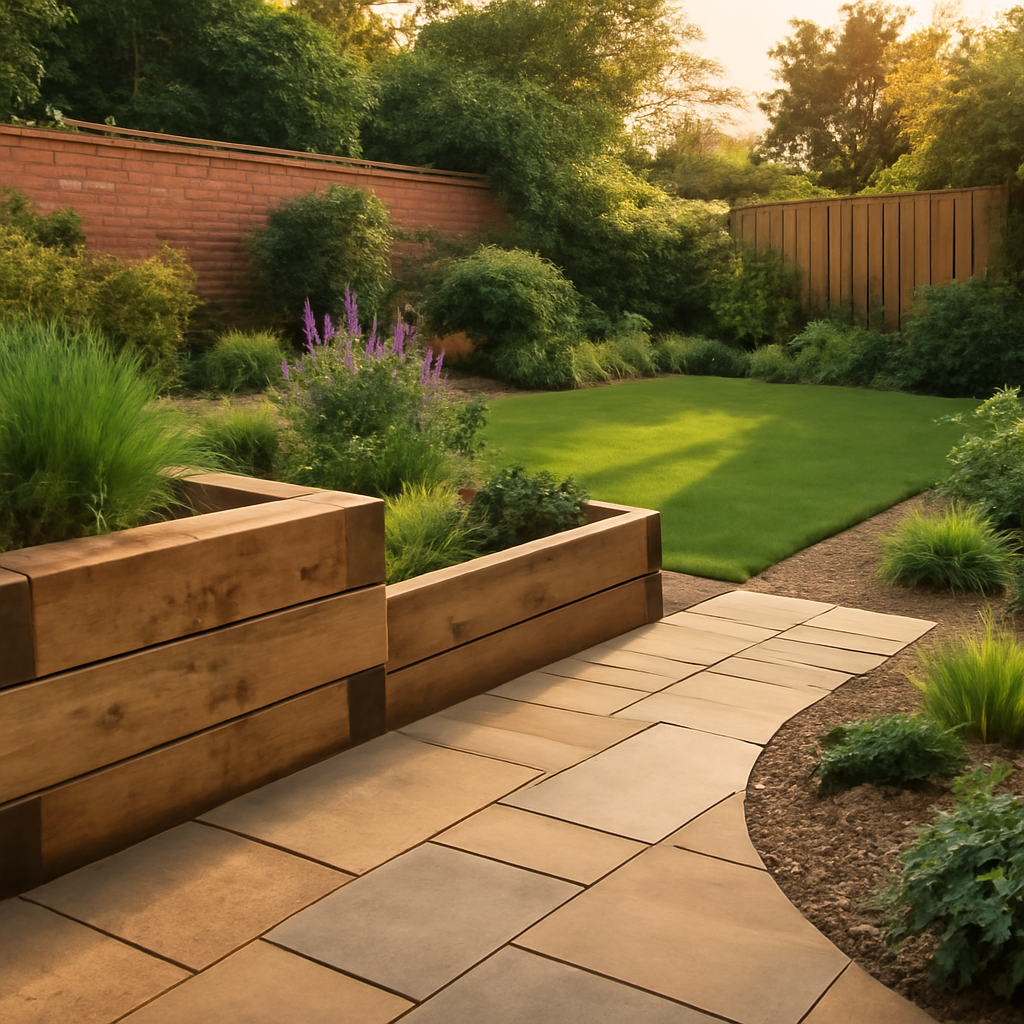
When planning a landscaping project in the Loughborough or East Midlands area, one key decision is what type of railway sleepers to use for raised beds, borders or other hard landscaping features. Oak, pine and hardwood sleepers all offer different benefits depending on your budget, intended use and the look you want to achieve. This guide looks at these options in practical terms to help you choose the right sleeper for your garden.
Starting with appearance, oak sleepers are prized for their natural, attractive grain and warm tones. They age well, often developing a silver-grey patina if left untreated. Pine sleepers have a lighter, softer look but often come treated to resist rot and insects, which can affect the finish over time. Hardwood sleepers, which include types like oak, ash or chestnut but more often refer to tropical hardwoods, tend to be dense and smooth, with a deeper colour range from reddish to dark brown.
In terms of lifespan, oak sleepers are very durable and can last 15 to 20 years or more if properly maintained. They are naturally resistant to decay but benefit from occasional sealing or oiling. Pine sleepers tend to have a shorter lifespan, typically 5 to 10 years, depending on the grade and treatment applied. Hardwood sleepers usually offer a robust and long-lasting option, often exceeding the durability of pine and competing closely with oak, but prices vary widely depending on the species and source.
Budget is another important factor. Pine sleepers are generally the most affordable option, making them popular for larger projects or when cost control is essential. Oak sleepers tend to be more expensive due to their quality and longevity. Hardwood sleepers can be similarly priced or occasionally higher depending on the wood species, certification and availability. For railway sleeper raised beds, prices typically range from £85 to £140 per linear metre, with exact costs affected by factors like sleeper grade, height and installation methods.
From a structural perspective, all three sleeper types can be used effectively for raised beds and other landscape features. Oak's density and strength make it a very sturdy option, ideal where load-bearing or heavy-duty use is expected. Pine, being softer, is easier to work with but may not withstand heavy pressure over a long period. Hardwood sleepers generally provide strong structural integrity, but you should check the specific timber type for suitability depending on your project.
When choosing sleepers in Loughborough and the wider East Midlands, consider your garden conditions carefully. Hard landscaping projects may also involve paving or driveways, and integrating sleepers with patios, turf or block paving requires planning for levels, drainage and clearance. For example, Indian sandstone patios typically cost between £90 and £120 per sqm installed, and porcelain patios cost more due to material and prep requirements. Railway sleeper raised beds are priced per metre but final quotes depend on site-specific factors.
At Worthington Landscape & Design, I recommend a site visit to assess your garden fully before making your choice. Understanding the levels, soil type, drainage and access is key to providing a reliable quote and advice on the best sleeper material for your intended use. Whether you want a simple raised bed or a more complex hard landscaping feature, local experience helps avoid surprises and ensure a successful project.
If you’re considering oak, pine or hardwood sleepers for your landscaping in Loughborough or the East Midlands, I'm here to help with practical, experienced guidance and bespoke 3D garden design if required. Please get in touch for a site visit or to discuss your project — you can WhatsApp me, Aaron, anytime on 07454 978031 for a quick quote or advice.
WhatsApp Aaron on 07454 978031 to talk through a garden project.