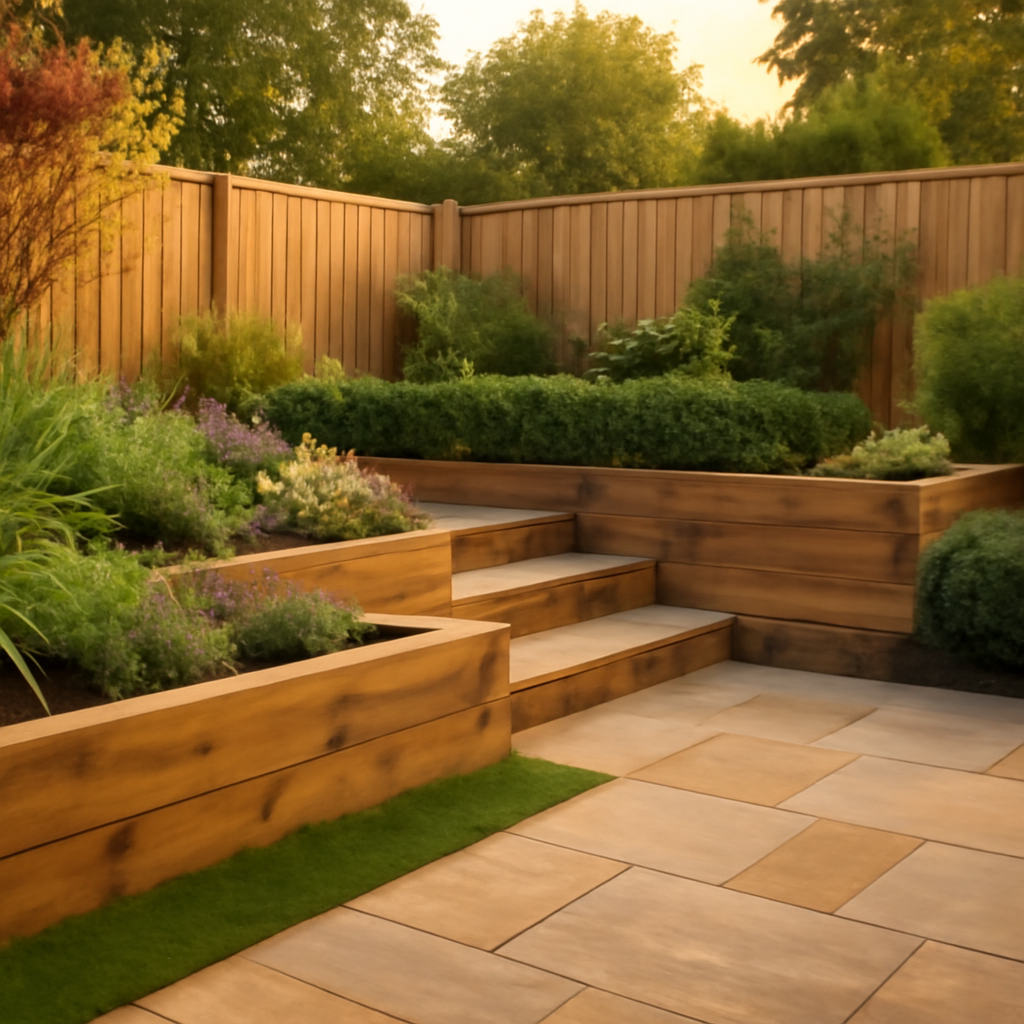
When planning a landscaping project in Loughborough or the East Midlands, the choice of materials can make a big difference to the final look, durability and budget. Railway sleepers are a popular choice for raised beds, steps, retaining walls and other landscaping features. But deciding between oak sleepers, pine sleepers and hardwood sleepers requires understanding their differences and what suits your garden best.
Oak sleepers are a premium choice known for their rich colour and strong grain. They typically offer excellent durability, often lasting 20 years or more outdoors, making them ideal for structural uses like retaining walls and raised beds. Oak is naturally resistant to rot and decay, but it is usually the most expensive option. For landscaping projects where longevity and an upscale appearance matter, oak sleepers are worth considering, though prices can vary depending on supplier and grade.
Pine sleepers, on the other hand, are much more budget friendly and widely available. They tend to have a pale, light colour that can brighten a garden space but will fade over time due to weathering. Pine is a softer wood that needs proper treatment, usually pressure-treated to resist rot and insect attack. While not as long-lasting as oak, pine sleepers can last 10-15 years outdoors when installed correctly. They're a practical choice for lower cost raised beds or light landscaping features where budget is a priority.
Hardwood sleepers cover a range of less common species and are generally denser and tougher than pine but not as expensive or long-lasting as oak. Species like jarrah, mahogany or iroko have good resistance to rot and provide a warm colour palette. Their lifespan can range between 15 and 25 years depending on local conditions and maintenance. Hardwood sleepers offer a balance between cost and durability and may be suitable for clients wanting quality but not the premium oak price.
From a structural perspective, oak’s strength makes it best for load-bearing features like retaining walls or steps that must support weight over time. Hardwood sleepers can also be used for these purposes but pine is better suited to lighter landscaping like planter boxes or decorative edging where structural demands are minimal.
Budget is often a deciding factor. Oak sleepers typically cost more and involve a higher installation price, partly because of their weight and handling requirements. Pine sleepers can reduce initial costs but may mean replacement sooner down the line. Hardwood sleepers fall in the middle. As a practical guide, railway sleeper raised beds range from £85 to £140 per linear metre installed, depending on sleeper type, grade, and ground preparation.
It’s important to note that final pricing for any sleeper installation depends on several site-specific factors such as access, ground levels, drainage, clearance and fixing method. For a more accurate cost tailored to your garden, a site visit is highly recommended.
If you’re considering patios in conjunction with sleepers, typical costs are £90 to £120 per sqm for Indian sandstone and £110 to £150 per sqm for porcelain patios. Block paving driveways generally cost £80 to £115 per sqm. Combining these materials can create practical, attractive outdoor spaces that complement your chosen sleepers.
At Worthington Landscape & Design, we specialise in 3D garden design, patios and hard landscaping tailored for the Loughborough and wider East Midlands area. With our local knowledge and practical experience, we can help you select the right sleepers and materials for your project.
For a site visit or a quick quote, please WhatsApp Aaron on 07454 978031. Understanding your garden’s specific needs on site allows us to provide cost-effective advice and ensure the best material choice between oak, pine and hardwood sleepers.
WhatsApp Aaron on 07454 978031 to talk through a garden project.