When it comes to landscaping projects in Loughborough and the East Midlands, particularly those involving raised beds, retaining walls or edging, choosing the right type of railway sleeper can make a big difference. Oak sleepers, pine sleepers and hardwood sleepers each have distinct qualities that suit different garden needs and budgets.
Starting with appearance, oak sleepers are prized for their rich colour and attractive grain. Over time, oak weathers to a lovely silvery-grey, making it a popular choice for more natural or traditional garden designs. Pine sleepers tend to be lighter in colour and take paint or stain well if you want to add a splash of colour or protect the timber further. Hardwood sleepers, often sourced from species like oak or tropical hardwoods, offer a variety of hues and textures, typically darker and denser than softwoods.
In terms of lifespan, oak sleepers are well known for their durability and resistance to rot, often lasting 20 to 30 years or more in garden conditions. Hardwood sleepers, depending on the species, can match or exceed this lifespan, especially those naturally dense and oily like some tropical hardwoods. Pine sleepers are generally less durable and may last around 10 to 15 years outdoors unless pressure-treated; they are more susceptible to weathering and insect damage if untreated.
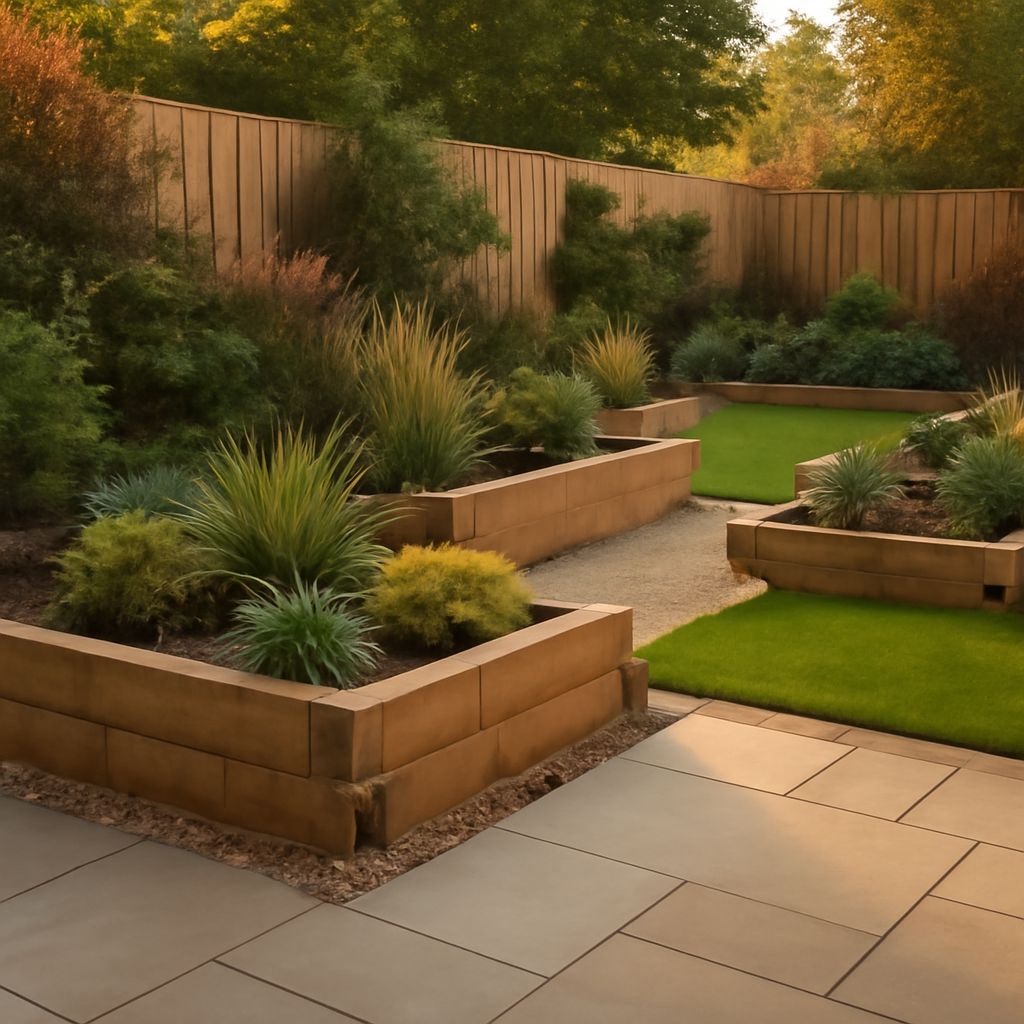
Budget is an important consideration. Pine sleepers tend to be the most affordable, making them a good choice for larger projects where cost is a factor. Hardwood sleepers, being denser and heavier, usually cost more than pine but less than premium oak options. Oak sleepers generally command the highest price due to their appearance and longevity. For example, typical prices for railway sleeper raised beds range from £85 to £140 per linear metre depending on sleeper grade and project specifics. Remember, final costs can vary with site access, levels, drainage, clearance and fixing methods.
Structurally, oak and hardwood sleepers offer excellent strength and stability, ideal for retaining walls, raised beds or steps that require load-bearing capabilities. Pine sleepers can be suitable for decorative edging or low-impact applications but may not be the best choice where structural integrity is critical over time.
Choosing the right sleeper material often depends on balancing your garden design goals, budget, and expected lifespan. If you prefer a natural, long-lasting look and don’t mind investing a little more upfront, oak or quality hardwood sleepers are worth considering. For more budget-sensitive projects or where sleepers are less exposed to heavy loads, pressure-treated pine may suffice.
At Worthington Landscape & Design, we understand that every garden and site is different. Factors like ground levels, drainage and clearance can influence material choice and cost. We offer 3D garden design services from £150 to £450 to help visualise how sleepers and other features will fit your space before work starts.
For a straightforward pricing guide, railway sleeper raised beds generally cost £85 to £140 per linear metre installed, depending on the sleeper type and site conditions. If you’re combining sleepers with patios or block paving in your Loughborough garden, typical patio prices are £90 to £120 per sqm for Indian sandstone and £110 to £150 per sqm for porcelain. Block paving driveways are usually £80 to £115 per sqm. Always consider these figures as guides—final quotes depend on factors like site access, levels, drainage and material specifics.
To make the best choice for your garden, we recommend a site visit where we can assess your plot and talk through the pros and cons of each sleeper type based on your needs. For a quick quote or to arrange a site visit, WhatsApp Aaron on 07454 978031. We’re here to bring practical, experienced advice to your landscaping project in Loughborough and the East Midlands.
WhatsApp Aaron on 07454 978031 to talk through a garden project.