
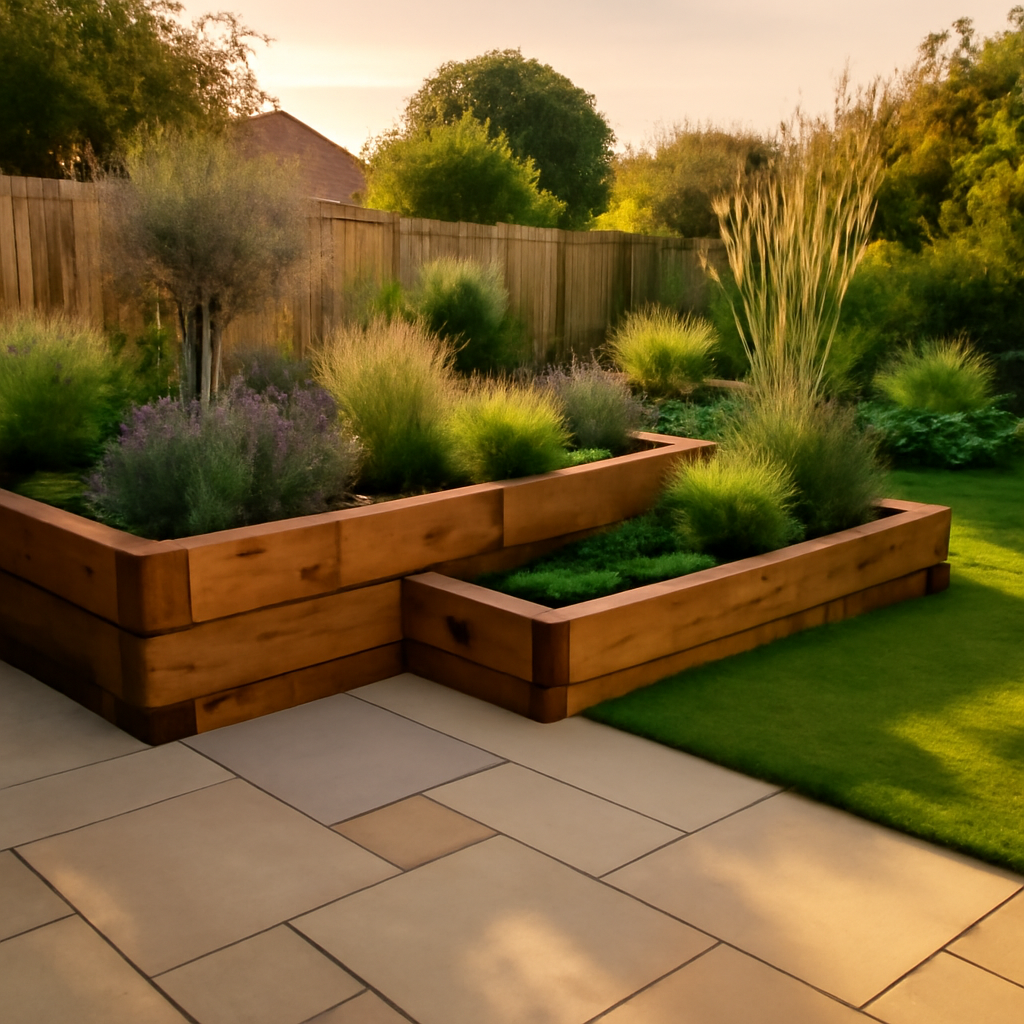
When planning a landscaping project in Loughborough or the wider East Midlands, choosing the right materials is key to both appearance and longevity. Railway sleepers are a popular choice for raised beds, retaining walls and edging. But with options ranging from oak, pine to other hardwoods, it can be tricky to decide which is right for your garden.
Oak sleepers are prized for their durability and rich colour. As a hardwood, oak naturally resists rot and insects better than many softwoods, making it a solid long-term investment. Their warm, classic appearance suits traditional or rustic garden styles. However, oak sleepers typically come at a higher price point, reflecting their quality and lifespan. For example, the installed guide rate for railway sleeper raised beds varies from GBP 85 to GBP 140 per linear metre depending on sleeper type, height and fixing method.
Pine sleepers, a popular softwood option, are generally more budget-friendly but need careful consideration regarding treatment and maintenance. Untreated pine can suffer from rot and insect damage more quickly in damp conditions common in the East Midlands. Treated pine sleepers offer better protection but still may have a shorter lifespan compared to hardwood options. Visually, pine is lighter in tone and can work well in contemporary or casual garden designs, but may weather more noticeably over time.
Other hardwood sleepers, such as chestnut or larch, fall somewhere between oak and pine in terms of appearance, cost, and longevity. These can offer good structural strength and moderate resistance to weathering. Depending on your chosen hardwood and supplier, pricing and availability can vary, so it’s worth discussing specifics during a site visit.
In terms of structural uses, oak and other hardwood sleepers are generally preferred for retaining walls, steps or other features bearing weight or under pressure due to their strength and durability. Pine is better suited for softer landscape features such as planter edges or raised beds in low-stress areas.
Budget is always a consideration. While pine sleepers provide a cost-effective solution initially, you might incur additional maintenance or replacement costs down the line. Oak sleepers involve a higher upfront investment but can save money over time with their extended lifespan and lower maintenance. Hardwood options offer a balanced approach, depending on the species.
At Worthington Landscape & Design, I recommend a site visit to assess your ground conditions, intended design, drainage and access before confirming the best sleeper choice. These factors influence not just material suitability but overall cost and installation complexity.
To give an idea of pricing, railway sleeper raised beds typically range from GBP 85 to GBP 140 per linear metre installed. Final quotes depend on sleeper grade, project height, fixing techniques, clearance and site preparation required. For patios, Indian sandstone usually costs GBP 90 to GBP 120 per sqm, porcelain GBP 110 to GBP 150 per sqm, and block paving around GBP 80 to GBP 115 per sqm installed under normal conditions.
If you want a practical, experienced opinion on the right sleepers for your Loughborough garden, or advice on integrating them with patios or other hard landscaping, please get in touch. I offer 3D garden design from GBP 150 to GBP 450 per project to help visualise your space clearly before work begins.
For a site visit or quick, no-obligation quote, WhatsApp me, Aaron, on 07454 978031. I’m happy to discuss your project’s specific requirements and help find the best material choices for your budget and garden style.
WhatsApp Aaron on 07454 978031 to talk through a garden project.