When planning a new garden patio or hard landscaping project in Loughborough or the wider East Midlands, choosing the right materials is key. Porcelain paving and Indian sandstone are two popular options that each have their strengths and considerations. This guide helps you compare them on factors like cost, grip, frost resistance, cleaning, and colour consistency so you can decide which suits your garden best.
Starting with cost, Indian sandstone patios typically range from £90 to £120 per square metre installed, assuming straightforward access and normal ground conditions. Porcelain paving generally costs more, between £110 and £150 per square metre, reflecting higher material prices and more careful installation requirements, including cutting and preparing falls for drainage. Final quotes depend heavily on site specifics such as access, levels, drainage, clearance, and material choices.
Grip and safety are important, especially on wet East Midlands days. Indian sandstone has a naturally textured surface that offers good slip resistance, though the exact grip varies by stone finish. Porcelain paving is manufactured with grip in mind, often featuring anti-slip ratings, but smooth porcelain can get slippery when wet. It’s worth checking the slip resistance rating of the porcelain slabs you like to ensure safety for your household.
In terms of frost resistance, the East Midlands climate can challenge some materials. Indian sandstone is durable but can suffer from frost damage over time, particularly if laid without proper drainage or on poor foundations. Porcelain paving is highly frost resistant due to its dense, non-porous nature, making it less likely to crack or spall in freezing weather if installed correctly.
Cleaning and maintenance are also factors. Indian sandstone requires regular sealing to help keep its appearance and prevent staining. It can also collect moss and algae in damp, shady areas, which might require occasional scrubbing or treatment. Porcelain paving is low-maintenance: it resists staining and moss growth and only needs basic washing to keep it looking fresh. However, grout lines may attract moss or dirt and might require periodic attention.
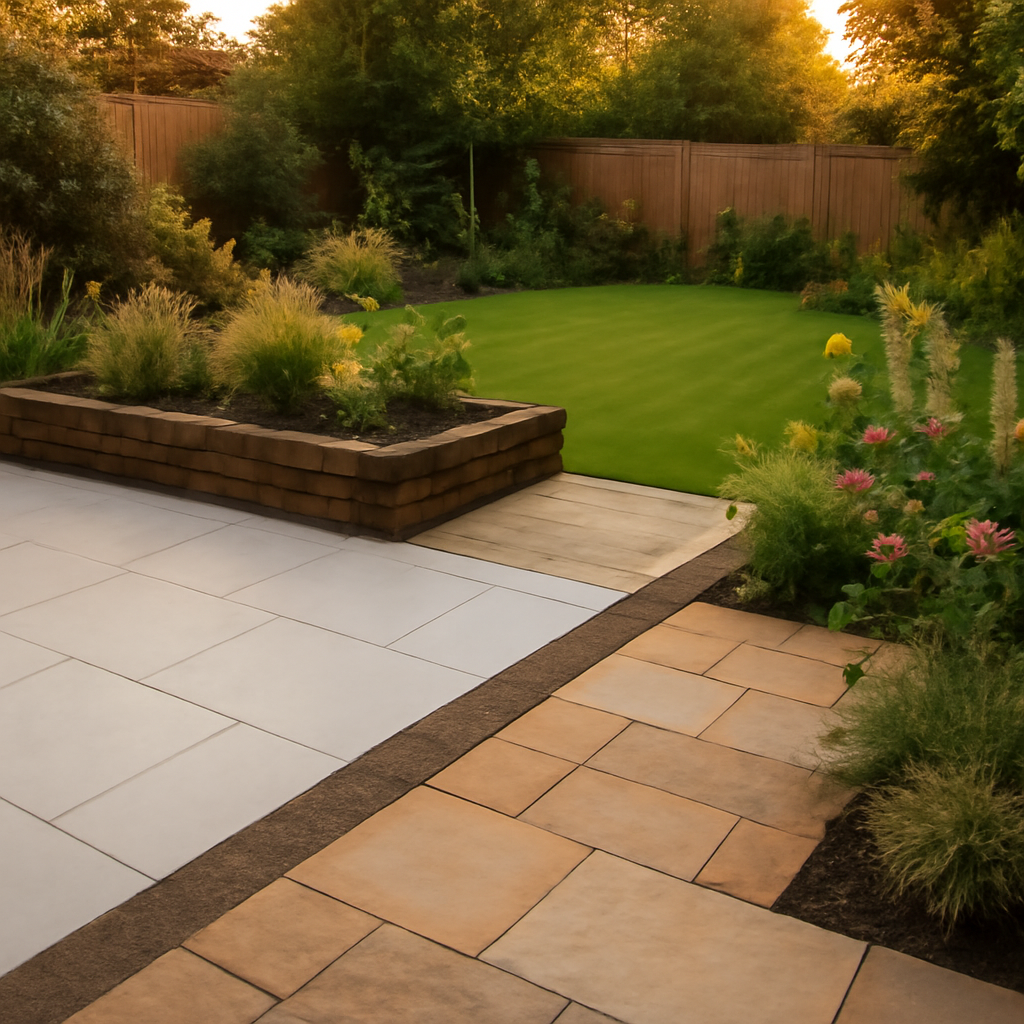
Colour consistency is another consideration. Indian sandstone offers natural variation and unique character across slabs, which many homeowners appreciate for a traditional look. Porcelain paving provides much more uniform colour and pattern options, which suits contemporary or minimalist designs where consistency is desired.
When does each material suit best? Indian sandstone works well in gardens aiming for a natural or rustic feel, where uniqueness and texture are priorities. Porcelain paving is a good choice for modern spaces requiring clean lines, low maintenance, and high durability. Both materials can be combined with features like railway sleeper raised beds or block paving driveways to create distinctive East Midlands gardens.
As a sole trader based in Loughborough specialising in landscaping and 3D garden design, I recommend a site visit for accurate advice and pricing. Each garden’s conditions affect what’s best, including ground preparation, drainage needs, and access. For a quick quote or to arrange a visit, WhatsApp Aaron on 07454 978031.
Remember, all pricing mentioned here is a guide only and final quotes depend on your specific site, the chosen materials, groundwork, levels and drainage requirements. Getting a tailored assessment helps avoid surprises and ensures your garden design and installation go smoothly.
WhatsApp Aaron on 07454 978031 to talk through a garden project.