When planning a garden makeover in Loughborough or the wider East Midlands, choosing the right paving material is crucial. Porcelain paving and Indian sandstone remain two popular options for patios and hard landscaping projects. Understanding their differences in cost, durability, maintenance, and suitability will help you make an informed decision that suits your garden and budget.
Cost is often a primary factor. Indian sandstone patios typically cost between £90 and £120 per square metre installed, assuming straightforward access and normal ground conditions. Porcelain paving tends to be pricier, with installed costs ranging from £110 to £150 per square metre. This reflects the higher material costs and the extra care needed for cutting, falls, and base preparation. Keep in mind that final prices for both materials depend on site specifics such as access, levels, drainage, and material grades.
When it comes to grip, Indian sandstone offers a naturally textured surface that provides good slip resistance, making it a smart choice for busy family gardens or patios that see regular use. Porcelain paving, however, can vary widely depending on the finish and manufacturer. Some porcelain options offer textured surfaces that rival natural stone in grip, while smoother varieties may be more slippery when wet. Choosing the right finish is important for safety, especially in our often damp East Midlands climate.
Frost resistance is another key consideration for this region’s gardens. Indian sandstone is generally frost-resistant but can sometimes suffer from spalling or cracking if water penetrates and freezes. Porcelain paving is highly frost-resistant due to its density and non-porous nature, making it very durable through repeated freeze-thaw cycles. For gardens prone to frost damage or poor drainage, porcelain might offer better long-term resilience.
Cleaning and maintenance also differ. Indian sandstone requires sealing to protect against stains and weathering and benefits from regular cleaning to keep it looking its best. Porcelain paving, being non-porous, is easier to clean and resists staining, algae, and moss growth. However, heavier weeds growing through joints can still be an issue with either material, so good joint preparation is essential.
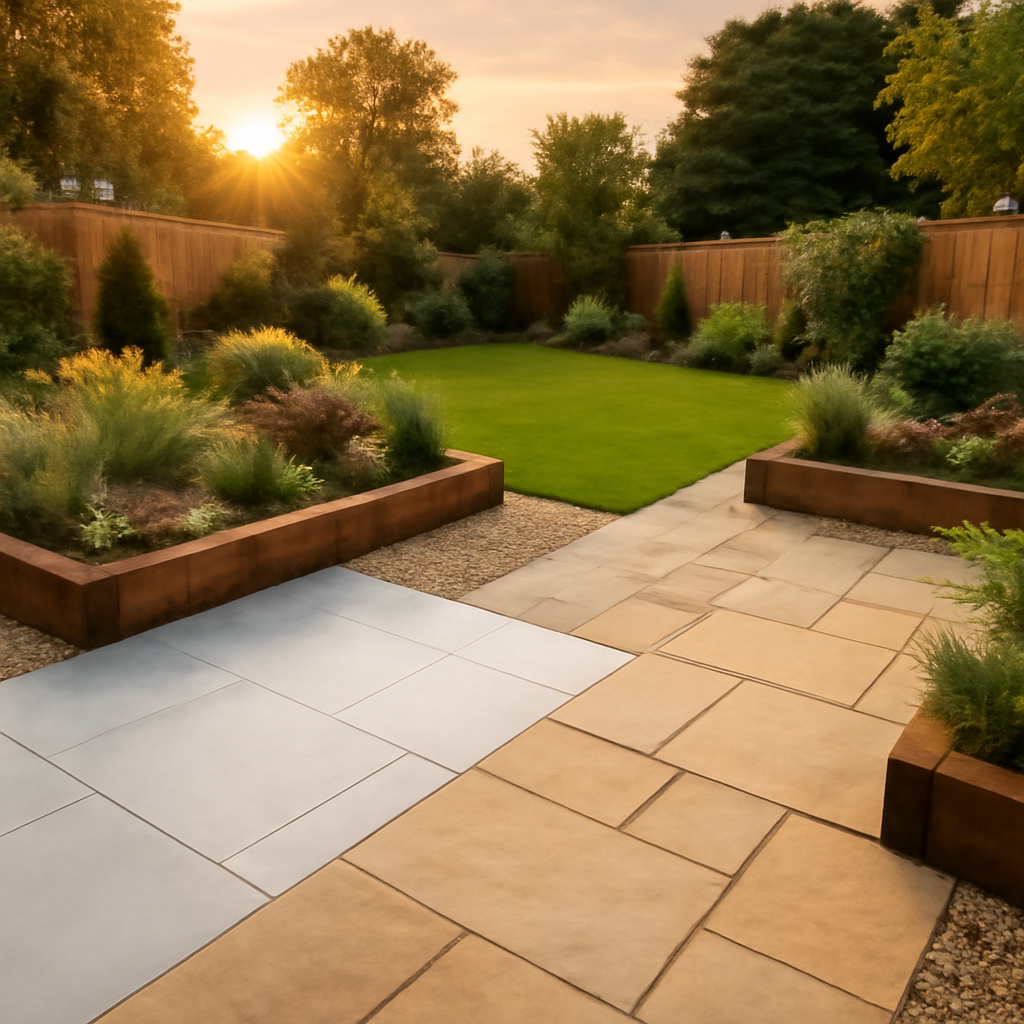
Colour consistency varies significantly between the two materials. Indian sandstone offers beautiful natural variation in colour and texture, which gives a garden a unique, organic feel. Porcelain paving delivers much more consistent colour and finish, which appeals to homeowners wanting a sleek, modern look with uniform slabs. The right choice depends on the garden style you want to achieve.
Deciding when each material suits best often comes down to garden style and practical needs. Indian sandstone is ideal for traditional or rustic East Midlands gardens where natural charm and warmth are priorities. Porcelain paving works well in contemporary designs or where you need a highly durable, low-maintenance surface that copes well with frost and moisture.
Ultimately, every garden is different, and factors like drainage, ground levels, and access will influence the best paving choice and price. A site visit and tailored advice are worth investing in to avoid surprises. Whether you lean towards porcelain paving or Indian sandstone, professional installation helps ensure a lasting, beautiful finish.
If you’re considering an East Midlands garden makeover and want a practical, experienced approach to landscaping and design, Worthington Landscape & Design can help. For a site visit or a quick quote, WhatsApp Aaron on 07454 978031. We cover Loughborough and surrounding areas, specialising in patios, railway sleeper raised beds, hard landscaping, and 3D garden design.
WhatsApp Aaron on 07454 978031 to talk through a garden project.