Choosing the right paving material is a key decision when landscaping your garden in Loughborough or the wider East Midlands. Two popular options are porcelain paving and Indian sandstone. Both materials offer distinct advantages, so understanding their differences will help you make a practical choice that suits your garden’s conditions and your budget.
Cost is often a significant factor. Indian sandstone patios typically cost between GBP 90 and GBP 120 per square metre for straightforward installations, depending on access and ground conditions. Porcelain patios usually run higher, from GBP 110 to GBP 150 per square metre, mainly due to material costs and the intricacies of cutting and preparing the base. It’s important to note that final quotes will vary based on site specifics like access, levels, drainage, and the type of paving slab chosen.
When it comes to grip, porcelain paving generally has a smoother finish, so it can be more slippery when wet unless you select textured or anti-slip options. Indian sandstone has a naturally rougher surface, offering better traction, which can be ideal for families or those concerned about slip hazards. This is something to consider carefully, especially for walkways and patios around pools or frequently damp areas.
Frost resistance is crucial in the East Midlands climate. Porcelain paving is highly frost-resistant and less porous than sandstone, reducing the risk of cracking or damage caused by freeze-thaw cycles. Indian sandstone is durable but more porous, so it requires sealing and regular maintenance to protect against frost damage and staining.
Cleaning and maintenance differ between the two materials. Porcelain paving is low maintenance, easy to clean with water and mild detergent, and resists moss and algae growth due to its density. Indian sandstone requires more regular attention, including sealing treatments to maintain colour and prevent weed growth in joints. Over time, sandstone can develop a natural patina, which some homeowners appreciate for its character.
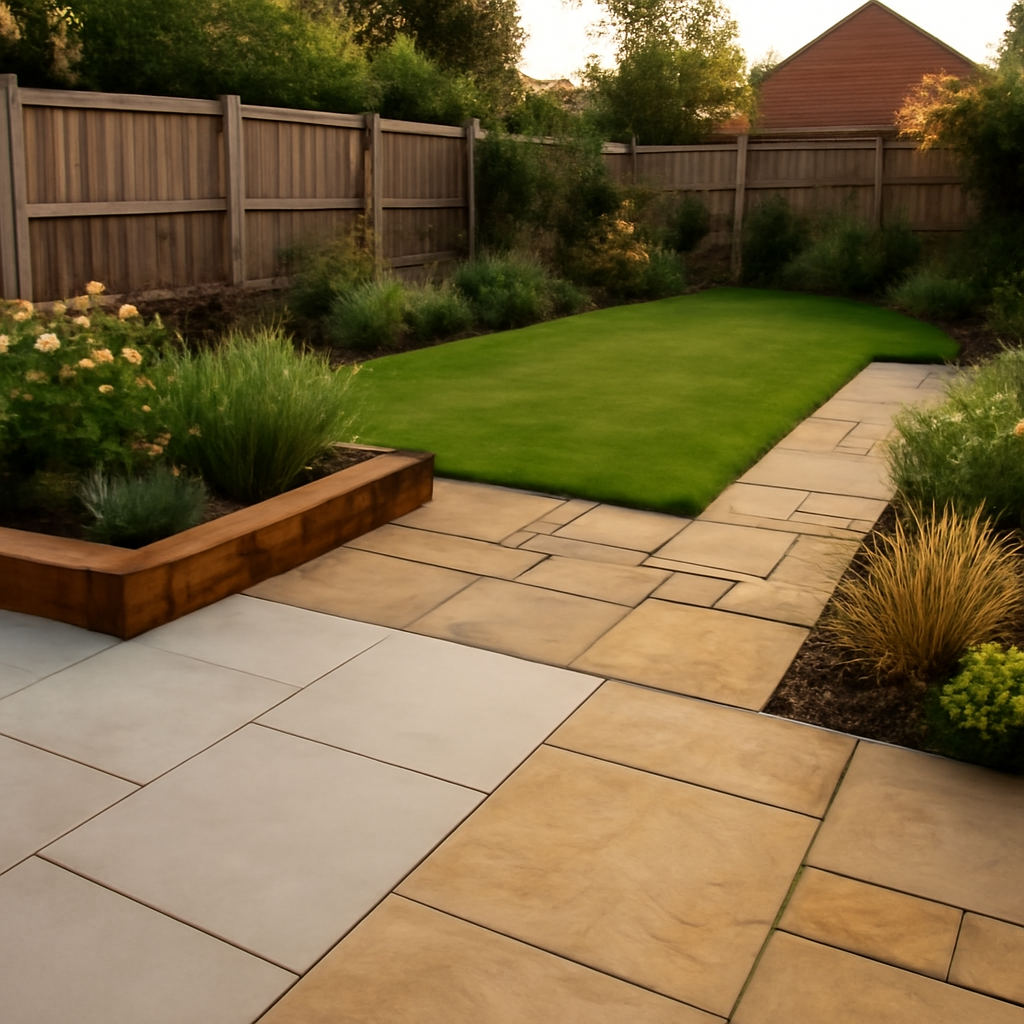
Colour consistency is another notable difference. Porcelain paving offers uniform colours and finishes because it is manufactured, making it a great choice if you want a modern and consistent look. Indian sandstone varies naturally in shades and texture, which can add warmth and character to traditional or rustic garden designs but may not suit all tastes.
In terms of suitability, porcelain paving works well with contemporary garden designs or where a clean, sleek look is desired. It suits smaller gardens or those requiring low upkeep. Indian sandstone is better suited to larger gardens, those seeking a natural, classic appearance, or historic property settings where authentic materials are preferred.
In summary, the choice between porcelain paving and Indian sandstone hinges on your budget, garden style, maintenance preference, and safety considerations. Both materials have their strengths and limitations. To get the best outcome, it’s recommended to arrange a site visit for a personalised assessment and quote.
For a site visit or a quick quote tailored to your garden in Loughborough or anywhere in the East Midlands, WhatsApp Aaron on 07454 978031. Final pricing will depend on factors like site access, ground levels, drainage provision, material choices, and preparation required.
WhatsApp Aaron on 07454 978031 to talk through a garden project.