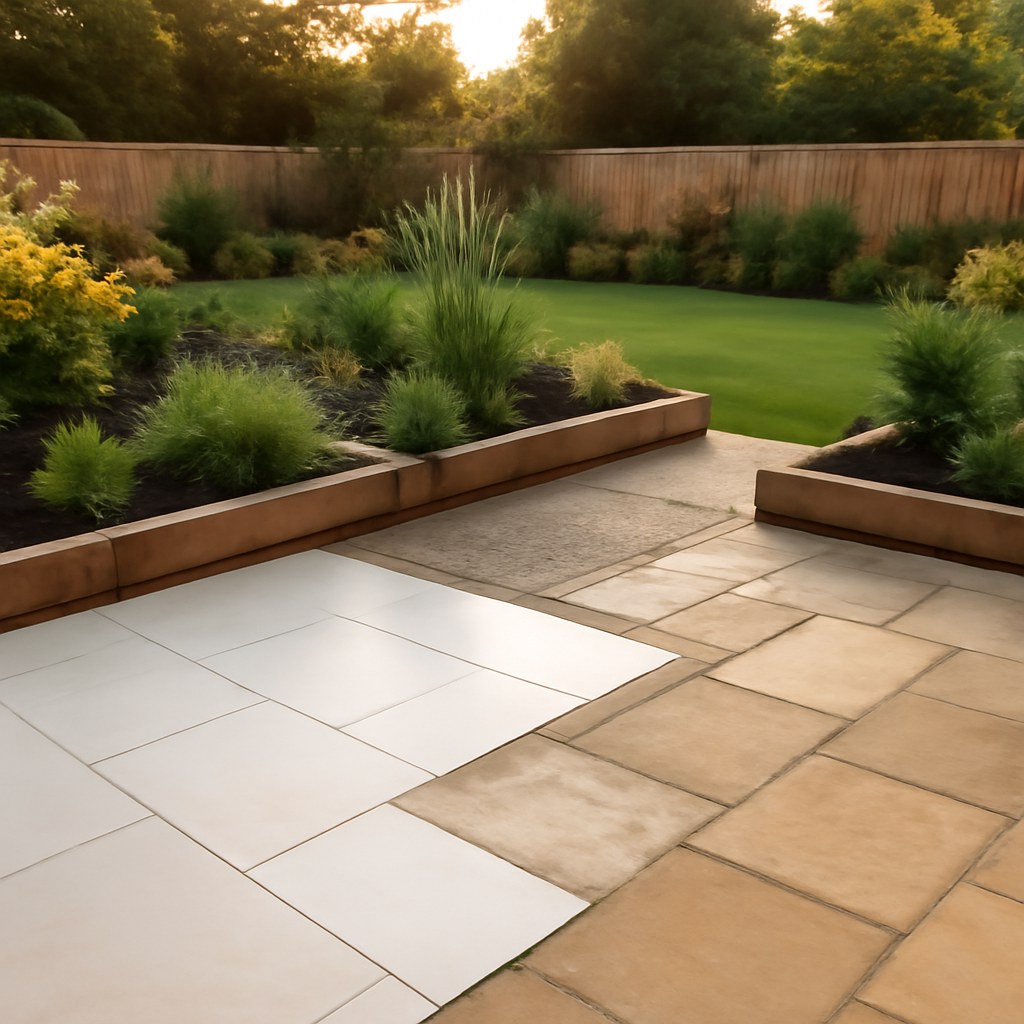
When planning a garden patio or hard landscaping feature in Loughborough or the wider East Midlands, two popular choices for paving materials are porcelain paving and Indian sandstone. Each material has its own strengths and considerations. Here, we’ll compare porcelain and Indian sandstone on several practical points to help you decide which might suit your garden project best.
Cost is often a key deciding factor. Indian sandstone patios typically cost between £90 and £120 per square metre installed, assuming straightforward access and normal ground conditions. Porcelain paving is generally more expensive, with prices ranging from £110 to £150 per square metre, depending on the slab choice and preparation needed. Remember, final costs can vary depending on factors such as site access, ground levels, drainage arrangements and the amount of cutting or falls required.
Grip or slip resistance matters for outdoor areas that may get wet or frosty. Indian sandstone naturally has a textured, uneven surface which tends to provide good grip, making it a safer option especially in wet conditions. Porcelain paving, being a smoother manufactured product, can be more slippery when wet unless you choose specific textured finishes designed to improve grip.
Frost resistance is important in East Midlands gardens as winters can be cold and damp. Porcelain paving is highly dense and manufactured to be frost resistant, minimizing the risk of cracking or damage over time. Indian sandstone is natural stone and generally robust but can vary in frost resistance depending on the quarry source. Some sandstone can absorb water and may be more vulnerable to frost damage over the long term.
Cleaning and maintenance are another consideration. Porcelain paving is low maintenance as it is non-porous, making it stain resistant and easier to clean with just water and mild detergent. Indian sandstone is porous by nature, which means it can absorb dirt and stains over time, requiring more regular sealing and cleaning to maintain its appearance.
Colour consistency differs notably between the two materials. Porcelain paving offers very consistent colours and patterns because it’s manufactured. This makes it ideal if you want a uniform look throughout your patio. Indian sandstone, being a natural product, features a range of colour variations and veining which creates a more natural, rustic and unique appearance for each project.
Choosing between porcelain and Indian sandstone often comes down to where and how you want to use them. Porcelain is well suited to modern gardens where a clean, contemporary look and straightforward maintenance are priorities. Indian sandstone works well in more traditional or country-style gardens where natural textures and the unique character of stone are desired.
If you’re considering either option for your Loughborough or East Midlands garden, it’s worthwhile to arrange a site visit. Ground conditions, drainage, levels and access can all affect the final cost and suitability of materials. For a no-obligation site visit or quick quote tailored to your project, WhatsApp Aaron on 07454 978031.
As a sole trader specialist in landscaping and 3D garden design, I focus on practical advice and clear communication to ensure your hard landscaping decisions meet both your budget and garden style. Whether patios, railway sleepers, or full landscape designs, I’m happy to discuss your ideas and provide a professional, honest quote.
Remember, pricing guides are just that — guides. For example, block paving driveways typically range from £80 to £115 per square metre, railway sleeper raised beds from £85 to £140 per linear metre, and turfing from £18 to £35 per square metre. The exact figures depend on many site-specific factors, so a site survey is essential before confirming costs.
WhatsApp Aaron on 07454 978031 to talk through a garden project.