When planning a garden upgrade in Loughborough or across the East Midlands, choosing the right paving material is crucial both for aesthetics and practicality. Two popular options for patios and paths are porcelain paving and Indian sandstone. Both have distinct qualities, costs, and suitability depending on garden conditions and personal preferences. This guide compares them on several practical factors to help you decide.
Starting with cost, Indian sandstone is generally more budget-friendly, with typical installed prices ranging from £90 to £120 per square metre in straightforward conditions. Porcelain paving tends to be pricier, from £110 to £150 per square metre, reflecting higher material costs and additional work needed for cutting and preparation. Keep in mind these prices can vary depending on site access, ground levels, drainage requirements, and the exact material specification. It's always best to arrange a site visit for an accurate quote.
Grip is an important consideration, especially in wet or frosty conditions typical in the East Midlands. Indian sandstone has a naturally rough texture that helps provide good slip resistance. Porcelain paving, which is essentially fired clay, comes in a variety of finishes including textured, but some smoother variants can get slippery when wet. If safety is a priority, be sure to select a textured porcelain suited for outdoor use or stick with Indian sandstone’s natural roughness.
Frost resistance is another key factor. Both materials generally cope well with frost, but porcelain paving is fired at very high temperatures, making it less porous and more frost-resistant over time. Indian sandstone, being a natural stone, can be slightly more susceptible to frost damage if not sealed or if it remains wet for long periods. Correct installation with good drainage is vital for either option to prevent frost damage.
In terms of cleaning and maintenance, porcelain paving is low maintenance. It resists stains and is easy to clean with just water and a mild detergent. Indian sandstone can be more porous and may require occasional sealing to prevent staining from leaves, soil, or bird droppings. Sandstone's natural texture can also collect moss or algae in shady East Midlands gardens, necessitating periodic cleaning.
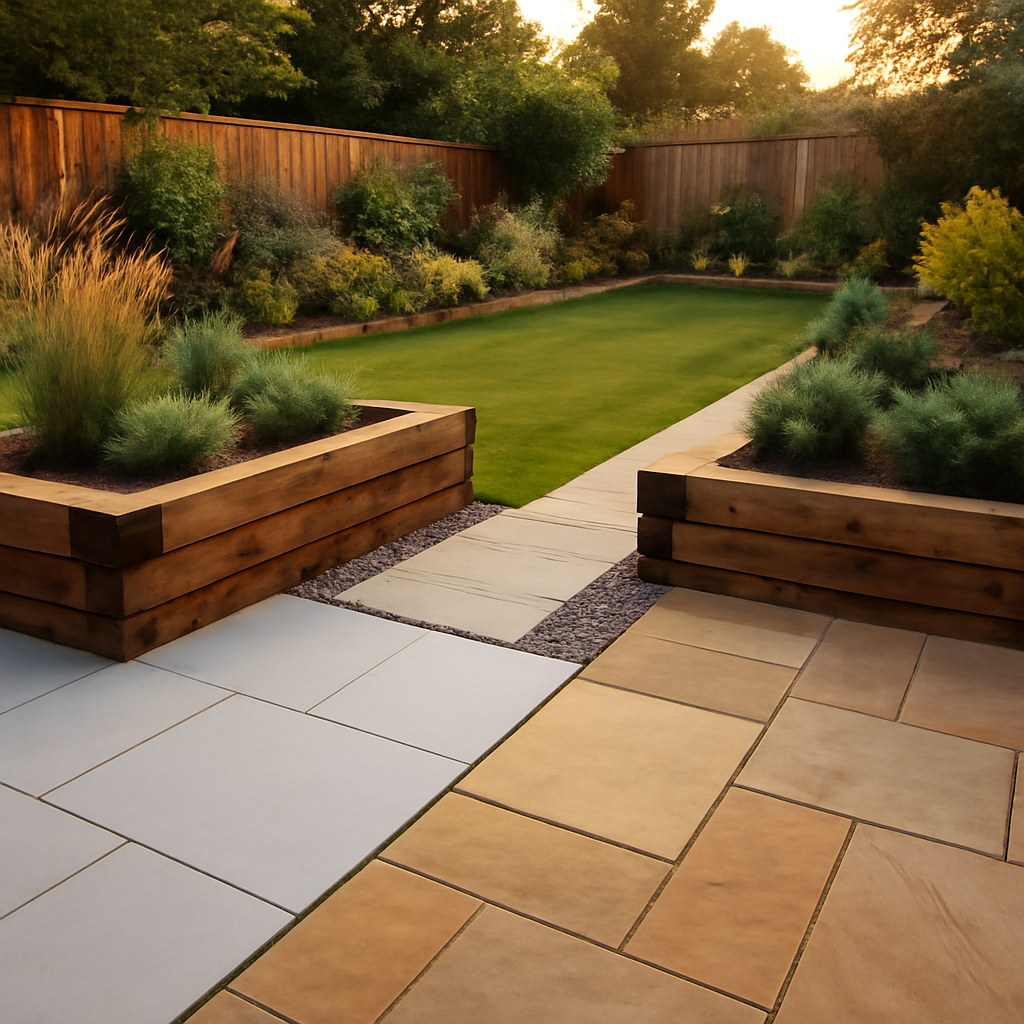
Colour consistency is where the two materials differ visually. Porcelain paving offers uniform colour and pattern options, which suits a modern garden design well. Indian sandstone provides a varied, natural look with shades changing between slabs; this adds character and uniqueness but requires more careful layout planning to balance colours.
In summary, Indian sandstone is ideal if you prefer a warm, natural stone feel with good grip and a slightly lower initial cost – good for traditional or rustic gardens. Porcelain paving suits contemporary designs, demanding minimal maintenance and greater frost durability but at a higher upfront price. Both perform well in the East Midlands climate when properly installed.
Other landscaping elements like railway sleeper raised beds can complement either patio option, offering rustic contrasts, especially in East Midlands settings. For those wanting a detailed garden plan, I offer 3D garden design services to visualise how materials and features work together before installation.
Given the variables involved, such as site levels, drainage, and clearance, I recommend a site visit to assess your individual project requirements and provide a precise quote. For a quick quote or to arrange a site visit, please WhatsApp me, Aaron, on 07454 978031.
WhatsApp Aaron on 07454 978031 to talk through a garden project.