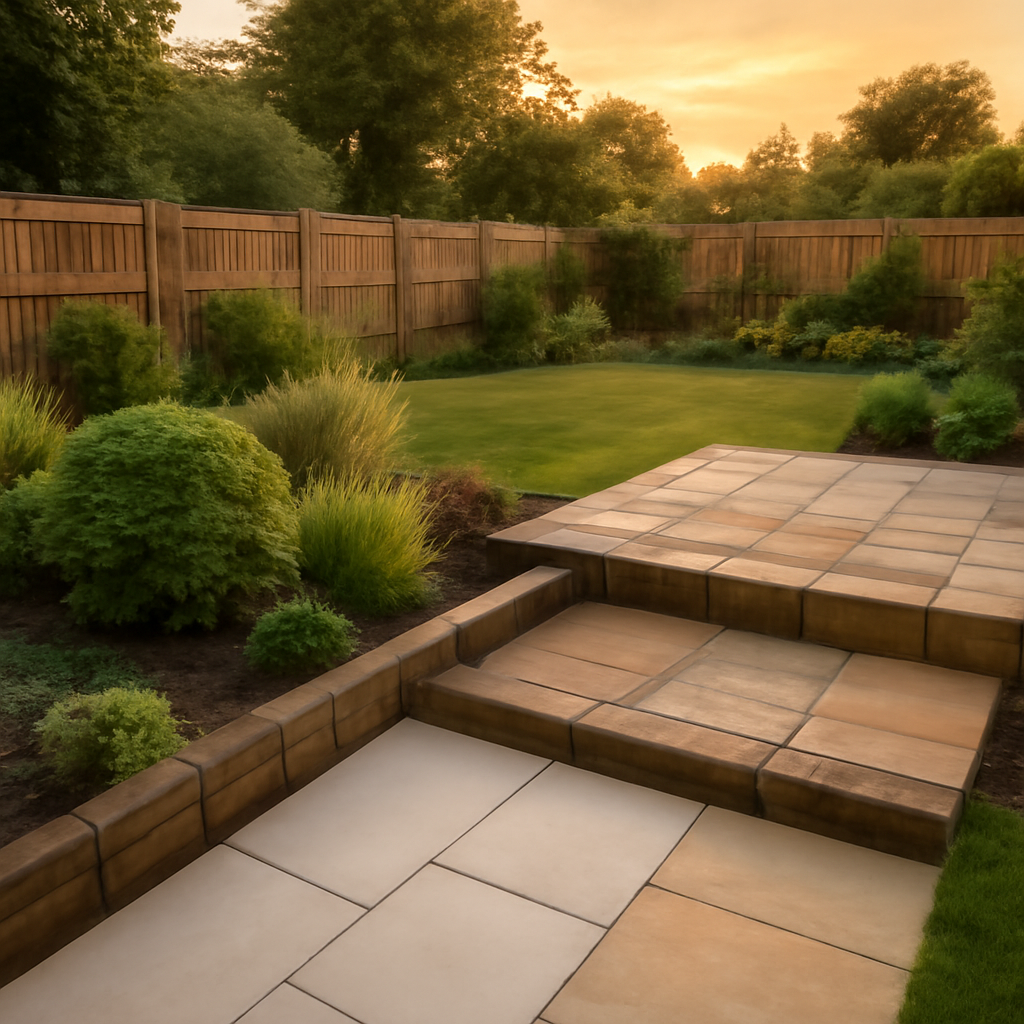
When planning landscaping in Loughborough or the wider East Midlands, choosing the right patio material is key for both aesthetics and durability. Two popular choices are porcelain paving and Indian sandstone. Each has unique qualities, so it’s worth understanding how they compare on cost, grip, frost resistance, cleaning, and colour consistency before deciding what suits your garden best.
In terms of cost, Indian sandstone patios typically range between £90 and £120 per square metre for straightforward access and normal ground conditions. Porcelain paving, on the other hand, usually comes in higher at £110 to £150 per square metre. This difference reflects porcelain’s higher material cost and additional requirements such as precise cuts, falls, and ground preparation. Remember, all prices depend on specific site factors like access, levels, drainage, and the material specification, so a site visit is always recommended.
Grip is another important consideration, especially if your garden sees a lot of foot traffic or if you have elderly family members. Indian sandstone tends to offer a naturally textured surface, which provides decent slip resistance even when wet. Porcelain paving is often smoother and may vary in grip, so it’s best to choose a textured finish to avoid slipping hazards, especially during rainy or icy periods common in the East Midlands.
Frost resistance matters too, given our region’s colder months. Both materials are generally frost resistant, but porcelain is typically more impervious due to its low porosity. Indian sandstone can absorb some moisture, which might cause minor surface damage over time with repeated freeze-thaw cycles. That said, high-quality Indian sandstone laid correctly can last many years if properly maintained.
When it comes to cleaning and maintenance, porcelain paving is hard wearing and stain resistant, making it easier to keep clean with regular washing. Indian sandstone requires more attention, as it’s a natural stone that can stain or develop algae if not sealed and cleaned regularly. If you prefer a low-maintenance option, porcelain may be more suitable, but if you love the natural variations and character of stone, sandstone remains a timeless choice.
Colour consistency is where these materials differ visibly. Porcelain paving is manufactured and thus available in uniform colours and patterns, providing a sleek, modern look with consistent tones across the patio. Indian sandstone’s natural origin means more variation in colour and texture, giving a more traditional, rustic appearance that suits classic or country-style gardens.
So, when is each material best suited to your East Midlands garden? If you want a contemporary, low-maintenance patio with consistent colour and high frost resistance, porcelain paving is ideal. It’s also a good choice for gardens with more exposure to rain and frost. Conversely, if you favour a classic aesthetic with natural colour variation and texture, Indian sandstone provides that timeless appeal, particularly in gardens where traditional materials are preferred.
Ultimately, the best way to decide is with professional guidance tailored to your specific plot. I offer expert advice, 3D garden design, and a full range of landscaping services across Loughborough and the East Midlands. For a site visit or a quick quote, WhatsApp Aaron on 07454 978031. Detailed pricing will factor in access, site levels, drainage, clearance, and the chosen materials.
Choosing the right patio material sets the tone for your outdoor space. Whether porcelain paving or Indian sandstone suits your garden best, knowing the practical differences ensures a lasting, beautiful finish to your landscaping project.
WhatsApp Aaron on 07454 978031 to talk through a garden project.