Choosing the right paving material is a crucial decision for any garden project in the East Midlands, particularly around Loughborough, where weather and ground conditions can vary. Two popular options for patios and hard landscaping are porcelain paving and Indian sandstone. Each has its pros and cons, which we've outlined here to help you make a well-informed choice.
Cost is often the first consideration. Indian sandstone patios typically range from £90 to £120 per square metre, including installation under straightforward access and standard ground conditions. Porcelain paving tends to be a bit more expensive, usually between £110 and £150 per square metre, largely due to the higher cost of materials and the extra care needed for cuts, falls, and surface preparation. Remember, these are guide prices; final quotes will depend on your specific site conditions such as access, drainage, and material choice.
When it comes to grip and safety, Indian sandstone generally offers a non-slip surface, which is ideal for gardens that see frequent moisture, whether from rain or dew. Porcelain paving can be slippery when wet, depending on the finish chosen, so look for textured or anti-slip options if safety is a top priority.
Frost resistance is another important factor in the East Midlands, where winters can be cold. Porcelain paving usually performs better here as it is denser and less porous than Indian sandstone. This means it absorbs less water, reducing the risk of frost damage such as cracking or spalling. Indian sandstone, being a natural stone, may be more vulnerable to frost damage over time if not properly sealed and maintained.
Cleaning and maintenance differ between these materials. Indian sandstone often requires periodic sealing to keep its colour and protect against staining from organic matter like moss or leaves. Porcelain paving is practically maintenance-free in comparison, needing just a quick wash-down with mild detergent to keep it looking like new.
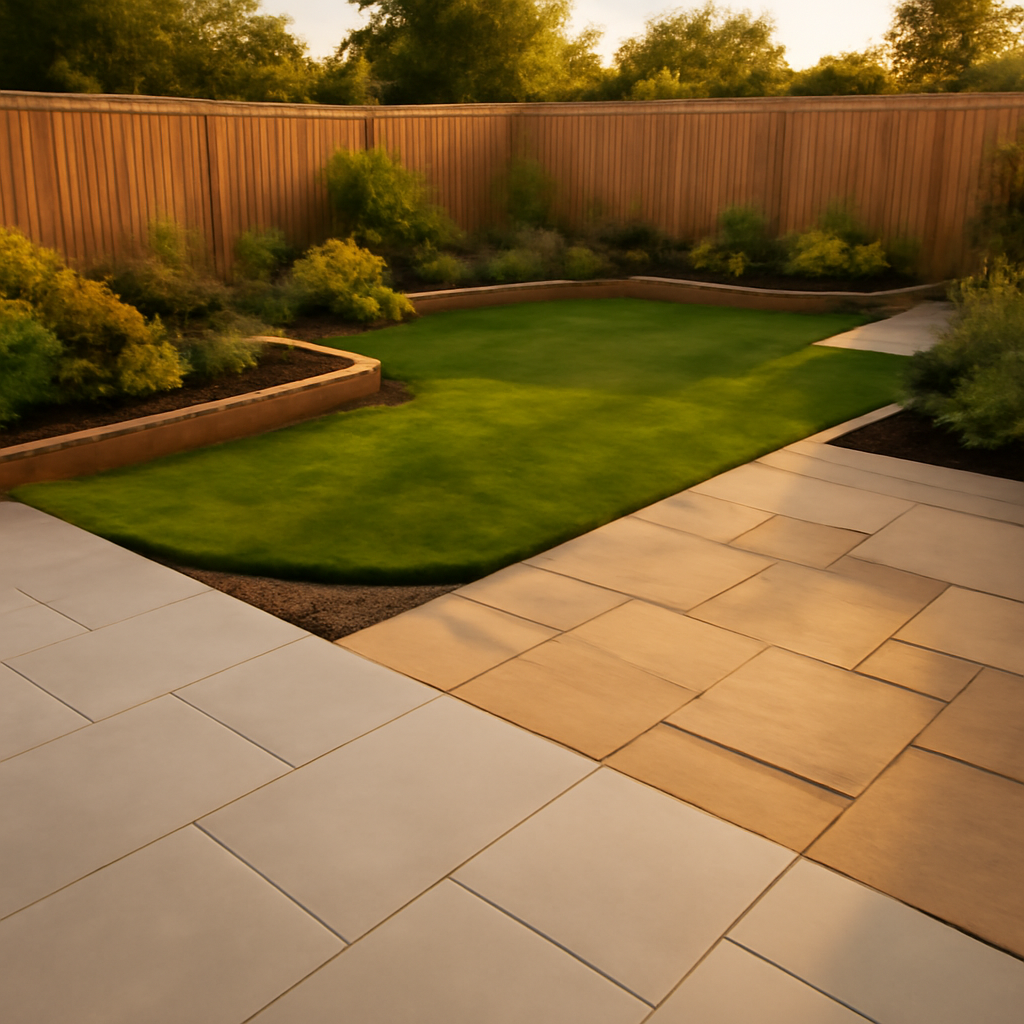
Colour consistency is a notable difference to consider. Indian sandstone is a natural product, so you can expect colour variation and unique patterns which add character and a distinct charm to your garden. Porcelain paving, by contrast, is manufactured and comes in uniform colours and textures, giving a more contemporary, clean look.
So, when does each material suit your garden best? Indian sandstone is great for homeowners looking to create a natural, traditional garden setting that blends well with greenery and existing stone features. Porcelain paving is a smart choice if you want a sleek, modern style and a low-maintenance surface that holds up well through the seasons.
In summary, both porcelain paving and Indian sandstone have their merits for Loughborough and wider East Midlands landscaping projects. Your choice should balance aesthetic preference with practical considerations like safety, maintenance, and durability in local weather conditions. Worthington Landscape & Design offers on-site visits to assess your garden, provide tailored advice, and deliver accurate quotes.
For a site visit or a quick quote tailored to your garden’s specific requirements—taking into account access, levels, drainage, clearance, and material specification—please WhatsApp Aaron on 07454 978031. We’ll help you choose the right paving to enhance your outdoor space.
WhatsApp Aaron on 07454 978031 to talk through a garden project.