When planning a garden upgrade in Loughborough or elsewhere in the East Midlands, choosing the right paving material can be one of the most important decisions. Two popular options for patios and hard landscaping are porcelain paving and Indian sandstone, each with advantages and considerations. This guide compares these materials on cost, grip, frost resistance, cleaning, colour consistency, and when to use each one.
Starting with cost, Indian sandstone patios typically range from £90 to £120 per square metre for straightforward access and normal ground conditions. Porcelain patios cost more because of higher material prices and installation complexity, generally between £110 and £150 per square metre. Final prices for either depend on site-specific factors like access, ground levels, drainage needs, and the type of slab or stone chosen.
Grip underfoot is an important safety consideration. Indian sandstone is naturally textured, offering reasonably good grip in most dry and damp conditions. Porcelain paving varies: some types are highly slip-resistant but others can be smooth and potentially slippery when wet. It’s worth discussing specific product options during a site visit to ensure the best choice for safety in your garden environment.
Frost resistance is crucial in the East Midlands climate. Porcelain paving is known for very good frost resistance because it is denser and less porous compared to natural stone. Indian sandstone is porous and can be vulnerable to frost damage over time, especially if not properly sealed or if water can penetrate deeply. However, proper installation with good drainage and maintenance can extend the life of sandstone significantly.
Cleaning and maintenance differ between these materials too. Indian sandstone may need regular sealing to protect against stains and moss growth, and occasional gentle cleaning to keep the surface looking fresh. Porcelain paving cleans easily, usually with just water and mild detergent, and does not require sealing. Both can suffer from algae or moss in shaded areas, so consider garden positioning when choosing.
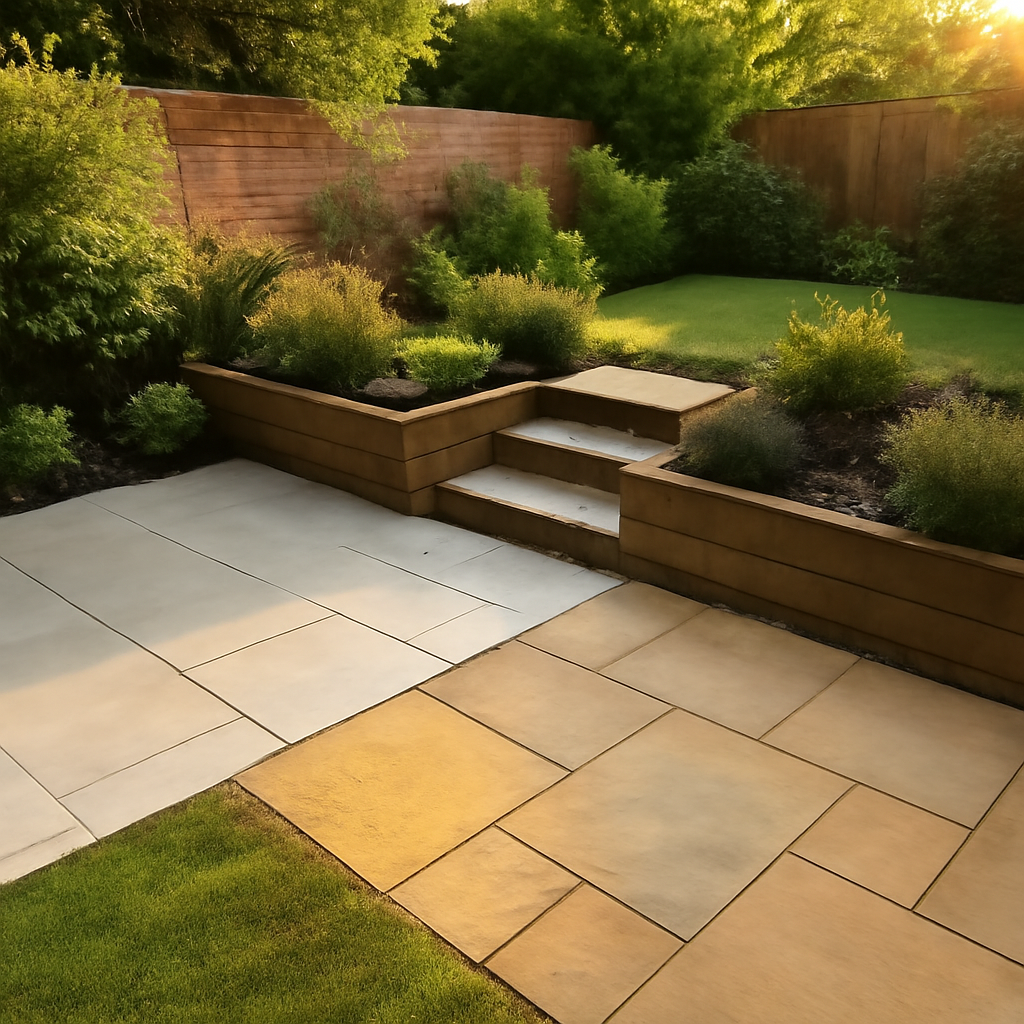
Colour consistency is another factor. Porcelain slabs come in uniform colours and patterns due to manufacturing processes, offering a precise and modern look. Indian sandstone varies naturally in tone and texture, with earthy and warm shades that are often preferred for a traditional or rustic garden style. If colour matching and uniformity matter, porcelain might be the better choice; if natural variation appeals, sandstone is ideal.
In terms of practical suitability, porcelain paving works well where a sleek, contemporary look is desired and where minimal maintenance is a priority. It suits Loughborough gardens where clean lines and colour consistency are important. Indian sandstone fits gardens aiming for a more natural or classic aesthetic, complementing greenery and natural surroundings typical of East Midlands landscaping.
Both options can be successfully combined with other elements such as railway sleeper raised beds or block paving driveways, common features in local landscapes. For example, sandstone patios with railway sleepers create a warm, traditional feel, while porcelain pairs well with modern garden furniture and lighting.
Ultimately, the best choice depends on your garden’s style, how you use the space, and the site’s specific conditions. Given the variables around access, levels, drainage, and material specification, I recommend a site visit to assess the area and discuss your preferences thoroughly. This ensures an accurate quote and a paving solution tailored to your needs.
For a site visit or quick quote, WhatsApp Aaron on 07454 978031. As a local sole trader specialising in Loughborough and East Midlands landscaping, I bring practical experience and personalised advice to your garden project.
WhatsApp Aaron on 07454 978031 to talk through a garden project.