When planning a new garden patio in Loughborough or elsewhere in the East Midlands, choosing the right paving material is crucial. Two popular options are porcelain paving and Indian sandstone. Both have their merits depending on your garden’s style, usage, and budget. This post will give you a clear, practical comparison based on key factors like cost, grip, frost resistance, cleaning, and colour consistency.
Cost is often the first consideration. Indian sandstone patios typically cost between £90 and £120 per square metre for straightforward access and normal ground conditions. Porcelain patios usually come in a higher range from £110 to £150 per square metre. The higher price for porcelain mainly reflects the material cost and any additional work required for cuts, falls and preparation. It’s best to get a tailored quote, as factors like access, drainage, and site levels have an impact.
Grip and safety are important for outdoor paving, especially in rainy conditions common in the East Midlands. Indian sandstone generally offers good natural grip due to its textured surface, making it less slippery when wet. Porcelain paving is available with textured or anti-slip finishes designed for safety, but some smoother porcelain slabs can become slippery if you’re not careful with your choice. If safety is a top priority, discuss surface finishes during your design phase.
Frost resistance is another key factor given the East Midlands climate. Porcelain paving has excellent frost resistance due to its low water absorption and durable manufacturing process, meaning it is less prone to cracking in freeze-thaw conditions. Indian sandstone is also frost resistant but can be more vulnerable if it’s a softer type or has many natural fissures. Proper installation with adequate drainage will improve longevity for either material.
Cleaning and maintenance differ between the two. Porcelain paving is low maintenance – its hard surface resists staining and is straightforward to clean with a hose or pressure washer. Indian sandstone can be more porous, so it may need sealing to protect against stains and moss growth, especially in shaded or damp gardens. Regular sweeping and occasional cleaning will help keep both looking their best.
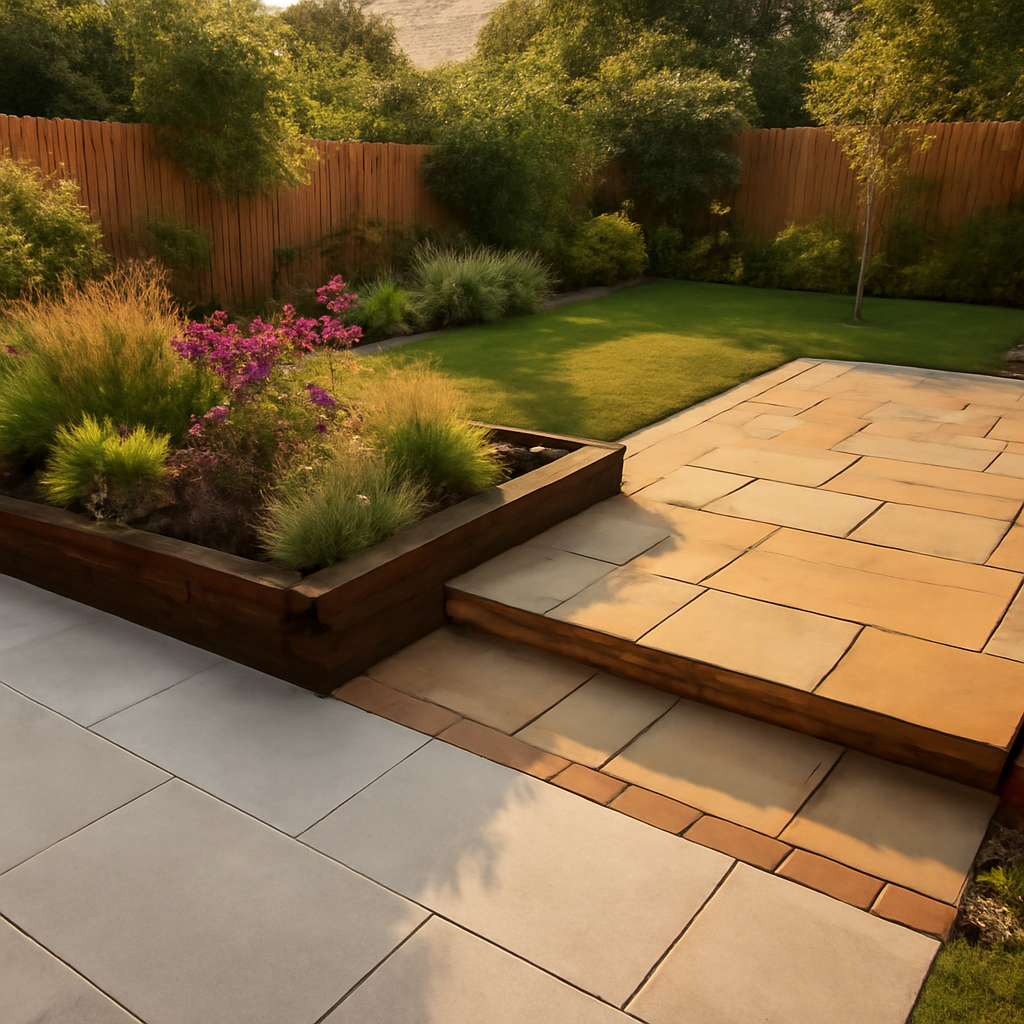
Colour consistency is a matter of personal taste. Porcelain paving is manufactured, so you get very consistent colours and patterns across your patio. This works well for contemporary, uniform designs. Indian sandstone features natural variation in colour and texture, offering a more rustic, traditional look. If your garden aims for a natural feel, sandstone can be a great choice; for modern, bold aesthetics, porcelain might suit you better.
Deciding which material suits your garden also depends on style and function. Porcelain paving suits modern, sleek designs and is often chosen for its durability and contemporary look. Indian sandstone fits well with traditional, cottage-style or country gardens and hard landscaping that embraces natural textures.
Ultimately, both porcelain and Indian sandstone are excellent options for East Midlands gardens. Your choice will depend on your budget, garden style, safety needs, and maintenance preferences. I recommend a thorough site visit to assess ground conditions and discuss your design goals so I can provide the best advice and an accurate quote.
For a site visit or quick quote in Loughborough and around the East Midlands, please WhatsApp me, Aaron, on 07454 978031. I provide straightforward, experienced advice and pricing to help you create the garden you want.
WhatsApp Aaron on 07454 978031 to talk through a garden project.