When planning garden landscaping in Loughborough or the broader East Midlands, choosing the right paving material is crucial. Two popular options for patios and hard landscaping are porcelain paving and Indian sandstone. Both come with distinct advantages depending on your garden’s specifics and maintenance preferences. Here’s a practical comparison to help you decide which suits your outdoor space best.
Cost is often the first consideration. For a straightforward patio with normal ground conditions and easy access, Indian sandstone typically costs between £90 and £120 per square metre installed. Porcelain paving tends to be pricier, ranging from £110 to £150 per square metre. The material itself is more expensive, and factors like slab choice, extra cuts, slopes, and ground preparation can push the price higher. These prices are guides and the final quote depends on your site’s unique conditions, so a visit is recommended.
Grip underfoot is important for safety, especially in wet or icy conditions common in the East Midlands. Indian sandstone is naturally textured, providing good traction. Porcelain paving is usually smoother but often finished with anti-slip treatments. However, not all porcelain slabs are the same, so ask about grip ratings before deciding, particularly if you have children or elderly family members.
Frost resistance is another critical factor here, given our regional winters. Porcelain paving generally performs better in frost because it has low water absorption, reducing the risk of cracking or spalling. Indian sandstone is more porous, which can cause issues if water freezes inside the stone. That said, well-installed sandstone patios with good drainage and sensible jointing can last many years without trouble.
Cleaning and maintenance differ between the two materials. Porcelain paving is very low maintenance; it resists staining well and can be cleaned easily with water and mild detergent. Indian sandstone, while durable, may need more regular sealing and can show moss or algae buildup, especially in shaded or damp spots. Regular cleaning and occasional resealing keep sandstone looking its best.
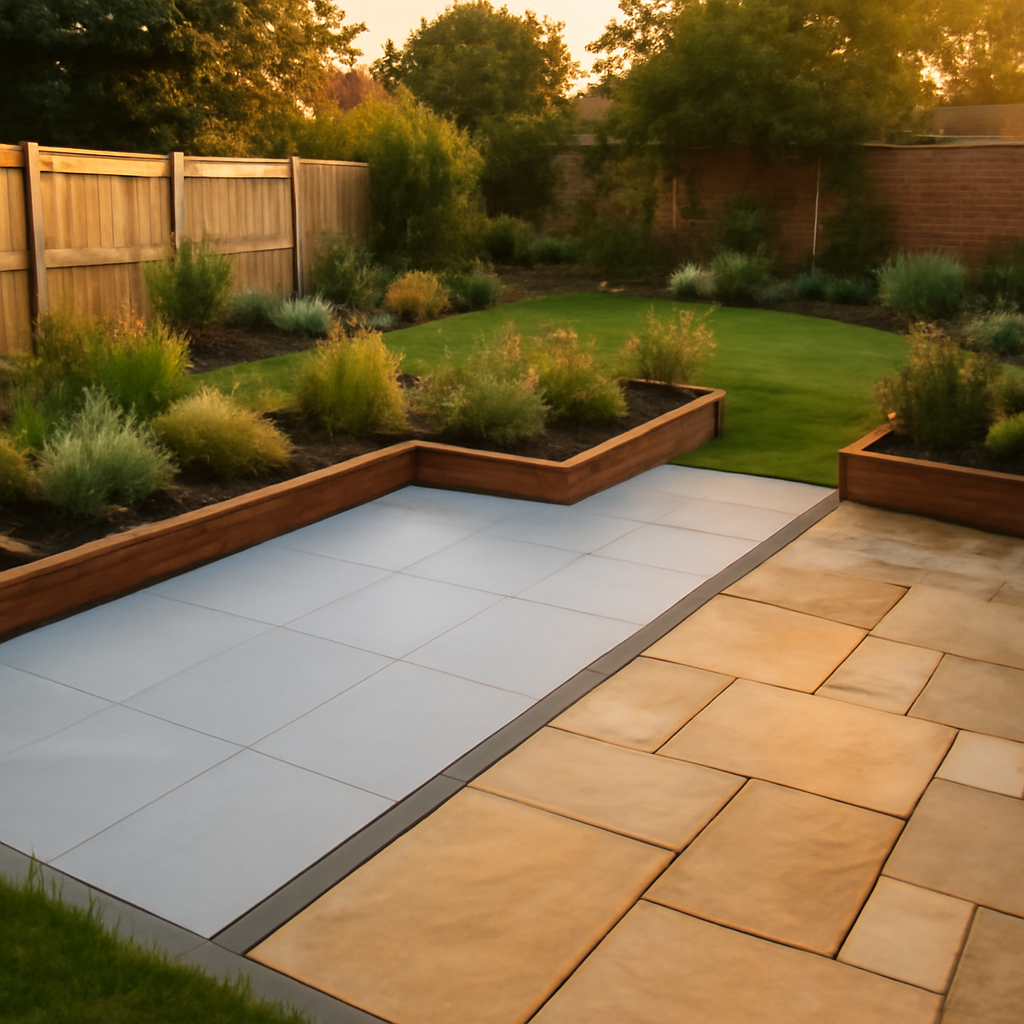
Colour consistency is another point to consider. Porcelain paving is manufactured to exact colour standards, so your patio will likely have uniform shades and patterns. Indian sandstone is a natural product, so colour varies from slab to slab, offering a more organic and varied look. Some homeowners prefer this natural variation, while others want a more consistent finish.
In terms of when each suits best: Indian sandstone works well for traditional or rustic garden designs, where natural texture and warmth are desired. Porcelain paving is a good choice for modern, minimalist gardens or where a sleek, uniform appearance is preferred. Both materials combine well with features like railway sleeper raised beds or block paving driveways, common choices in East Midlands landscaping projects.
Ultimately, the best choice depends on your garden’s character, your budget, and how much maintenance you’re willing to undertake. Because prices and installation challenges like site access, ground levels, drainage, and clearance vary, a site visit is essential to get an accurate quote before committing. This way, you ensure the right material fits your vision and practical needs.
For a site visit or a quick quote tailored to your garden in Loughborough and the East Midlands, please WhatsApp Aaron on 07454 978031. As a sole trader specialising in landscaping, 3D garden design, patios, railway sleepers, and hard landscaping, Aaron offers practical advice and clear pricing based on your specific project requirements.
WhatsApp Aaron on 07454 978031 to talk through a garden project.