When planning a garden or patio in Loughborough or the wider East Midlands, one of the key decisions is what type of paving material to use. Porcelain paving and Indian sandstone are both popular choices, each with distinct advantages and some considerations to keep in mind. This post aims to give you a practical comparison of these two materials to help you decide what will work best for your landscaping project.
Starting with cost, Indian sandstone typically ranges from £90 to £120 per square metre installed, assuming straightforward access and normal ground conditions. Porcelain paving tends to be more expensive, usually from £110 to £150 per square metre. The final price for porcelain depends heavily on the slab specification, cuts, falls, and preparation needed. Always remember that each garden is different, so these are guide prices and a site visit helps provide an accurate quote.
When it comes to grip and safety, Indian sandstone offers a natural, non-slip surface that performs well even when wet. Porcelain paving, especially textured varieties, can also provide good grip, but some smooth porcelain slabs may be slippery when wet. If safety is a priority, ask your supplier or installer about slip ratings specific to the porcelain product you are considering.
Frost resistance is another important factor for East Midlands gardens where winters can be cold. Porcelain paving is typically very frost resistant and low in water absorption, which reduces the risk of frost damage over time. Indian sandstone is more porous and while durable, it can be prone to surface wear and staining if not sealed or maintained properly in freeze-thaw conditions.
Cleaning and maintenance are easier with porcelain paving as it stains less and can be simply washed down without much risk of damage. Indian sandstone requires more regular sealing and careful cleaning to avoid moss, algae, or staining, particularly in shaded or damp areas.
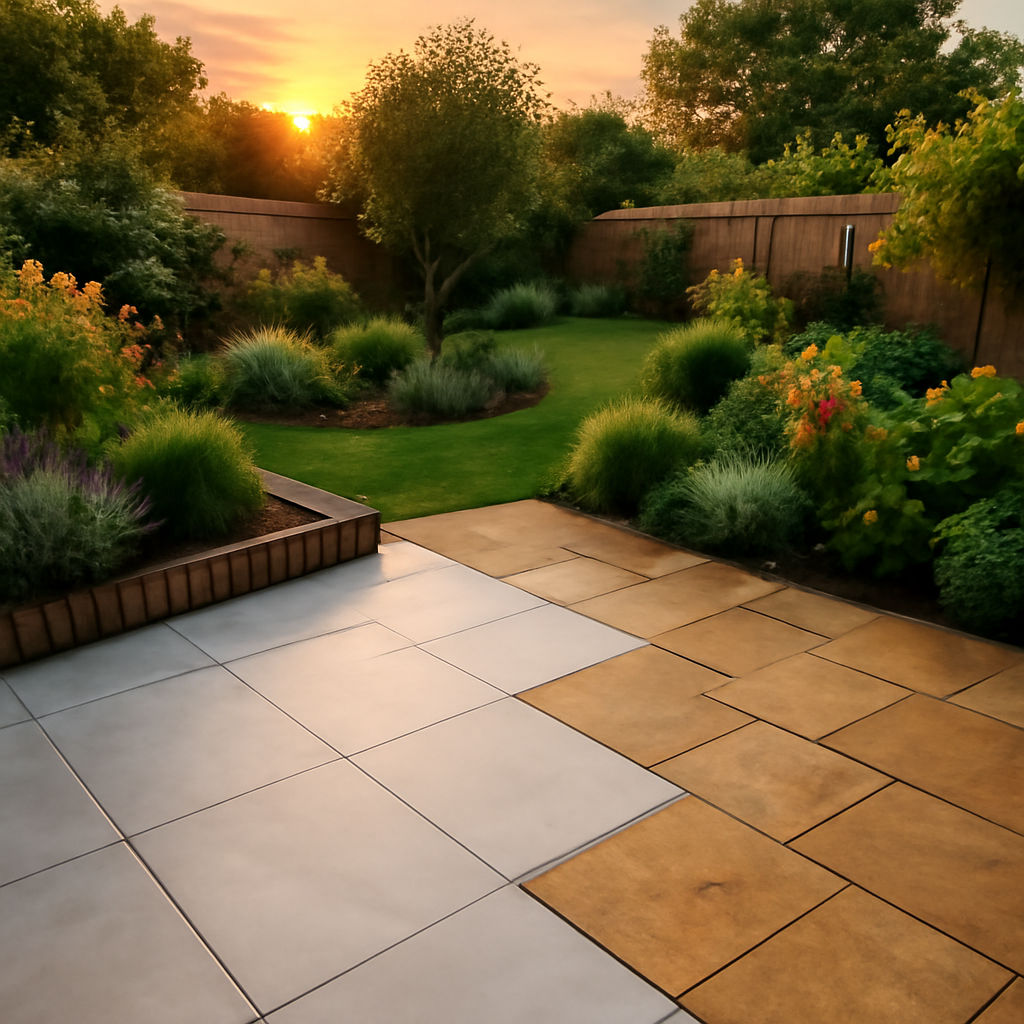
Colour consistency is a strong point for porcelain paving since manufactured slabs are uniform. Indian sandstone is a natural stone with varied colours and patterns, which many people find attractive for a natural look. If you want consistency in colour and finish, porcelain is likely to suit better. If you want a more organic, varied appearance, Indian sandstone will deliver that character.
In terms of suitability, Indian sandstone is well suited for traditional or naturalistic garden styles and can blend nicely with native plants and rustic elements like railway sleepers for raised beds. Porcelain paving fits modern, contemporary gardens well because of its sleek appearance and precise installation. Both materials can work well in different landscaping styles around Loughborough and the East Midlands, so the choice often depends on your garden theme and personal preference.
In summary, porcelain paving offers greater frost resistance, easier maintenance, and colour consistency but at a higher price point. Indian sandstone is more affordable, naturally slip resistant, and gives a timeless, organic look but requires more upkeep and care in cold climates. Both have their place depending on your budget, style preference, and garden conditions.
If you’d like tailored advice or a no-obligation site visit to discuss porcelain paving, Indian sandstone, or other landscaping options including railway sleepers and patios, please get in touch. You can WhatsApp Aaron on 07454 978031 for a quick quote or to arrange a visit. Final pricing depends on access, levels, drainage, clearance, material specification, and a proper site survey, so seeing your garden is the best way to provide an accurate estimate.
Worthington Landscape & Design specialises in practical, quality landscaping in Loughborough and the East Midlands. Whether it’s 3D garden design, patios, or hard landscaping, our aim is to help you get the best value and look for your outdoor space.
WhatsApp Aaron on 07454 978031 to talk through a garden project.