When planning a garden makeover or new landscaping project in Loughborough or the wider East Midlands, one key decision is the choice of paving material. Porcelain paving and Indian sandstone are two popular options, each with distinct advantages and considerations. Knowing how they differ in cost, durability, grip, frost resistance, cleaning effort, and appearance will help you choose what’s best for your outdoor space.
Cost is often a primary factor. Indian sandstone patios typically range between £90 and £120 per square metre installed, assuming straightforward access and average ground conditions. Porcelain paving tends to be a bit pricier, with prices around £110 to £150 per square metre, influenced by slab style, cuts, preparation work, and any groundwork for falls. These prices serve as a guide; final quotes require a site visit to assess specific challenges like drainage or clearance.
Grip and safety are important, especially in the East Midlands where wet and frosty conditions are common. Indian sandstone offers a naturally textured surface that provides decent grip underfoot, though it can become slippery when wet. Porcelain paving comes in various finishes, with some designed specifically to enhance slip resistance. However, certain glazed porcelain types might be smooth and more slippery, so choosing the right finish is crucial.
Regarding frost resistance, porcelain paving generally performs very well in freezing climates as it is highly durable and non-porous. Indian sandstone is more porous, which means it can absorb water that freezes and potentially causes cracking or surface damage over time. However, properly sealed sandstone and good drainage can mitigate these risks, making it a durable choice with the right care.
Cleaning and maintenance differ too. Porcelain paving is easier to maintain due to its non-porous nature. It resists stains, mould, and algae growth relatively well and can be cleaned with a simple wash-down. Indian sandstone requires more regular maintenance, including sealing to prevent staining and deeper cleaning to avoid moss and dirt buildup in the stone’s pores.
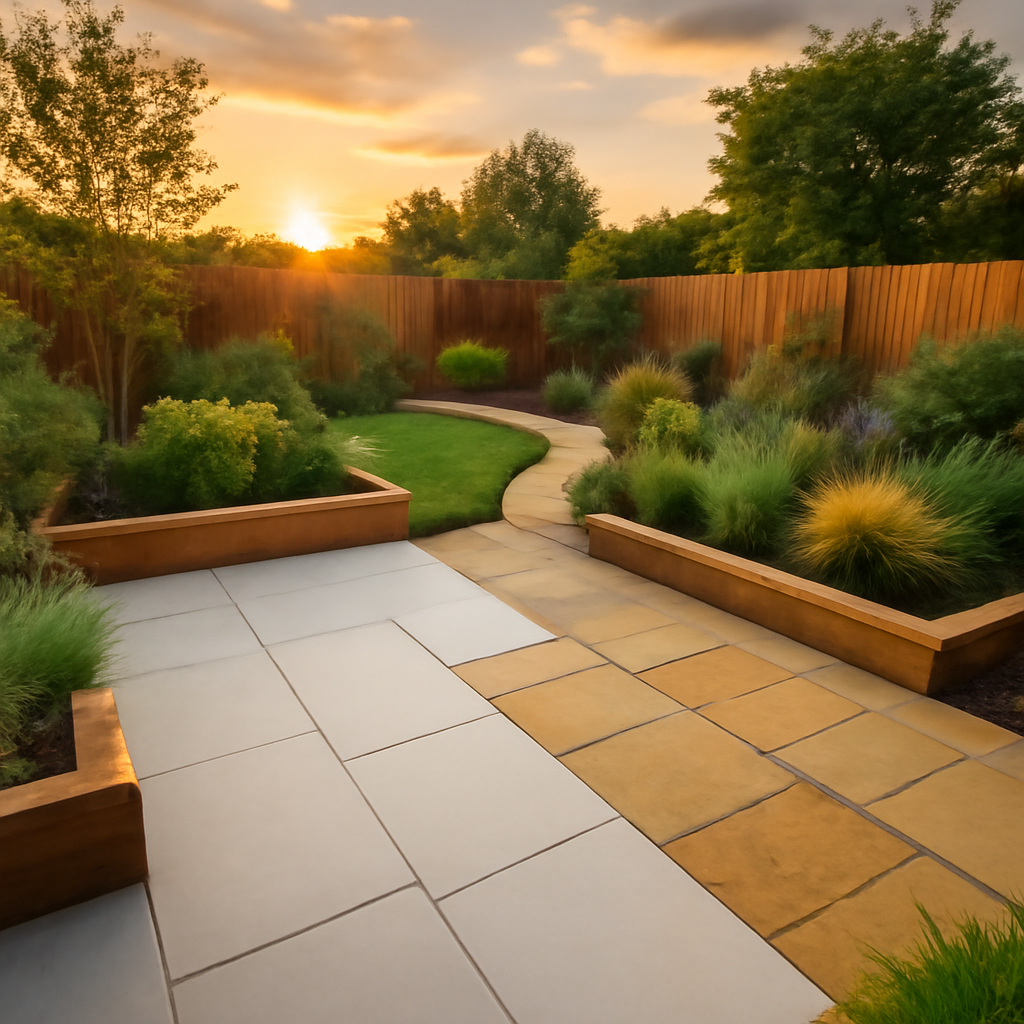
Colour consistency is another consideration. Porcelain paving offers uniform colour and pattern, ideal if you want a neat and modern look. Indian sandstone is a natural stone, so each slab varies, producing a more rustic and varied aesthetic. This natural variation can add character but also means colour matching can be less predictable if you need to replace or extend sections later.
When deciding which material suits your garden, consider the look and feel you want alongside practical issues like budget, site conditions, and maintenance commitment. Porcelain paving works well for sleek, modern gardens demanding low upkeep and high frost resistance. Indian sandstone suits those after a traditional, natural appearance and who don’t mind a bit more upkeep.
Both materials can integrate well with other landscaping elements such as railway sleeper raised beds or turfing, common in East Midlands gardens. Given the complexity and variables involved—including site access, ground levels, drainage, and material specifications—we recommend arranging a site visit for a precise quote and tailored advice.
For a site visit or a quick quote on porcelain paving, Indian sandstone or other landscaping work in Loughborough and the East Midlands, feel free to WhatsApp Aaron on 07454 978031. Personalised advice and accurate pricing start with seeing your space in person.
WhatsApp Aaron on 07454 978031 to talk through a garden project.