Choosing the right paving material is key to creating a garden that looks great and stands up well to the changing East Midlands weather. At Worthington Landscape & Design, we often get asked about porcelain paving versus Indian sandstone when working on landscaping projects around Loughborough and the wider East Midlands area. Both materials have distinct qualities, so deciding which is better for your garden depends on several practical factors.
Starting with cost, Indian sandstone typically falls between £90 and £120 per square metre for supply and installation. This price bracket covers straightforward access and typical ground conditions. Porcelain paving tends to be a bit more expensive, generally ranging from £110 to £150 per square metre. The higher cost reflects the material itself and preparation work, such as cutting precise falls and slabs. Remember, these are guide prices; the final quote may vary depending on site access, ground levels, clearance, drainage requirements, and your chosen materials.
Grip and safety are important considerations, especially in wet or frosty conditions common in the East Midlands. Indian sandstone usually offers a natural textured surface, providing good grip underfoot. Porcelain paving can vary; some slabs are designed with grip-enhancing finishes, but others can be quite smooth and slippery when wet. When safety is a priority, check with your supplier or landscaper about the slip resistance rating of the porcelain product you choose.
Frost resistance is another key point. Indian sandstone is generally porous and, if not sealed properly, may absorb moisture that can cause damage during freeze-thaw cycles. Porcelain paving, made from dense, vitrified clay, is highly frost-resistant and unlikely to suffer frost damage. This makes porcelain a durable option for gardens exposed to harsh winters in the East Midlands.
Cleaning and maintenance differ between these two materials too. Indian sandstone requires regular cleaning and periodic sealing to keep the stone looking fresh and to reduce moss or algae growth in damp climates. Porcelain paving is low maintenance; it resists staining and doesn’t need sealing, making it easier to keep clean with a simple wash. However, dirt and debris can sometimes be more visible on lighter porcelain colours.
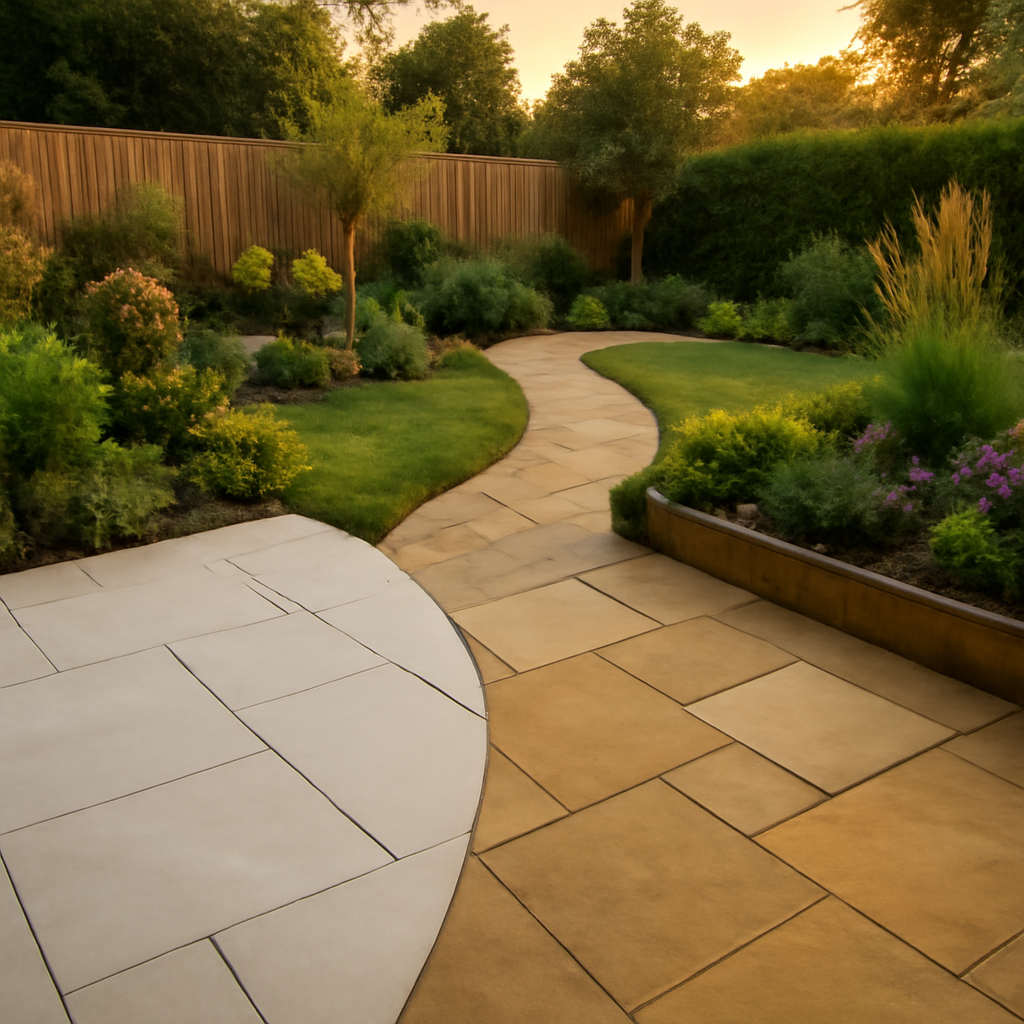
Colour consistency is worth mentioning, especially if you want a uniform look. Indian sandstone naturally varies in shade and texture, which lends a rustic, natural charm but means no two slabs are exactly alike. Porcelain paving is factory-made and comes with consistent colours and finishes, ideal if you want a modern, even appearance across your patio or paths.
When to choose each depends on your garden style and practical needs. Indian sandstone suits traditional, country-style gardens where natural materials help your space blend with the surroundings. Porcelain paving is well matched to contemporary gardens, offering sleek, clean lines and easy maintenance. It’s also a good choice where frost resistance and uniform colour are priorities.
In summary, both porcelain paving and Indian sandstone have strengths for East Midlands gardens. Indian sandstone offers natural beauty and texture at a typically lower cost but requires some upkeep. Porcelain paving provides durability, frost resistance, and colour consistency, albeit with a higher upfront price. A site visit is vital to assess your garden’s conditions before making a decision.
If you’re based in Loughborough or the East Midlands and want to discuss which paving suits your landscaping project, get in touch. For a site visit or a quick quote, WhatsApp Aaron on 07454 978031. We’ll assess your garden’s specifics like access, ground levels, drainage, and preferred materials to provide a tailored, realistic cost.
Remember, landscaping is an investment in your home’s outdoor space. Choosing the right materials for your garden now ensures years of enjoyment with minimal hassle.
WhatsApp Aaron on 07454 978031 to talk through a garden project.