Choosing the right paving material is an important decision when planning your garden makeover in Loughborough or the wider East Midlands. Two popular options are porcelain paving and Indian sandstone, each with its benefits and considerations. Understanding how they compare on key practical aspects can help ensure your outdoor space is both attractive and durable.
Cost is often the first factor people consider. Indian sandstone patios typically range from £90 to £120 per square metre for straightforward installations on normal ground. Porcelain paving tends to be a bit pricier, usually between £110 and £150 per square metre. The higher end of porcelain pricing reflects the cost of slabs chosen, cutting complexity, necessary falls for drainage, and site preparation. It’s important to remember that final quotes depend on site specifics such as access, levels, drainage requirements, and clearance, so a visit is always recommended.
Grip or slip resistance is crucial, especially in the wet and frosty weather common in the East Midlands. Indian sandstone has a naturally textured surface that usually offers good grip underfoot. Porcelain, while generally smooth, is available in various finishes designed to enhance slip resistance; however, some polished porcelain may be more slippery. If safety is a priority—for example, if children or elderly family members will be using the garden frequently—choosing appropriate finishes and textures is essential.
When it comes to frost resistance, both materials perform well in our local climate. Indian sandstone is a natural stone with inherent resilience to freeze-thaw cycles, although some softer grades might show signs of wear over time. Porcelain paving is manufactured to be very frost-resistant and less prone to cracking or spalling, making it a strong choice for durability in cold conditions.
Maintenance and cleaning differ between the two. Indian sandstone, being porous, can absorb stains and usually requires periodic sealing to maintain its colour and protect against moss and algae growth. Cleaning involves careful use of appropriate stone cleaners to avoid damage. Porcelain paving is non-porous, so it resists stains easily and can be cleaned with just water and mild detergent. This low maintenance aspect often appeals to busy homeowners.
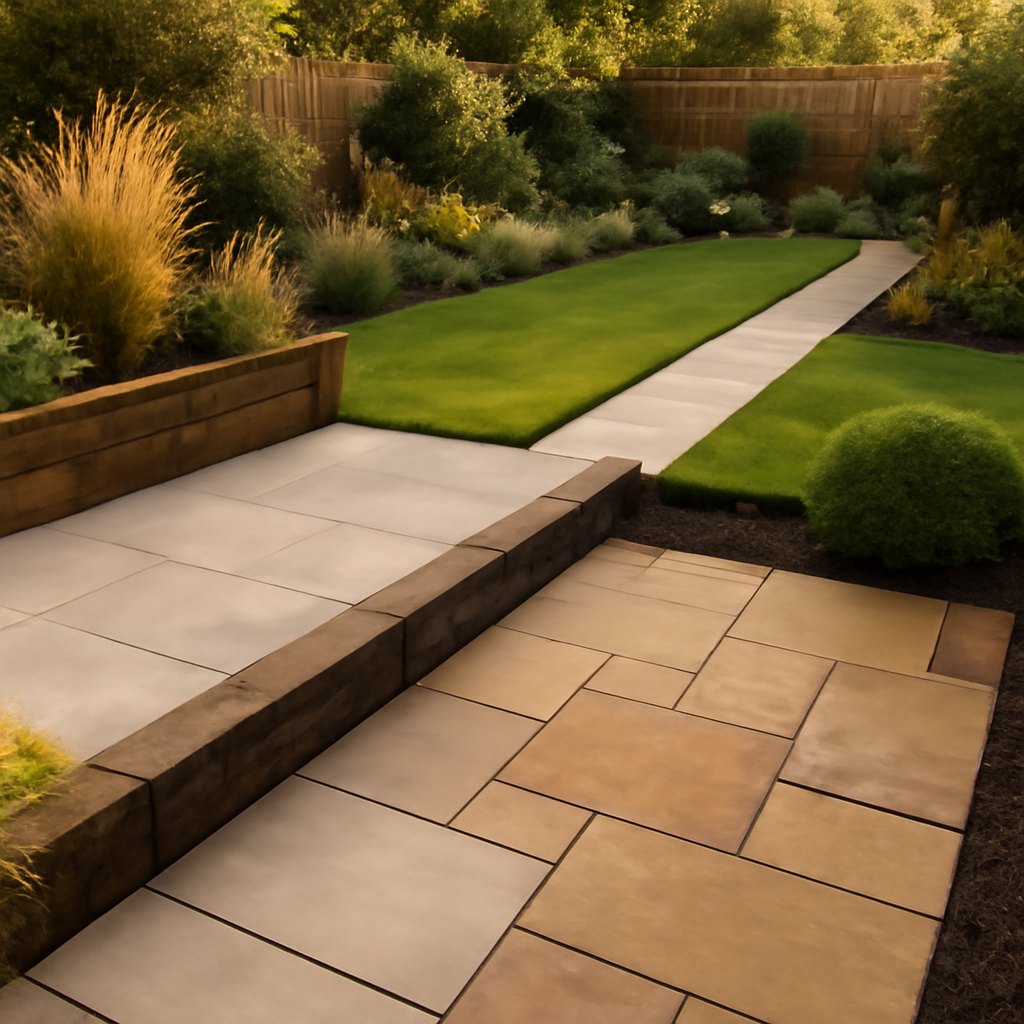
Colour consistency is a noticeable difference. Indian sandstone varies naturally in colour and pattern, creating a rustic or traditional look with warm earth tones and unique veining. This variability means no two slabs are identical, which some clients love for character but others find less predictable. Porcelain paving offers uniform colours and finishes, allowing for a sleek, modern appearance with consistent tone across your garden.
In terms of style and suitability, Indian sandstone suits gardens aiming for a natural, earthy vibe or those complementing period properties and country settings. Porcelain paving fits well in contemporary designs, minimalistic layouts, or when paired with metal and glass features for a clean look. Both materials can be used for patios, pathways, and terraces but consider your garden’s style and usage when choosing.
At Worthington Landscape & Design, we advise a site visit to assess your garden’s conditions, including access, drainage, levels, and your personal preferences before making final recommendations. This ensures we provide the most accurate quote and product advice tailored to your East Midlands garden. For a quick quote or to arrange a site visit, you can WhatsApp Aaron on 07454 978031.
Ultimately, porcelain paving and Indian sandstone both offer excellent options for East Midlands landscaping, each with strengths depending on budget, style, and maintenance preferences. If durability and a modern look with low upkeep appeal, porcelain is the way to go. For timeless character and natural variation, Indian sandstone remains a classic choice.
WhatsApp Aaron on 07454 978031 to talk through a garden project.