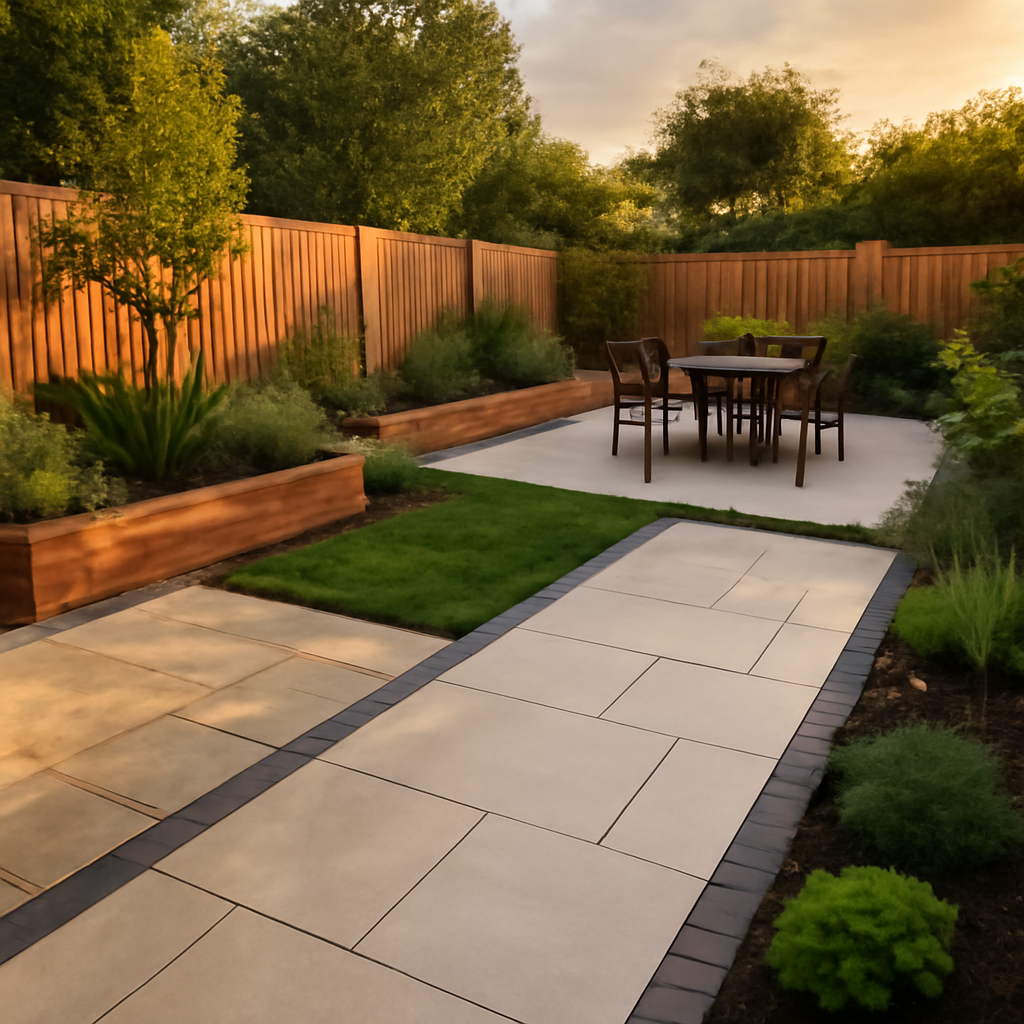
When planning a new patio or garden path in Loughborough or the wider East Midlands, choosing the right material is key to achieving a durable and attractive finish. Two popular options are porcelain paving and Indian sandstone. Each has strengths and considerations that can affect both cost and performance.
Starting with cost, Indian sandstone typically ranges from £90 to £120 per square metre installed. Porcelain paving is usually pricier, between £110 and £150 per square metre. The higher porcelain cost is due to the material itself, which can vary by slab style, as well as more precise cutting and ground preparation requirements. These prices are for straightforward sites, so expect final quotes to depend on factors like access, levels, drainage, and material specification after a site visit.
Grip or slip resistance matters, especially in wet UK weather. Indian sandstone tends to have a natural textured surface offering good grip, which often improves with weathering. Porcelain paving is typically dense and smooth but modern options come with anti-slip finishes certified for outdoor use. When safety is a priority, ask for grip ratings and examples of finished installations.
Frost resistance is another practical concern. Porcelain is highly frost-resistant because it is dense and non-porous, reducing the risk of damage from freeze-thaw cycles common in the East Midlands. Indian sandstone is porous and can absorb moisture, which might lead to occasional cracking as frost sets in. Good drainage and quality installation help mitigate frost damage for both materials.
Cleaning and maintenance are straightforward for porcelain, which resists staining and moss growth thanks to its tightly sealed surface. Indian sandstone may require more regular brushing and occasional sealing to prevent algae and dirt build-up, especially in shady or damp garden areas. Over time, sandstone can develop a natural patina that some homeowners appreciate.
Colour consistency is a notable difference. Porcelain slabs offer uniform colour and texture, which is useful for modern or minimalist garden designs. Indian sandstone varies naturally in colour and patterns, giving a warm, rustic charm that suits traditional or countryside-style gardens. Your choice will largely depend on the look you want to achieve.
In terms of suitability, porcelain paving is ideal where durability, low maintenance, and crisp aesthetics are priorities. It works well for contemporary patios, urban gardens, or where a precise finish is needed. Indian sandstone suits gardens favouring natural materials, character and where a softer, more relaxed feel is preferred. It also tends to harmonise well with planting and other organic garden features.
At Worthington Landscape & Design, we recommend visiting your garden to assess conditions and discuss your needs before deciding. Site-specific factors like soil type, drainage, garden layout and access all influence which patio material is best value and will last longest in the East Midlands climate.
For a site visit or quick quote tailored to your garden in Loughborough or nearby, WhatsApp Aaron on 07454 978031. We provide clear guidance without pressure to help you choose between porcelain paving and Indian sandstone with confidence.
WhatsApp Aaron on 07454 978031 to talk through a garden project.