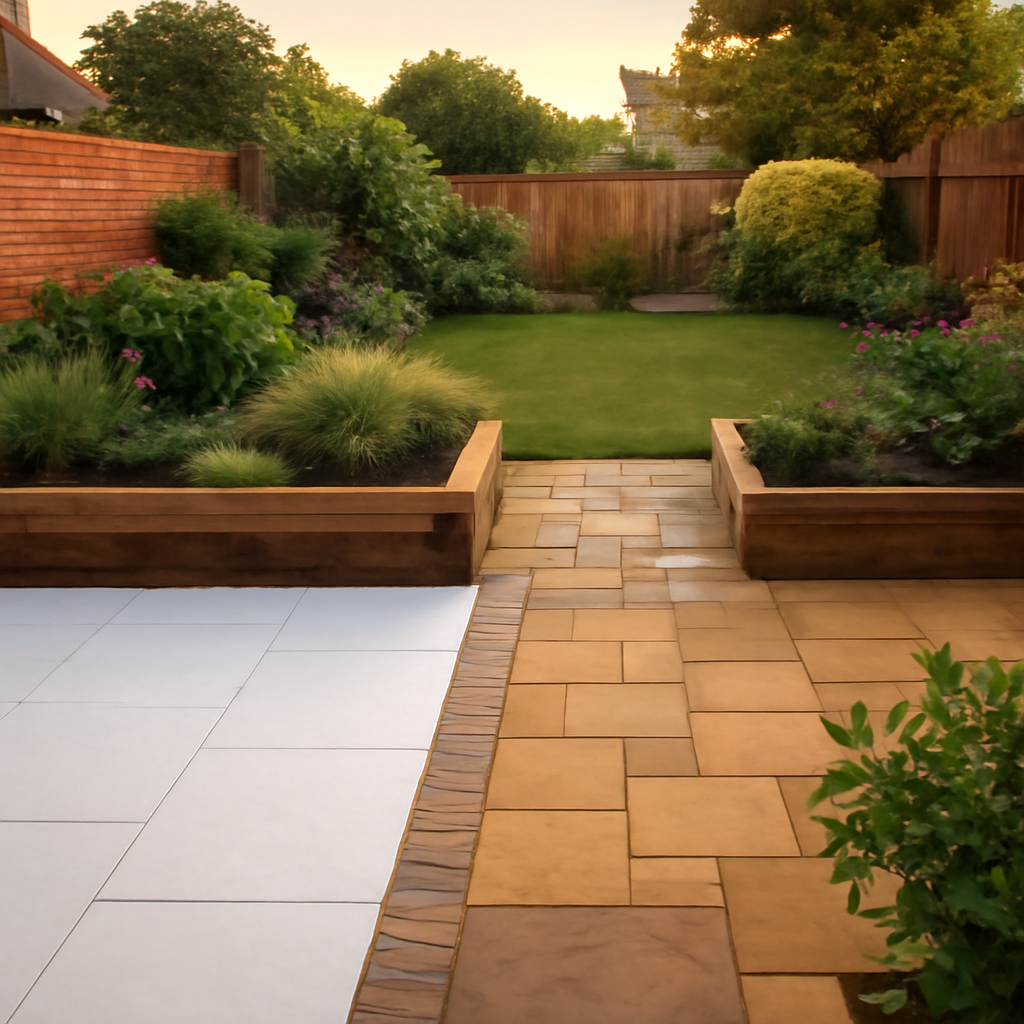
When choosing paving for your garden in the East Midlands, deciding between porcelain and Indian sandstone is a common consideration. Both materials offer distinct advantages and drawbacks depending on your garden’s conditions, style preferences, and budget. This guide highlights key factors such as cost, grip, frost resistance, cleaning, and colour consistency to help you make an informed decision.
Cost is often a major factor. Indian sandstone patios generally cost between GBP 90 to GBP 120 per square metre, including installation for straightforward access and normal ground conditions. Porcelain paving tends to be pricier, typically ranging from GBP 110 to GBP 150 per square metre. The higher price mainly reflects the material cost and the need for more precise cutting and preparation to ensure proper falls and drainage.
Grip and slip resistance are important, especially in wetter climates like the East Midlands. Indian sandstone usually offers a naturally textured surface that provides good grip. Porcelain paving can vary; some finishes are very smooth and potentially slippery when wet, but non-slip textured options are available. Consider the pattern and finish carefully if slip resistance is a priority for your garden.
Frost resistance is another practical consideration. The East Midlands experiences cold winters, so you need a paving material that can withstand freeze-thaw cycles without damage. Porcelain is highly frost resistant due to its low water absorption rate, making it very durable in winter. Indian sandstone is generally frost resistant but can vary depending on the stone’s source and quality. Some softer sandstones may suffer from frost damage over time.
Cleaning and maintenance are easier with porcelain paving because it is non-porous and less likely to stain. Indian sandstone is porous and tends to absorb dirt and moss, requiring more regular cleaning and occasional sealing to maintain its appearance. If minimal maintenance matters to you, porcelain could be the better choice.
Colour consistency is a notable difference. Porcelain paving is manufactured to have uniform colour and pattern, making it easier to achieve a sleek, modern look. Indian sandstone offers natural variations in colour and texture, which can create a warm, rustic character but with less predictability. Your design preference will guide this choice.
In terms of suitability, Indian sandstone works well with traditional and naturalistic garden styles common in the East Midlands. It pairs nicely with soft landscaping and railway sleeper raised beds. Porcelain paving suits contemporary gardens and hard landscaping with clean lines, perfect for patios and driveways that demand a polished finish.
Keep in mind that final pricing for both materials depends on factors like site access, ground levels, drainage requirements, material specification, and the complexity of the installation. It’s always best to arrange a site visit to get a tailored quote based on your garden’s specifics.
For homeowners in Loughborough and the East Midlands considering porcelain paving or Indian sandstone for their landscaping projects, a professional assessment can clarify which option suits your garden best. To discuss your ideas or book a site visit, WhatsApp Aaron on 07454 978031. We provide straightforward advice and reliable pricing to help you plan with confidence.
WhatsApp Aaron on 07454 978031 to talk through a garden project.