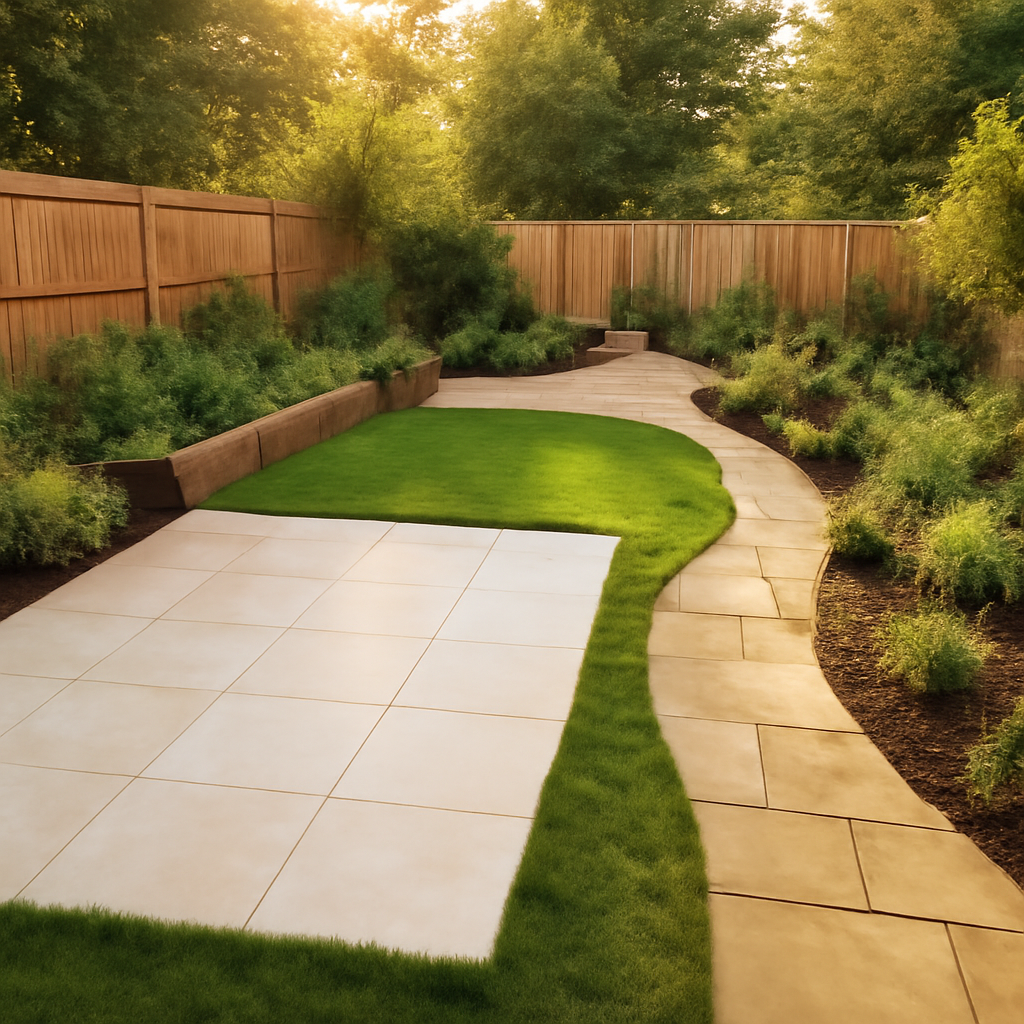
When planning a new garden patio or hard landscaping project in Loughborough or the wider East Midlands, choosing the right paving material is crucial. Two popular options are porcelain paving and Indian sandstone. Both have their strengths and will suit different garden styles and requirements. Here’s a straightforward comparison based on cost, grip, frost resistance, cleaning, and colour consistency to help you decide which material fits your project best.
Starting with cost, Indian sandstone patios typically range between £90 to £120 per square metre including installation, assuming straightforward access and normal ground conditions. Porcelain paving is generally a bit pricier, costing between £110 to £150 per square metre. This higher price is mainly due to the material cost and the extra care needed for cuts, falls, and preparation. Keep in mind these are guide prices; final quotes depend heavily on factors like site access, levels, drainage needs, and the exact materials selected.
Grip or slip resistance is an important safety consideration, especially if you have children or elderly family members. Indian sandstone, with its naturally textured surface, tends to offer good grip in dry and wet conditions. Porcelain paving can be more slippery when wet, though many manufacturers now produce finishes with textured surfaces to improve traction. It’s worth discussing your grip needs when specifying porcelain slabs to ensure safety.
Frost resistance matters in the East Midlands climate, where winters can be cold with freeze-thaw cycles. Indian sandstone is a natural stone that can vary in frost resistance depending on the quarry source and density. Generally, it performs well but may show some weathering over time. Porcelain paving is highly frost resistant because it is dense and non-porous, making it less prone to cracking or damage during harsh winters.
Cleaning and maintenance are other considerations. Indian sandstone tends to absorb dirt and may develop moss or algae in shaded, damp areas. Regular sweeping and occasional gentle cleaning usually keep it looking good. Porcelain paving’s non-porous surface makes it easier to clean; stains do not penetrate, and it is less likely to harbour moss. However, porcelain can show surface dirt on some finishes, so regular washing is still recommended.
Colour consistency is a notable difference between the two. Indian sandstone comes with natural colour variations and veining, giving each patio a unique character and a more traditional look. This can be a real benefit if you want a rustic or classic garden feel. Porcelain paving is manufactured, so colours tend to be very consistent across the slabs. This is perfect if you prefer a modern, sleek, uniform look in your landscaping.
When to choose which material largely depends on your garden's style and practical needs. If you want a natural, timeless appearance that blends well with plants and hardworking surfaces, Indian sandstone can be an excellent pick. For a contemporary garden with clean lines, easy maintenance, and high durability, porcelain paving might be more suitable.
Both materials work well for patios, pathways, and even pool surroundings in East Midlands gardens, but a professional site visit is advisable to check ground levels, drainage, and access. Each garden is unique, and these factors can affect both cost and final appearance.
At Worthington Landscape & Design, we offer personal, local expertise in Loughborough and the East Midlands. Whether you’re leaning towards porcelain paving or Indian sandstone, we can advise on what suits your space best and provide an accurate quote based on a site visit. For a quick quote or to arrange a free site visit, WhatsApp Aaron on 07454 978031.
WhatsApp Aaron on 07454 978031 to talk through a garden project.