When planning a new patio or hard landscaping feature in your Loughborough or East Midlands garden, one key decision is choosing the right paving material. Two popular options are porcelain paving and Indian sandstone, each with distinct benefits and considerations. This guide compares these materials on cost, grip, frost resistance, cleaning, colour consistency, and suitable garden styles to help you make an informed choice.
Starting with cost, Indian sandstone tends to be less expensive than porcelain paving. Typical installed prices for Indian sandstone patios in the East Midlands range from £90 to £120 per square metre, assuming straightforward access and normal ground conditions. Porcelain paving generally costs between £110 and £150 per square metre, reflecting higher material prices and the complexity of cutting and preparation. Final quotes will always depend on site specifics such as access, ground levels, drainage, and the exact paving specification.
Grip is an important safety consideration, especially in outdoor spaces prone to wet or frosty conditions. Indian sandstone offers a naturally textured surface which generally provides good slip resistance. Porcelain paving can be very smooth or have a textured finish depending on the product chosen—some porcelain slabs offer good grip, but others can become slippery when wet. It’s important to specify anti-slip finishes if grip is a priority.
Regarding frost resistance, porcelain paving is highly durable and non-porous, making it excellent at resisting frost damage. Indian sandstone is porous and while generally resilient, it can be vulnerable to frost-related cracking or surface flaking over time if not properly sealed and installed with good drainage.
Cleaning and maintenance requirements differ as well. Porcelain paving is low-maintenance and easy to clean due to its non-porous surface—usually just a simple wash with water and mild detergent is enough. Indian sandstone, being porous, can stain and often needs sealing to protect against dirt, moss, and algae buildup, plus occasional deep cleaning.
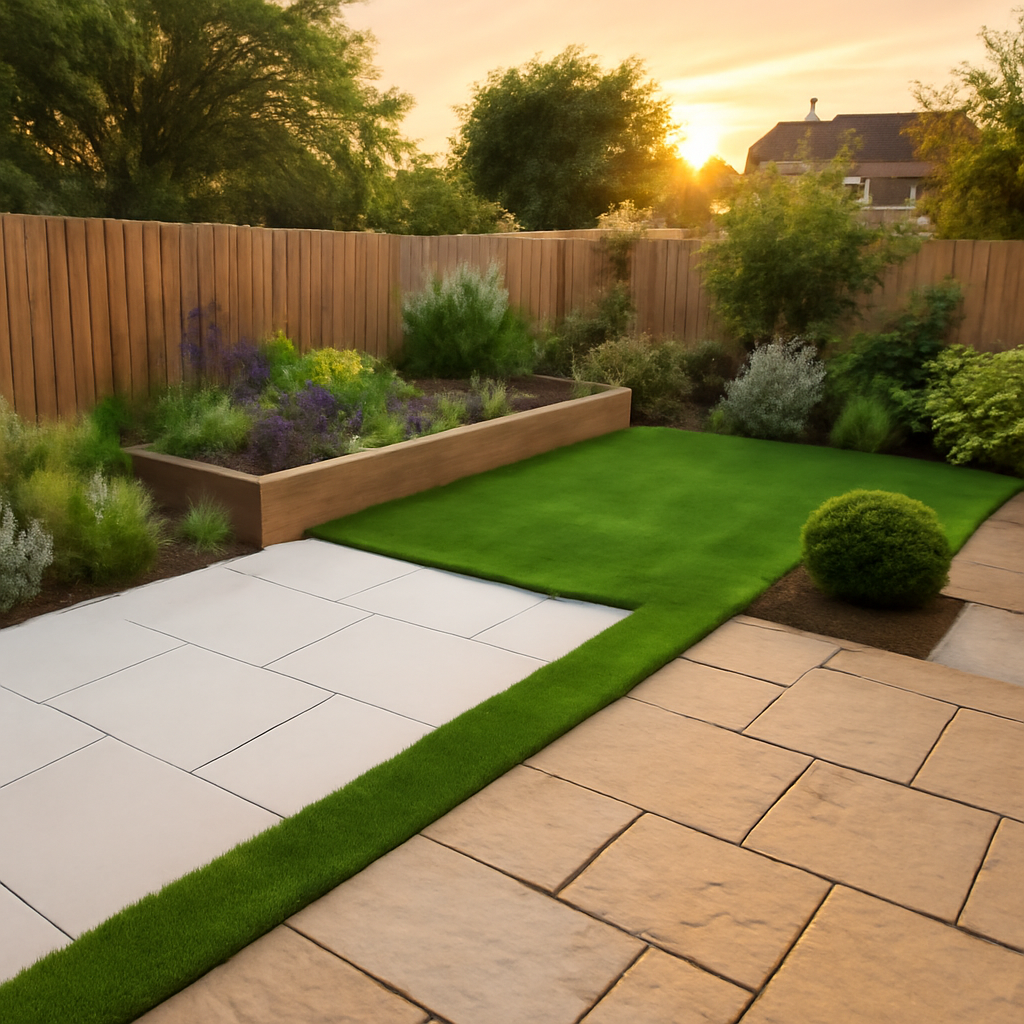
Colour consistency is another factor to consider. Porcelain paving is factory-produced, resulting in very consistent colour and finish across all slabs, ideal for modern and uniform designs. Indian sandstone is a natural stone with variations in shade, veining, and texture, which suits rustic and natural garden styles but means no two slabs look exactly the same.
So, when should you choose porcelain paving and when Indian sandstone? Porcelain is well-suited to contemporary gardens or where a sleek, uniform appearance and low maintenance are priorities. Indian sandstone fits traditional, rural, or naturalistic garden designs where the beauty of natural stone textures and variation is desired.
At Worthington Landscape & Design, we treat each project individually, considering the site conditions and your garden’s style to recommend the best materials. Our pricing guide provides a starting point for budgeting but we always advise a site visit to discuss drainage, access, levels, and your preferences to provide an accurate quote.
If you’d like to explore these options further in your East Midlands garden, get in touch for a site visit or a quick quote. WhatsApp Aaron on 07454 978031, and we’ll be happy to advise you on the best solution for your landscaping needs.
WhatsApp Aaron on 07454 978031 to talk through a garden project.