When it comes to choosing paving materials for gardens in Loughborough and the wider East Midlands, two popular options stand out: porcelain paving and Indian sandstone. Each material has its benefits and considerations, especially given the local climate and landscaping requirements. This guide compares them on cost, grip, frost resistance, cleaning, colour consistency, and suitability to help you make an informed choice.
Starting with cost, Indian sandstone is generally more affordable, with typical installed prices ranging from £90 to £120 per square metre for straightforward access and normal ground conditions. Porcelain paving tends to be pricier, between £110 and £150 per square metre, reflecting both the higher material cost and the additional work often required for cutting, adjusting falls, and preparing the base. Keep in mind that final prices can vary based on site specifics such as access, ground levels, drainage, and material specification.
Grip is an important factor, particularly for safety in the wetter East Midlands climate. Indian sandstone offers a natural textured surface that provides reasonable slip resistance, though this can vary depending on the stone's finish. Porcelain paving usually comes with a textured or anti-slip surface treatment that delivers excellent grip even when wet, making it a good option for family gardens or areas prone to moisture.
Regarding frost resistance, porcelain paving excels thanks to its low water absorption rate. It is less likely to crack or suffer damage during freeze-thaw cycles common in our region. Indian sandstone, being a natural stone, can be more susceptible to frost damage, especially if the stone is of a softer variety or has higher porosity. However, with proper installation and sealing, Indian sandstone can still perform well outdoors.
Cleaning and maintenance differ between these two materials. Porcelain paving is non-porous, making it resistant to staining and straightforward to clean with basic washing or wiping. Indian sandstone, on the other hand, being porous, can absorb dirt and organic matter, potentially leading to staining or algae growth if not sealed and cleaned regularly. Periodic sealing is recommended for sandstone to maintain its appearance and longevity.
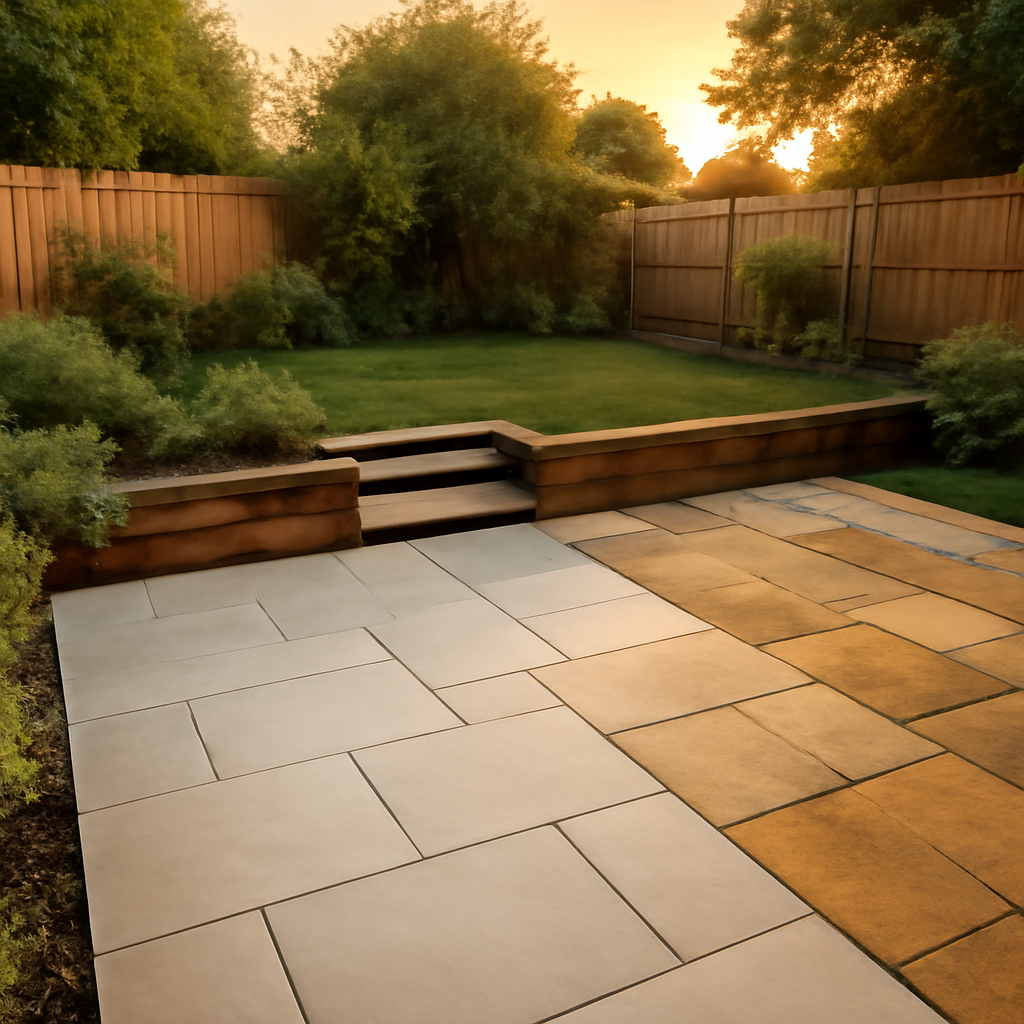
Colour consistency is another point to consider. Indian sandstone is a natural product, so colour and pattern can vary across slabs, giving a more rustic and unique look. If you prefer subtle variations and a natural vibe, sandstone is an attractive choice. Porcelain paving is manufactured, allowing for uniform colours and patterns. This consistency suits more contemporary or formal garden designs where a sleek, even appearance is preferred.
In terms of suitability, Indian sandstone complements traditional East Midlands garden styles well and is ideal if you want an organic feel with naturally evolving tones. Porcelain is better suited to modern gardens or those where low maintenance and durability are priorities. Both materials work well with hard landscaping elements like patios, paths, and terraces, but the choice depends on your garden’s style, exposure, and your personal preferences.
For tailored advice on which paving material fits your garden best, a site visit is always beneficial. Factors such as ground preparation, drainage, clearance, and access can affect the final cost and installation time. Worthington Landscape & Design offers local expert landscaping services around Loughborough and the East Midlands, including 3D garden design to visualise your project before work starts.
Typical guide prices: Indian sandstone patios £90-£120 per sqm, porcelain patios £110-£150 per sqm, with final quotes depending on site conditions and material choices. For a site visit or quick quote, WhatsApp Aaron on 07454 978031. This practical approach ensures you get the right solution fit for your garden and budget.
WhatsApp Aaron on 07454 978031 to talk through a garden project.