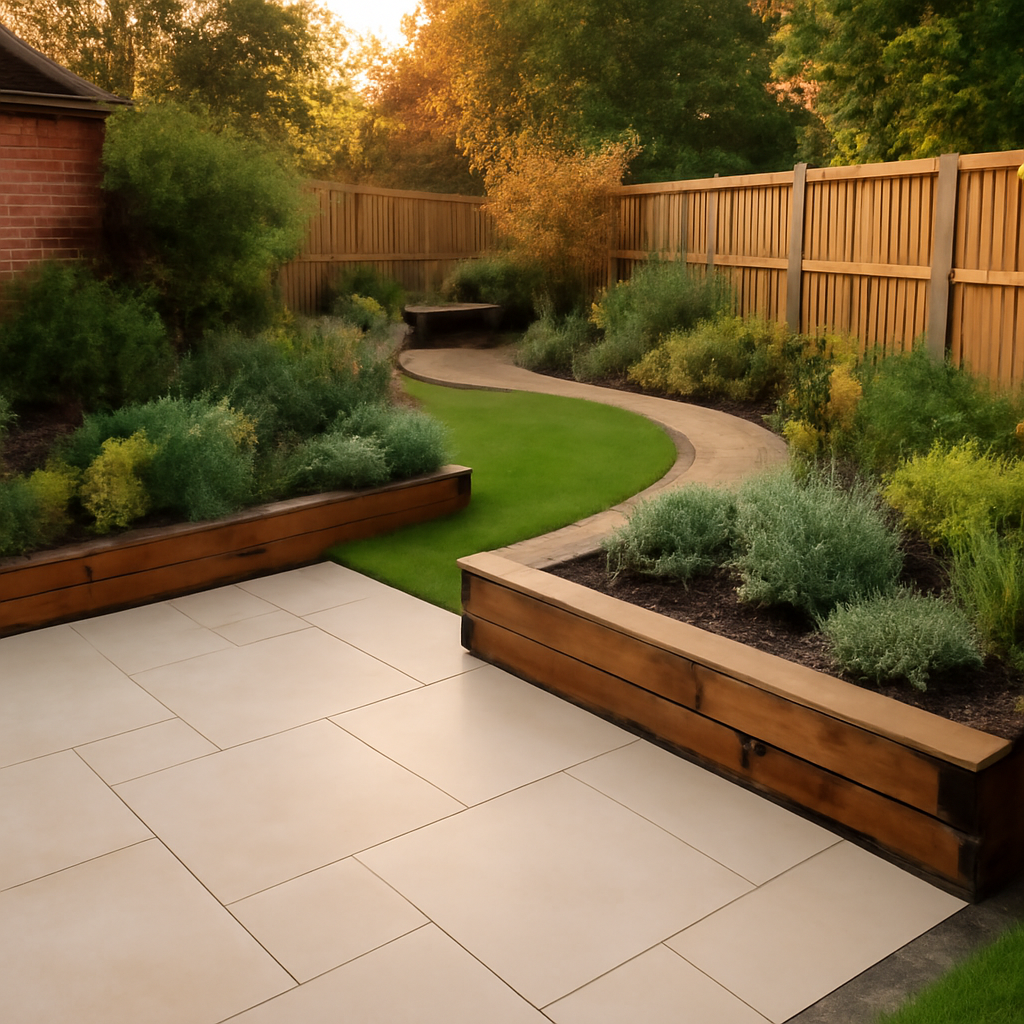
When planning new hard landscaping for gardens in Loughborough and the wider East Midlands, two popular choices for patios and paths are porcelain paving and Indian sandstone. Both materials have strengths and trade-offs depending on your garden’s requirements, budget and style preferences.
Cost is often a key factor. Indian sandstone patios typically range from £90 to £120 per square metre installed, assuming straightforward access and normal ground conditions. Porcelain paving tends to be pricier, usually between £110 and £150 per square metre. The higher cost mainly reflects the price of the material itself and extra care needed for cuts, falls and preparation to achieve a good finish. Do note these figures are guides only — a site visit is essential to refine an accurate quote.
In terms of grip underfoot, Indian sandstone offers a naturally textured surface, which generally provides good slip resistance even when wet, making it suitable for family gardens or areas near water features. Porcelain paving is manufactured to be hard-wearing, but the grip can vary depending on the specific finish and manufacturer. Matte or textured porcelain slabs have improved traction compared to glazed varieties, so it’s worth discussing options with your supplier.
Frost resistance is an important consideration in the East Midlands climate where winters can bring freezing temperatures. Porcelain paving is highly frost resistant due to its low water absorption rate, meaning it is less likely to crack or spall. Indian sandstone, being a natural stone, can be more susceptible to frost damage, especially if it contains softer minerals or has been sourced from less durable quarries. Proper installation and sealing will help reduce frost issues with sandstone.
Cleaning and maintenance habits also differ. Indian sandstone’s porous nature means it can stain more easily and may require periodic sealing to maintain appearance and protect from moss or algae. It can be cleaned with gentle detergents and careful brushing. Porcelain paving is very low maintenance, with a non-porous surface that resists staining and makes washing down with a hose or pressure washer straightforward.
Colour consistency is another factor to keep in mind. Indian sandstone varies naturally in colour, veining, and tone, which adds character and a unique look to each garden. However, this natural variation means slabs may need careful selection and laying to create a balanced appearance. Porcelain paving, on the other hand, tends to offer much more consistent colours and patterns as it is factory produced. This suits designs where a clean, uniform aesthetic is desired.
When deciding between porcelain paving and Indian sandstone, consider the style and environment of your garden. Indian sandstone typically suits more traditional or rustic East Midlands gardens and can complement brick, timber and established planting well. Porcelain paving fits modern, contemporary styles and family gardens needing durable, low-maintenance surfaces that withstand heavy use.
Both materials work well for patios and paths in Loughborough and East Midlands landscaping projects. Final choice often depends on your budget, site conditions, and personal style preferences. Factors like garden access, levels, drainage and clearance will impact cost and installation complexity for either option.
If you’re unsure which paving material best suits your garden, a professional site visit is recommended. This allows assessment of your space, ground conditions and lifestyle needs to provide tailored advice and an accurate quote. For a site visit or quick quote, WhatsApp Aaron on 07454 978031.
WhatsApp Aaron on 07454 978031 to talk through a garden project.