When planning a garden landscaping project in Loughborough or the wider East Midlands, choosing the right patio material plays a key role in both aesthetics and durability. Two popular options are porcelain paving and Indian sandstone, each with its distinct advantages. Understanding their differences helps you make an informed decision that suits your garden’s needs and budget.
Starting with cost, Indian sandstone typically ranges between GBP 90 to GBP 120 per square metre installed, assuming straightforward access and normal ground conditions. Porcelain paving tends to be slightly more expensive, from GBP 110 to GBP 150 per square metre, reflecting its higher material costs and installation complexity, especially when cuts or precise falls are involved. Remember, final quotes always depend on site specifics like access, drainage, preparation, and material grade.
Grip is an important practical consideration, especially in a damp climate like the East Midlands. Indian sandstone generally offers good natural slip resistance thanks to its textured surface. Porcelain paving can vary widely in grip depending on the finish chosen—some polished porcelains can be slippery when wet, while matt or textured finishes perform much better. Always check slip ratings for porcelain options if safety is a priority.
Frost resistance is vital given the colder months we experience locally. Porcelain paving is highly frost resistant because it’s a dense, low-porosity material that absorbs little water, reducing the risk of cracking in freeze-thaw cycles. Indian sandstone is natural stone and can vary by quarry source; while generally frost resistant, some varieties may be softer or more porous, making them susceptible to frost damage over time.
Cleaning and maintenance differ too. Porcelain paving is low maintenance, easy to clean with just water and mild detergent, and resistant to staining and algae growth. Indian sandstone, while beautiful, is more porous and can absorb dirt and algae, requiring periodic sealing and more frequent cleaning to keep it looking its best.
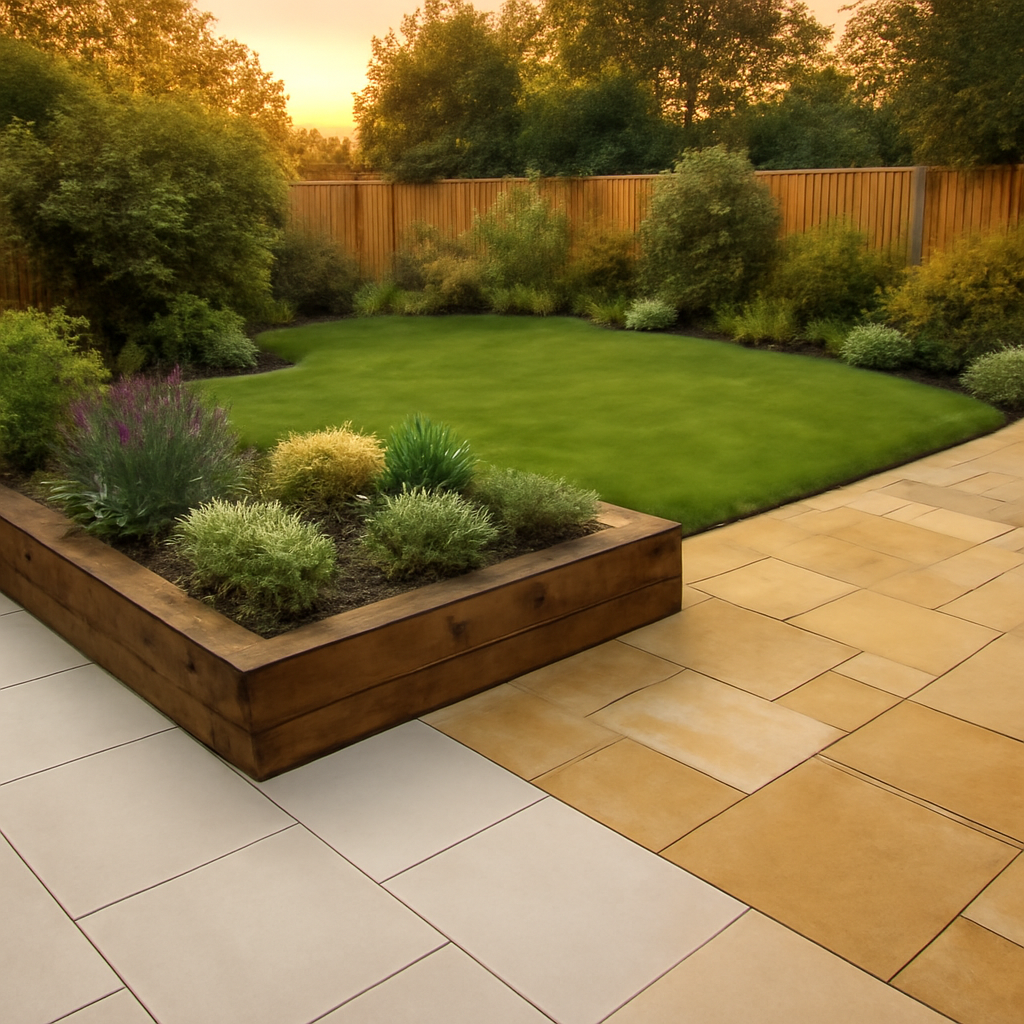
Colour consistency is another factor. Porcelain paving provides very uniform colour and pattern since it’s manufactured, which suits modern and contemporary designs. Indian sandstone offers a richer, natural variation in colour and texture, often preferred for traditional or rustic gardens, but expect some variation between slabs.
In terms of when each material suits best, porcelain paving is ideal for busy family gardens, pool surrounds, or areas needing low maintenance and high durability. It also suits contemporary designs requiring clean, consistent looks. Indian sandstone works well in gardens where warmth, natural character, and a softer feel underfoot are desired, often complementing cottage or country style landscapes.
Both materials can integrate well with other landscaping elements such as railway sleeper raised beds or block paving driveways, and can be designed in 3D to visualise the final project. Due to the variables involved, I recommend a site visit to assess conditions and discuss your preferences.
For a reliable quote or site visit to discuss porcelain paving vs Indian sandstone for your East Midlands garden, WhatsApp Aaron on 07454 978031. We can provide practical advice tailored to your site, helping you choose a long-lasting and suitable solution for your landscaping needs.
WhatsApp Aaron on 07454 978031 to talk through a garden project.