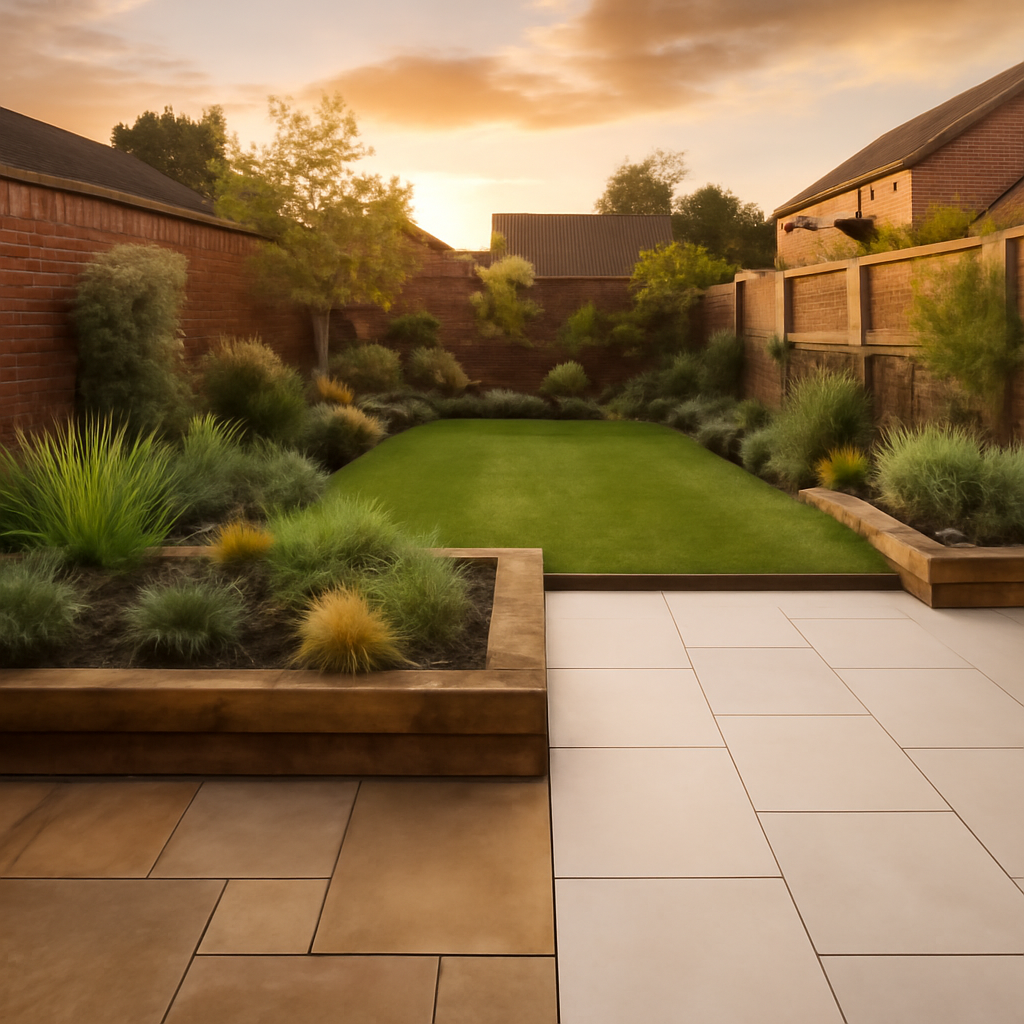
Choosing the right paving material is key to a successful garden makeover in the East Midlands. Two popular options for patios and hard landscaping in Loughborough and surrounding areas are porcelain paving and Indian sandstone. Both have their strengths and drawbacks, and understanding these will help you pick the best fit for your outdoor space.
Cost is often a deciding factor. Indian sandstone typically costs between £90 and £120 per square metre installed for straightforward access and normal ground conditions. Porcelain paving tends to be a bit pricier, ranging from £110 to £150 per square metre, reflecting higher material costs and sometimes more complex installation due to cuts and preparation. Final quotes for either will depend on site specifics such as access, ground levels, drainage and material specification, so a site visit is always recommended.
When it comes to grip and safety, Indian sandstone offers a natural texture that can be less slippery when wet. Porcelain paving, although smooth, is generally designed with anti-slip properties in mind; however, it can be more slippery when wet or icy unless you choose specifically textured or matte finishes.
Frost resistance is crucial for our East Midlands climate. Porcelain paving is typically more frost-resistant due to its low water absorption rate, meaning it fares better in freeze-thaw conditions without cracking. Indian sandstone, being a natural stone, can be more vulnerable to frost damage over time if not properly sealed or maintained.
Cleaning and maintenance differ as well. Porcelain slabs are non-porous and easy to clean, resisting stains and algae better than sandstone. Indian sandstone’s porous surface tends to absorb dirt and organic matter, so it requires periodic sealing and more regular maintenance to keep it looking good.
Colour consistency is another point to consider. Porcelain paving is manufactured to offer consistent colour and pattern across all slabs, ideal if you want a uniform look. Indian sandstone's natural variation in colour and texture brings character and individuality to each project but expect some variation between slabs.
So, when to use each? Indian sandstone suits gardens where a natural, traditional, or rustic look is preferred. It works well in more relaxed landscapes and complements planting with its earthy tones. Porcelain paving is ideal for modern, sleek designs or where low maintenance and durability are priorities, such as busy patios or outdoor dining areas.
If your garden has tricky access or unusual ground levels, consider that porcelain paving installation might require more groundwork to ensure proper laying due to its rigidity and size. Indian sandstone’s smaller and irregular pieces may be easier to work around uneven terrain.
In the East Midlands, especially around Loughborough, the choice between porcelain paving and Indian sandstone comes down to style preferences, budget, and practical considerations like grip, frost resistance, and maintenance. A bespoke solution may involve combining both materials for different areas of your garden.
For a tailored recommendation and reliable price based on your garden’s specifics, I recommend a site visit. Contact Aaron via WhatsApp on 07454 978031 for a quick quote or to arrange a visit. This way, you’ll get an accurate estimate considering access, levels, drainage, clearance and material choices.
WhatsApp Aaron on 07454 978031 to talk through a garden project.