Choosing the right paving material is an important step when planning a garden in the East Midlands. At Worthington Landscape & Design, we often get asked about the differences between porcelain paving and Indian sandstone. Both options have their strengths, and understanding these can help you make a practical decision for your Loughborough or East Midlands landscaping project.
Cost is usually one of the first considerations. Indian sandstone patios generally cost between £90 and £120 per square metre, including installation, assuming straightforward access and normal ground conditions. Porcelain paving tends to be a bit pricier, ranging from £110 to £150 per square metre, mainly due to higher material costs and the potential for more complex cuts or preparation such as falls for drainage. Remember that final pricing depends on site specifics such as access, levels, drainage, and material choices, so a site visit is always recommended.
When it comes to grip, Indian sandstone offers a naturally textured surface that provides good traction, which is useful in wetter conditions common in the East Midlands. Porcelain paving, being a manufactured product, can vary in texture but generally has a smoother finish. However, many porcelain slabs today come with anti-slip surface treatments to make them safer underfoot. In areas prone to frequent rain or where safety is a priority, this is an important factor to consider.
Frost resistance is critical for East Midlands gardens because winters can be harsh. Porcelain paving tends to outperform Indian sandstone here; it is less porous and can better resist frost damage and cracking. Indian sandstone, being a natural stone, has more variation; some types can be vulnerable to frost if not sealed or properly installed with good drainage.
Cleaning and maintenance are another practical consideration. Porcelain paving is very low maintenance—easy to clean with water and non-abrasive cleaners—and resists staining and moss growth better due to its dense, non-porous surface. Indian sandstone, while beautiful, is porous and can stain or develop algae or moss in shaded or damp areas, requiring occasional sealing and more regular cleaning to keep it looking its best.
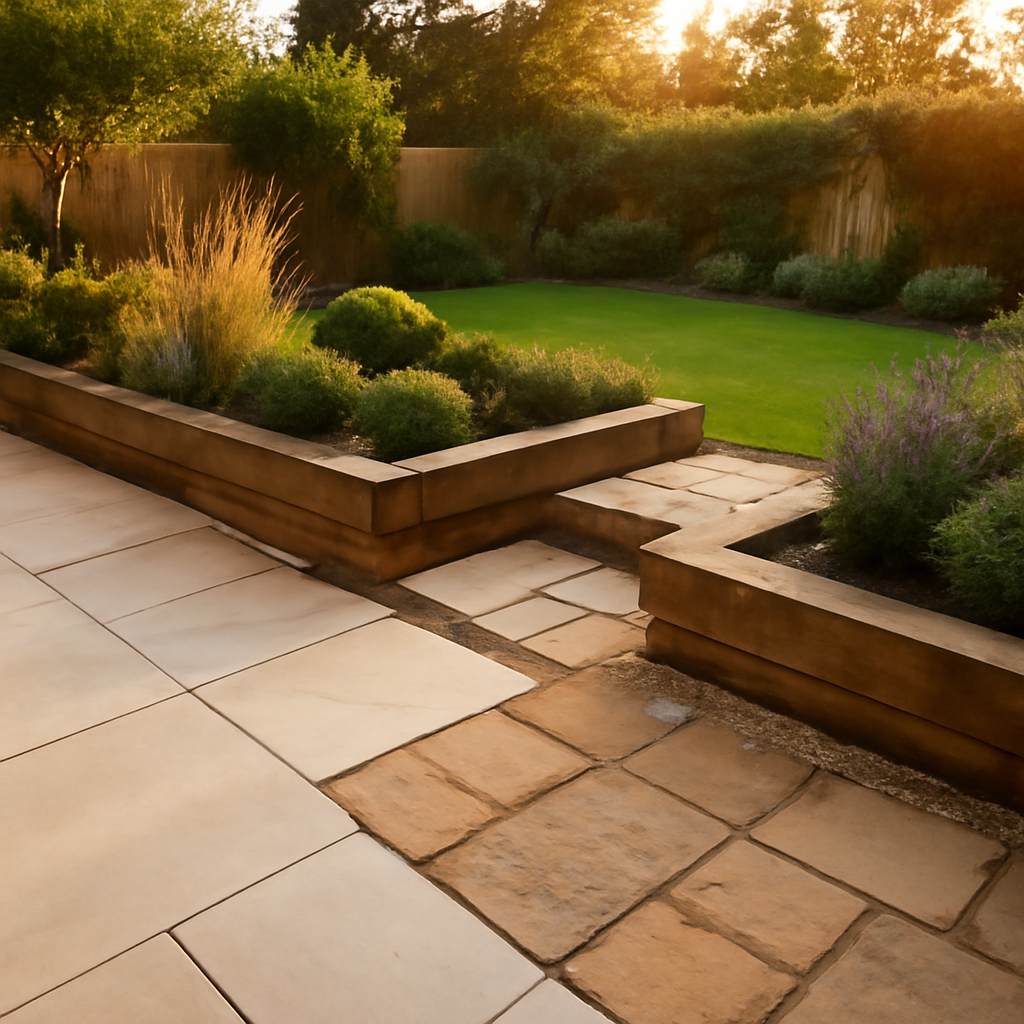
Colour consistency differs significantly between the two. Porcelain paving is manufactured in controlled conditions, so you get uniform colour and pattern, which suits modern, sleek garden designs. Indian sandstone offers a natural, varied look with unique colour tones and textures in each slab, ideal if you want a more rustic or traditional feel in your garden.
So, when might each material suit your garden best? Porcelain paving fits well in contemporary or minimalist gardens where durability and low maintenance are priorities. Indian sandstone suits gardens where natural aesthetics and a vintage or countryside vibe are preferred, and where slight colour variation can be an advantage.
If you’re considering associated landscaping elements, remember that block paving driveways typically range from £80 to £115 per sqm, and railway sleeper raised beds go from £85 to £140 per linear metre depending on specs. Turfing costs between £18 and £35 per sqm, but preparation costs are separate. For those wanting a detailed plan, 3D garden design is a useful option, priced from £150 to £450 depending on revisions and garden size.
Every landscaping project is unique and site conditions vary greatly. For a clear understanding of what suits your garden’s needs and to get an accurate quote, a site visit is essential. Feel free to get in touch for a prompt quote or to arrange a site visit. WhatsApp Aaron on 07454 978031 and let’s make your East Midlands garden look its best with proper advice and quality work.
WhatsApp Aaron on 07454 978031 to talk through a garden project.