Choosing the right paving material for your garden in Loughborough or the wider East Midlands can be tricky. Two popular options for patios and hard landscaping are porcelain paving and Indian sandstone. Both have their strengths and drawbacks depending on your budget, garden style, and practical needs. Here’s a straightforward comparison to help you decide.
When it comes to cost, Indian sandstone patios generally range between £90 and £120 per square metre for straightforward installations with normal ground conditions. Porcelain paving tends to be more expensive, typically costing £110 to £150 per square metre. The higher price is due to the cost of the material itself and the need for more careful cuts, fall preparation, and fixing. Keep in mind, final prices vary depending on access, site levels, drainage, and specific material choices.
Grip and safety are important to consider, especially in wet or frosty conditions common in the East Midlands. Indian sandstone’s natural textured surface offers decent grip, though it can become slippery when wet if the stone is polished. Porcelain paving, on the other hand, often has a pressed or textured finish designed to improve slip resistance. It’s worth checking the slip ratings of the specific porcelain slabs you choose.
Frost resistance is another key factor given the East Midlands’ winter weather. Porcelain paving is fired at very high temperatures, making it very dense and non-porous. This gives porcelain excellent frost resistance and low water absorption, reducing the risk of cracks during freeze-thaw cycles. Indian sandstone is a natural stone with varying porosities depending on the quarry. While good quality sandstone works well if sealed and maintained, it can be more prone to frost damage over time.
In terms of cleaning and maintenance, porcelain paving is low maintenance. It resists staining, moss, and algae better due to its non-porous nature, and cleaning is usually just a simple wash-down. Indian sandstone requires more care to prevent staining and moss growth. It’s advisable to seal sandstone regularly to maintain its appearance and durability.
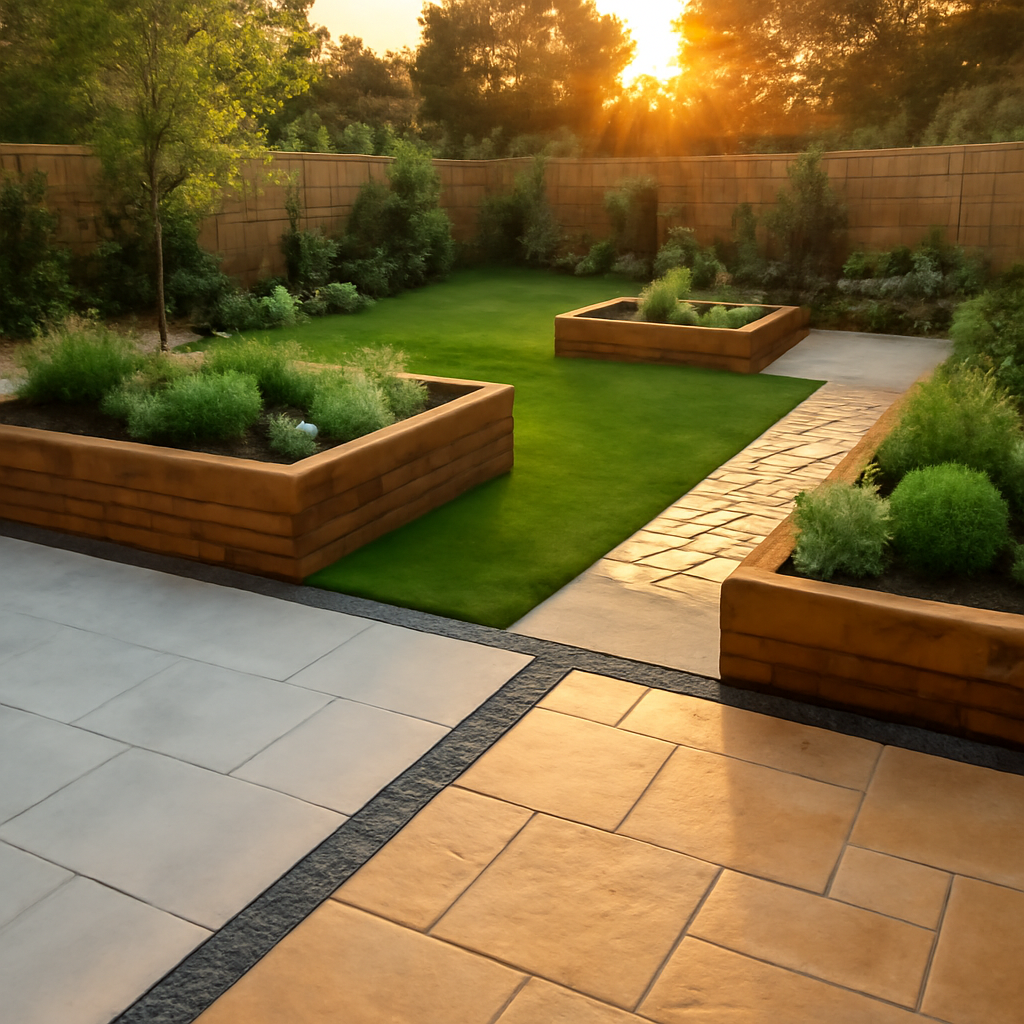
Colour consistency varies significantly between the two. Porcelain paving offers uniform colour and texture due to controlled manufacturing processes, appealing if you want a sleek, modern look. Indian sandstone provides natural variation in colour and pattern, which many homeowners find attractive for creating a characterful, rustic garden feel.
When to choose each material often comes down to style and site conditions. Porcelain paving works well for contemporary gardens or where a clean, colour-consistent finish is desired. It’s also a good choice for sites with challenging drainage or frost concerns. Indian sandstone suits more traditional or informal gardens, and where you want a natural stone look that blends with the local environment.
Both materials can be excellent choices for East Midlands landscaping projects, but the best option depends on your individual garden, budget, and taste. If you’re unsure, a site visit can make a big difference in assessing ground conditions, access, and discussing design options.
For a practical, experienced assessment tailored to your project in Loughborough or the East Midlands, get in touch with Aaron at Worthington Landscape & Design. For a site visit or a quick quote, WhatsApp Aaron on 07454 978031 to discuss your patio, 3D garden design, or hard landscaping needs.
WhatsApp Aaron on 07454 978031 to talk through a garden project.