When planning a new patio or outdoor space in Loughborough or the wider East Midlands, choosing the right paving material is key to achieving a durable, attractive garden. Porcelain paving and Indian sandstone remain two of the most popular choices in local landscaping projects. Each has strengths and considerations worth weighing up before investing in your outdoor area.
Cost is often a starting point for many homeowners. Indian sandstone patios typically cost between GBP 90 and GBP 120 per square metre, including installation for straightforward access and normal ground conditions. Porcelain paving carries a higher material cost, ranging from GBP 110 to GBP 150 per square metre installed. The final quote for either can change depending on site specifics like access, ground levels, drainage needs, and cuts required for falls.
Grip underfoot is an important safety factor, especially in a climate like the East Midlands, where damp conditions are common. Indian sandstone naturally offers a textured surface that provides good grip but can become slippery when wet or covered in algae. Porcelain paving has improved significantly in slip resistance, often designed with anti-slip finishes or textured surfaces, making it a strong contender for family gardens.
Frost resistance also plays a role in material choice. Indian sandstone is generally frost resistant but being a natural stone, it can be prone to slight surface weathering or occasional flaking over many years depending on quality and maintenance. Porcelain paving is highly frost resistant, thanks to very low water absorption, making it ideal for the freeze-thaw cycles common in the East Midlands.
Cleaning and maintenance differ between the two materials. Indian sandstone benefits from a sealant to reduce staining and algae growth but will require regular cleaning to keep its natural look. It can sometimes stain or develop moss in shady, damp conditions. Porcelain paving is easier to clean with a simple wash-down, is stain-resistant, and does not require sealing, helping keep your garden looking smart with less effort.
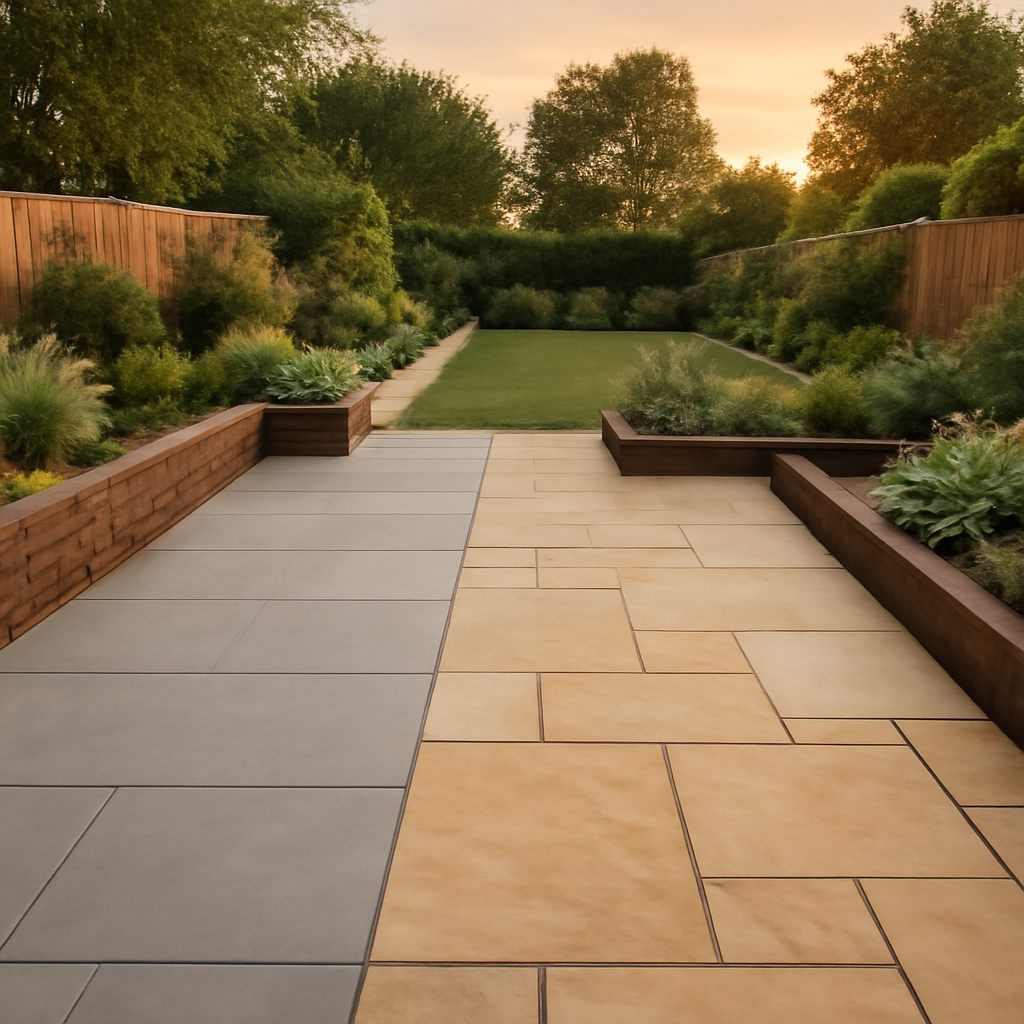
Colour consistency is another factor. Indian sandstone offers natural colour variation and subtle veining, giving a warm and organic feel to gardens. This suits rustic, traditional, or natural-style landscaping schemes. Porcelain paving, on the other hand, delivers highly consistent colours and patterns, offering a sleek, modern look with uniformity that appeals to contemporary garden designs.
When to choose each material often comes down to style and site conditions. Indian sandstone works well in larger gardens where natural textures blend with greenery and plants. It’s also suitable if you prefer a genuinely natural stone feel. Porcelain paving is a practical choice for smaller gardens, urban settings, or where a low-maintenance, durable surface is preferred. It stands up well to heavy foot traffic and is great for families or outdoor entertaining spaces.
Both porcelain paving and Indian sandstone require professional installation to suit site specifics including drainage and ground preparation. I recommend a site visit to assess your garden's access, slopes, and any existing ground conditions before finalising your choice or quote.
At Worthington Landscape & Design, I offer tailored landscaping and 3D garden design services across Loughborough and the East Midlands. If you want to discuss porcelain paving vs Indian sandstone for your garden or get a quick, no-obligation quote, please WhatsApp me, Aaron, on 07454 978031. Let's explore what suits your garden best.
WhatsApp Aaron on 07454 978031 to talk through a garden project.