Choosing the right patio material is an important decision for any garden project in Loughborough or the wider East Midlands. Two of the most popular options are porcelain paving and Indian sandstone. Each has its strengths and weaknesses, and understanding these can help you get the best results for your space as well as your budget.
When it comes to cost, Indian sandstone patios typically range from £90 to £120 per square metre for straightforward installations on normal ground conditions. Porcelain paving generally comes in higher, at around £110 to £150 per square metre. The porcelain price variation depends on the slab choice, complexity of cuts, falls, and site preparation. It’s worth noting that these are guide prices; a site visit is essential to provide a final quote as factors like access, levels, drainage, and material specification all impact the cost.
Grip and safety are key considerations, especially with our variable East Midlands weather. Indian sandstone usually offers good natural grip, which helps prevent slips in damp conditions. Porcelain paving can sometimes be more slippery when wet, although many modern porcelain slabs come with textured or anti-slip finishes designed to improve traction. If safety is a big priority, especially around pools or sloped areas, this is worth discussing during the project planning.
Speaking of weather, frost resistance is crucial for patio materials here. Porcelain paving is highly frost resistant due to its low porosity and manufacturing process, making it a durable choice in freezing conditions. Indian sandstone varies depending on the specific stone and its finish, but generally, it holds up well in frost if properly sealed and maintained. However, sealing is recommended to reduce frost damage and staining for sandstone patios.
Cleaning and maintenance are other practical points to consider. Porcelain paving is low maintenance since it resists staining and can be easily cleaned with water and a mild detergent. Indian sandstone, being natural stone, may require regular sealing to protect it from dirt, moss, and algae build-up. It might also need more frequent cleaning to keep it looking at its best over time.
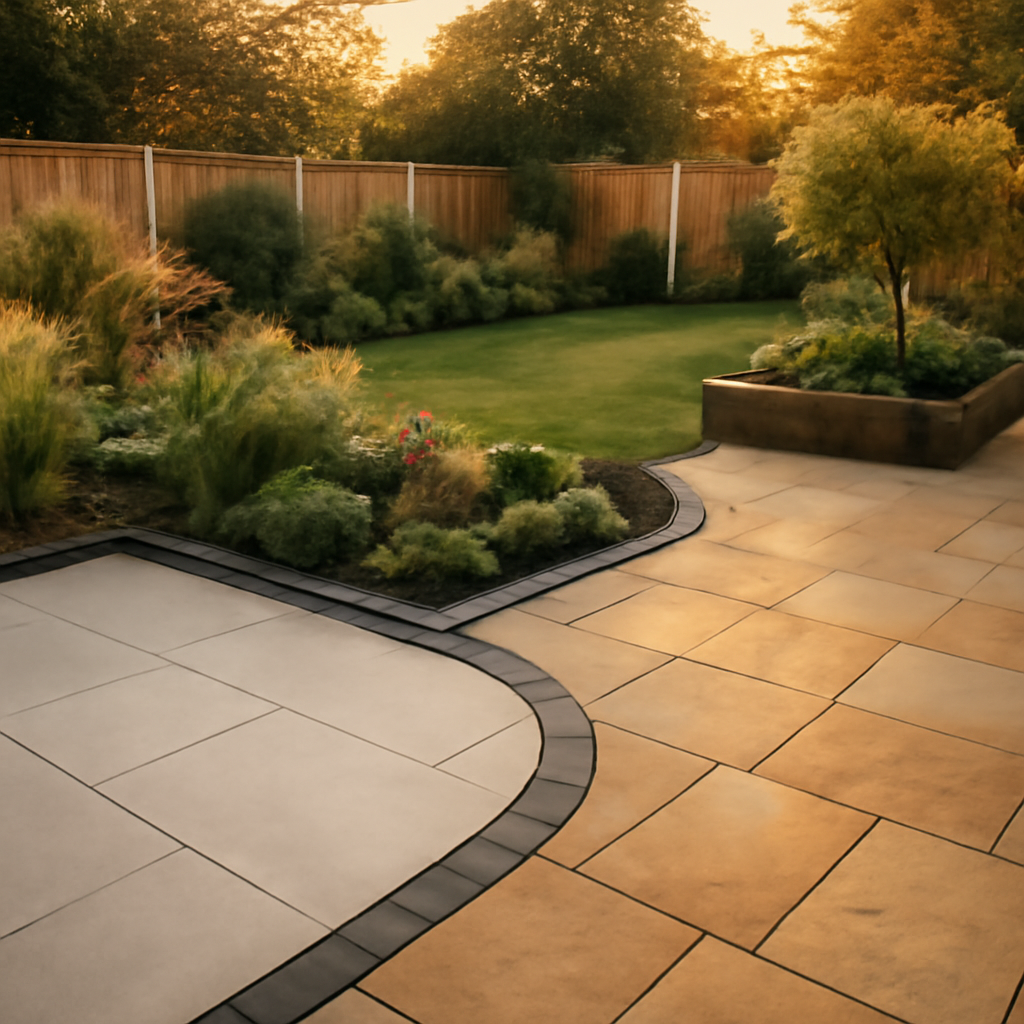
Colour consistency is where porcelain paving stands out. Porcelain slabs are manufactured for a uniform appearance, which suits contemporary or minimalist garden designs. Indian sandstone offers unique natural colour variations and textures that many gardeners find appealing for creating characterful and warm outdoor spaces. Your choice here will depend on the style you want and how much natural variation you’re comfortable with.
In terms of suitability, Indian sandstone works well for homeowners wanting a traditional or rustic look that blends with natural surroundings. It’s often used in Loughborough gardens connected to period properties or rural settings. Porcelain paving fits modern gardens or urban environments with its sleek finish and wide range of colour and pattern options, plus its durability suits heavy use areas.
If you’re still unsure which material fits your garden best or want an expert view on installation specifics, I recommend a site visit. We can assess your garden’s levels, drainage, access, and other conditions before giving an accurate quote and design advice. As a sole trader specializing in 3D garden design and hard landscaping in Loughborough and the East Midlands, I’m happy to help with all aspects from planning to completion.
For a site visit or quick quote, please WhatsApp Aaron on 07454 978031. Getting the right advice early can save time and expense later while making sure your garden is both beautiful and practical.
WhatsApp Aaron on 07454 978031 to talk through a garden project.