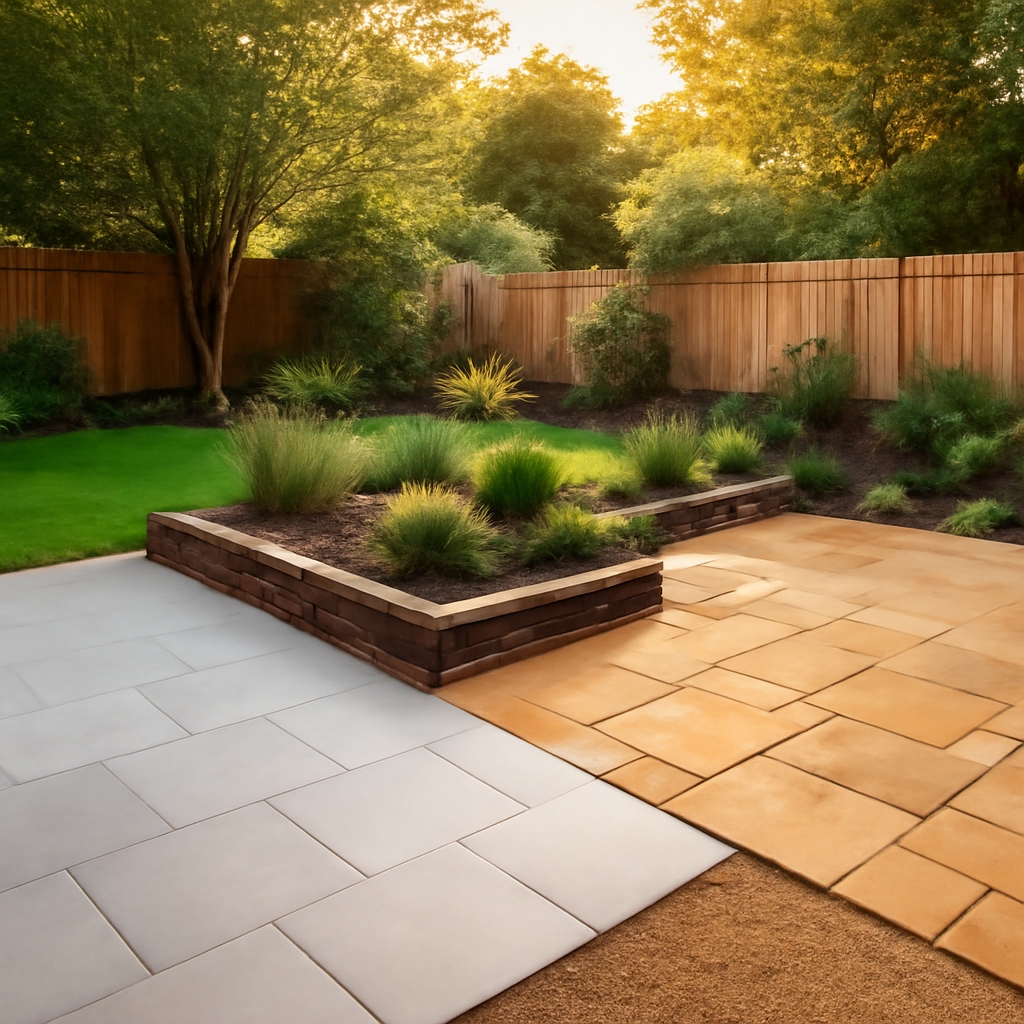
When planning a garden makeover in Loughborough or the wider East Midlands, choosing the right paving material is crucial. Two popular options are porcelain paving and Indian sandstone, each with their own advantages and considerations. This guide compares them across key factors like cost, grip, frost resistance, cleaning, and suitability for local gardens.
In terms of cost, Indian sandstone patios typically range from £90 to £120 per square metre, assuming straightforward access and normal ground conditions. Porcelain patios can be pricier, generally costing between £110 and £150 per square metre. The higher cost reflects more expensive materials and the potential need for cutting, falls, and additional preparation. Keep in mind that final prices depend on site-specific factors such as access, levels, drainage, and material choice.
Grip is an important safety factor, especially in a damp climate like the East Midlands. Indian sandstone offers a naturally textured surface that provides decent slip resistance when dry and wet. Porcelain paving, being a manufactured product, can vary in texture; many modern porcelain slabs have slip-resistant finishes, but selecting the right product is key to ensuring safety underfoot.
When it comes to frost resistance, porcelain paving generally performs very well because it is fired at high temperatures and has low water absorption. Indian sandstone, as a natural stone, can be more susceptible to frost damage over time, especially if the stone is softer or more porous. Proper sealing and maintenance can improve its frost resistance, but porcelain is often the safer bet in harsh winters.
Cleaning and ongoing maintenance are factors where porcelain paving shines. Its non-porous surface resists stains and algae buildup, making it easier to keep clean with simple washing. Indian sandstone, while aesthetically pleasing with its natural variation, can absorb dirt and moss, requiring more regular maintenance including occasional sealing to preserve its appearance.
Colour consistency is another notable difference. Porcelain paving offers uniform colour and pattern since it is factory-produced, making it easier to match slabs and create a cohesive look. Indian sandstone varies naturally in shade and pattern, which many homeowners appreciate for a more organic, rustic feel. However, this variation can make consistency across a larger patio more challenging.
In terms of suitability, Indian sandstone suits gardens seeking a classic, natural appearance that blends well with traditional East Midlands landscaping and heritage properties. Porcelain paving complements modern or contemporary garden designs, offering sleek, clean lines and a wide range of finishes from stone-effect to concrete-look surfaces.
Ultimately, both materials have their place depending on your garden’s style, budget, and practical needs. For those wanting easy maintenance and durability in tough weather, porcelain is a solid investment. For those who value natural texture and a timeless look, Indian sandstone remains a favourite.
As each garden and project differs, it's always worth having a site visit to evaluate drainage, ground levels, and access before finalising your choice. For a site visit or a quick quote tailored to your East Midlands garden, WhatsApp Aaron on 07454 978031. This helps ensure an accurate estimate reflective of your specific requirements.
WhatsApp Aaron on 07454 978031 to talk through a garden project.