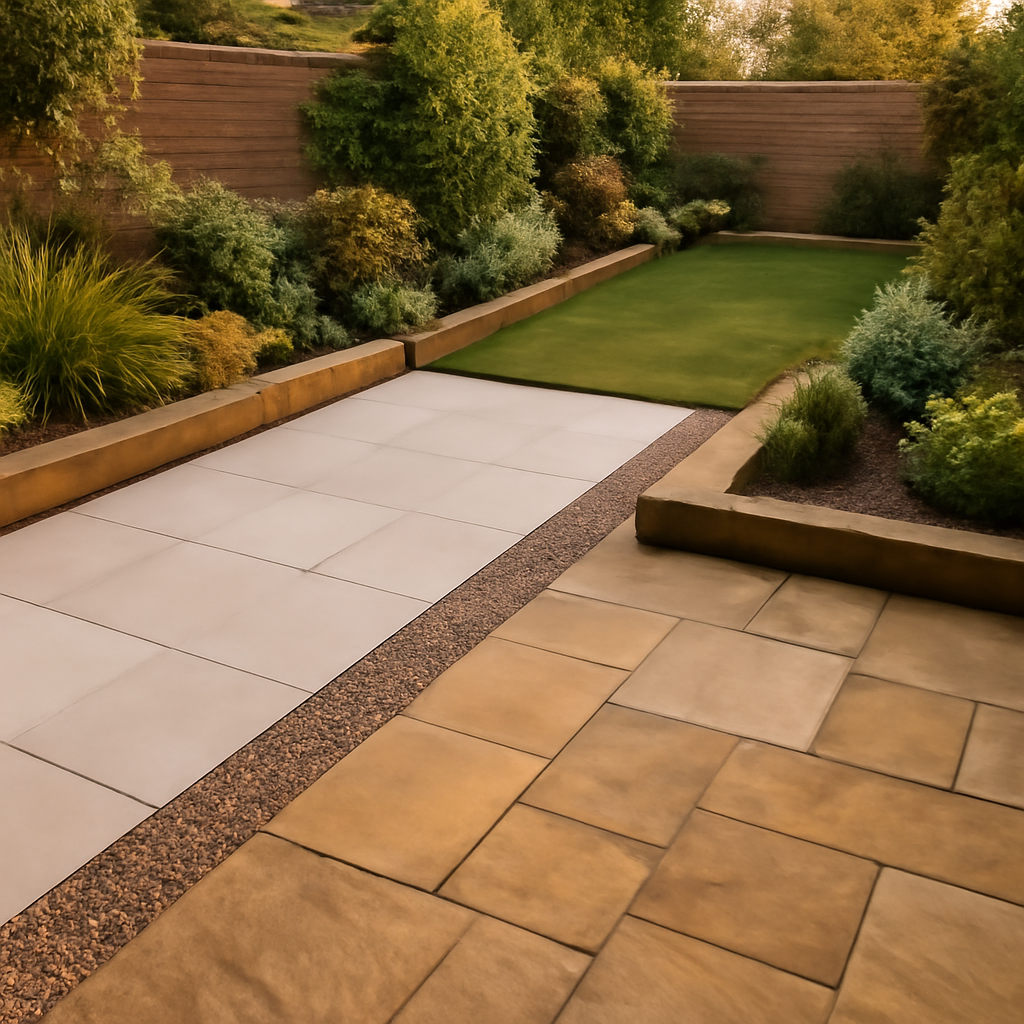
When considering new paving for your garden in Loughborough or the wider East Midlands, two of the most popular choices are porcelain paving and Indian sandstone. Each has its own advantages and drawbacks, and understanding these can help you make a practical decision tailored to your outdoor space and lifestyle.
First, let's talk about cost. Indian sandstone patios typically range from £90 to £120 per square metre for straightforward installations on normal ground with easy access. Porcelain paving usually costs a bit more, around £110 to £150 per square metre, depending on the slab choice, any cutting required, falls, and preparation work. While porcelain comes at a premium, its durability can mean long-term value. Always keep in mind that final quotes can vary based on access, ground levels, drainage, and material specification. A site visit is recommended to get an accurate price.
Grip is an important consideration, especially if your garden gets wet or you have children or elderly family members. Indian sandstone offers a naturally textured surface that tends to provide good slip resistance even when wet. Porcelain paving, being a man-made material, can have a smoother surface, but modern outdoor porcelain slabs often come with textured or anti-slip finishes. However, porcelain may become a bit more slippery when wet compared to sandstone, so it’s best to discuss your specific needs during the design process.
Frost resistance is crucial in the East Midlands climate. Porcelain paving has excellent frost resistance because it is dense and non-porous, which reduces water absorption and the risk of cracking in freezing temperatures. Indian sandstone, while also quite durable, is a natural stone and can be more porous, meaning it can absorb water and potentially suffer from frost damage over time if not properly sealed. Regular sealing and maintenance are essential if you choose sandstone.
From a cleaning and maintenance perspective, porcelain is easier to keep clean because it resists staining and is less likely to harbour moss or algae. Indian sandstone requires more attention as it can stain and grow moss or lichen, especially in shaded or damp areas. Periodic sealing and cleaning may be necessary to maintain its appearance over the years.
Colour consistency is another factor. Porcelain paving is manufactured to tight tolerances, so you can expect consistent colour and pattern across your patio. Indian sandstone, being a natural material, offers a unique and varied appearance with natural colour variations that many people find appealing for a more organic, rustic look. If you prefer a uniform look, porcelain may be a better fit.
When might each material suit your garden best? Indian sandstone is well suited to gardens where a natural, traditional or rustic style is desired. It's also a great choice if you want to match existing natural stone features or if you prefer the charm of colour variation. Porcelain paving is ideal for modern, minimalist gardens or areas where longevity and low maintenance are priorities. It can also be used to achieve sleek or contemporary designs with a wide choice of colours and finishes.
In summary, choosing between porcelain paving and Indian sandstone in the East Midlands should factor in your budget, style preference, maintenance willingness, and how your garden gets used. Both materials have their place, and a practical choice depends on site specifics and personal taste. For a precise recommendation and quote tailored to your garden, a site visit is invaluable.
If you’re thinking about updating your garden in Loughborough or anywhere in the East Midlands and want expert advice on porcelain paving versus Indian sandstone, get in touch. For a site visit or a quick, no-obligation quote, you can WhatsApp Aaron on 07454 978031. Practical, clear advice and quality workmanship come as standard with Worthington Landscape & Design.
WhatsApp Aaron on 07454 978031 to talk through a garden project.