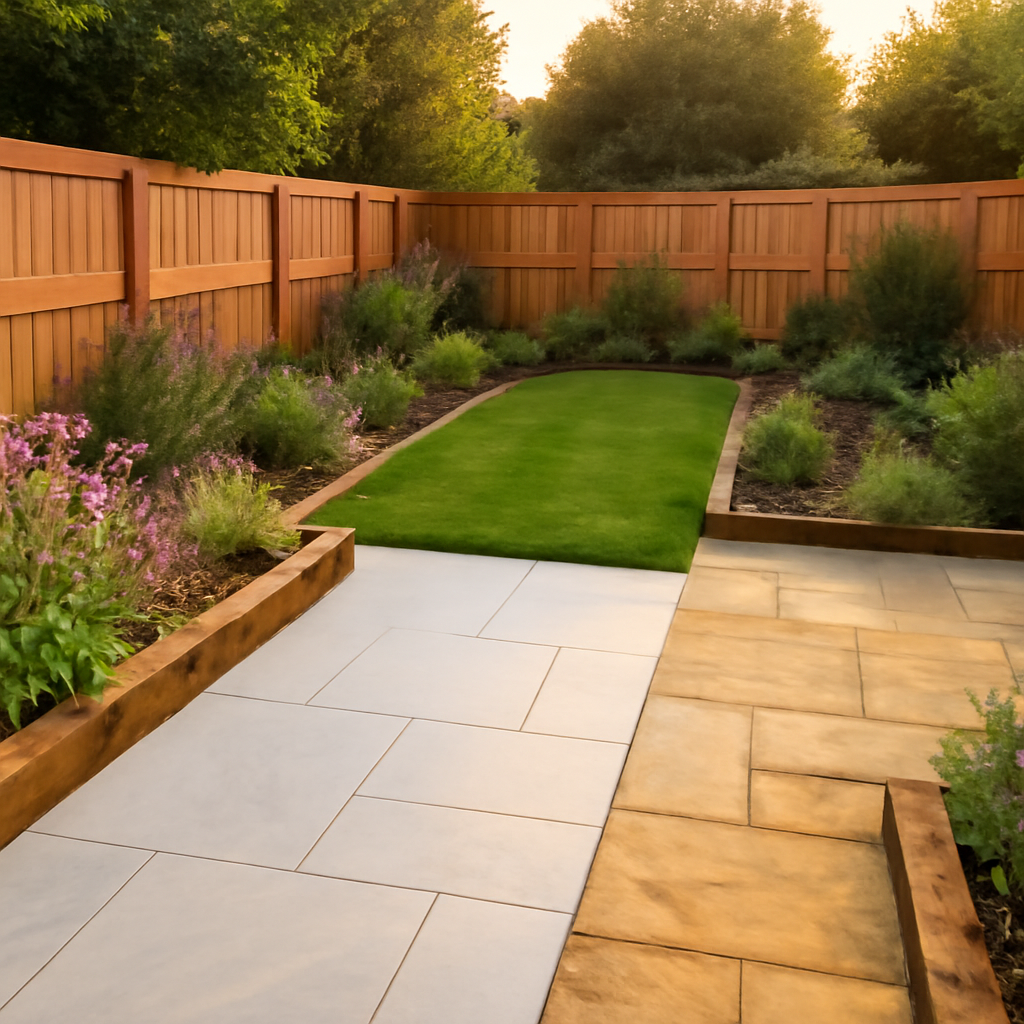
When considering a patio or hard landscaping project in Loughborough or the wider East Midlands, choosing the right paving material is key. Two popular options are porcelain paving and Indian sandstone. Both have their merits but differ in cost, maintenance, and suitability depending on your garden conditions.
Cost is often a deciding factor. Indian sandstone patios typically cost between GBP 90 and GBP 120 per square metre, which includes a basic installation assuming straightforward access and normal ground conditions. Porcelain patios tend to be pricier, generally between GBP 110 and GBP 150 per square metre. This higher price reflects both the cost of the material and often the additional work involved in cutting slabs, achieving correct falls for drainage, and site preparation. Keep in mind that final quotes will depend on access, levels, drainage, clearance, the specific material chosen, and a site visit.
Grip or slip resistance is crucial, especially in rainy or frosty conditions common in the East Midlands. Indian sandstone offers a naturally textured surface, providing reasonable grip when dry and wet. Porcelain, while extremely hard-wearing, can be more slippery depending on the finish. It’s best to opt for non-slip textured porcelain slabs if grip is a priority, especially around pools or on pathways.
Frost resistance is important for longevity in this region. Porcelain paving is generally highly frost-resistant because it is vitrified—meaning it doesn’t absorb much water. This makes it less prone to frost damage like cracking or flaking. Indian sandstone is natural stone and does absorb more water, so some types can suffer frost damage over time, especially if they have poor drainage underfoot. Tougher grades of sandstone perform better but still require good installation.
Cleaning and maintenance also vary. Porcelain paving is low maintenance; most dirt and stains wipe away easily, and it doesn’t harbour moss or algae as readily as natural stone. Indian sandstone, with its porous surface, may need regular sealing and can be prone to moss growth in shaded or damp areas. If ease of cleaning is a priority, porcelain has the upper hand.
Colour consistency in your patio can affect the overall look. Porcelain paving slabs offer very consistent colouring and patterning because they are manufactured. Indian sandstone offers richer natural colour variations and veining, which some homeowners prefer for a more organic, traditional garden feel.
When to choose what? Porcelain paving suits modern gardens requiring durability, low maintenance, and a uniform look. It’s ideal for high-use areas or contemporary designs. Indian sandstone suits projects where a natural, timeless character is desired and where the budget is more moderate. However, it’s best suited to gardens with good drainage and less shade to minimise moss.
If you’re planning a garden in Loughborough or across the East Midlands and want tailored advice on porcelain paving vs Indian sandstone, a site visit is invaluable. A precise quote takes into account your garden’s access, levels, drainage, and material choices. For straightforward pricing guidance, Indian sandstone patios start from GBP 90 per sqm, porcelain from GBP 110 per sqm, but final prices will vary.
For a site visit or quick quote, WhatsApp Aaron on 07454 978031. With local experience and 3D garden design options, Worthington Landscape & Design can help you make the right materials choice for your garden’s look and longevity.
WhatsApp Aaron on 07454 978031 to talk through a garden project.